It is easy to forget how many hands have touched a tea leaf before it reaches ours.
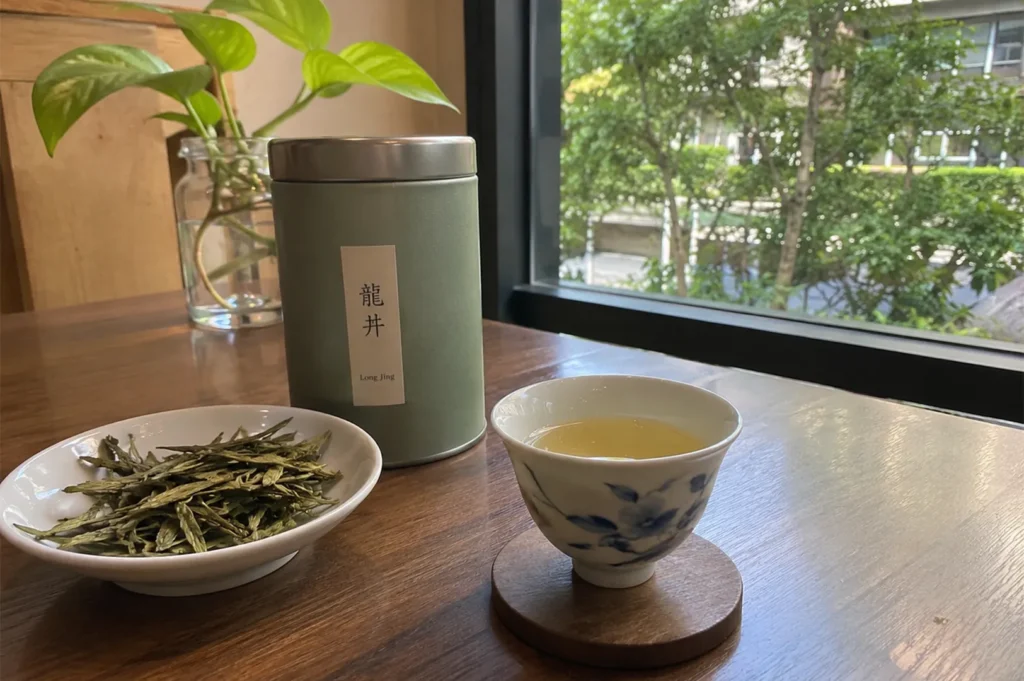
We speak of mountains, harvest seasons, famous gardens, and the qualities of particular cultivars. We admire the fragrance of a good Long Jing or the complexity of a carefully roasted Tie Guan Yin.
Yet the people responsible for those qualities often remain unnamed.
I find that increasingly difficult to overlook.
Consider Long Jing, for instance. Its distinctive flat leaves are shaped through a demanding process of pan-firing, where experience and careful judgment influence the finished tea.
Behind that familiar appearance is someone’s practiced skill.
And before the leaves reach the pan, someone must tend the plants, assess the growing conditions, and decide when the leaves are ready to be picked.
These are not romantic details added to make tea seem special.
They are work.
I think tea appreciation sometimes becomes too focused on the person drinking it. We discuss our brewing techniques, our preferred vessels, and how well we can recognise particular flavours.
There is value in developing that knowledge.
But I wonder whether we give enough attention to those who make such experiences possible.
A skilled tea maker may spend years learning to recognise changes that most of us would never notice. A farmer’s decisions may influence a harvest long before the leaves are processed.
Their contributions cannot always be understood from a tasting note.
Nor should they be reduced to a charming story printed on expensive packaging.
Gratitude, I believe, requires something more than admiration.
It asks us to become curious about provenance, working conditions, and whether the people producing our tea are treated fairly. These questions are not always easy to answer, but that does not make them less important.
I do not think every cup needs to become an exercise in ethical examination.
Sometimes tea should simply be enjoyed.
Still, I would like to remember that what feels effortless in my hands may represent considerable effort in someone else’s.
Perhaps appreciating tea more deeply begins not with learning another brewing technique, but with recognising the people whose knowledge and labour have already gone into the leaves.
The cup may belong to us.
The work behind it never did.
With quiet regard,
N. P. Lim

The Tea We Drink for No Reason
Tea is often praised for its ritual, its mindfulness, its ability to transform ordinary moments into quiet ceremonies. And I appreciate all of that. I really do. But there is another kind of tea, one that rarely gets mentioned in articles or recommended in guides. The tea we drink for no reason at all. I…
-
A Tea Lover’s Map to Elegant Finds in the City Teaware Shop
There is a particular quiet that settles when you pour hot water over tea leaves in a pot you chose with care. The weight of the clay in your hand. The porcelain capacity that holds just the right amount of warmth. A small ritual, repeated, until it becomes yours. Singapore knows tea in many languages….
-
Why We Pretend Every Tea Moment Should Be Peaceful
There is a quiet expectation we place on tea that I’m not sure we talk about enough. We expect it to calm us. To slow us down. To make everything feel a little more intentional, a little more put together, a little more peaceful than whatever came before it. But I’ve started to wonder if…
-
The Discipline of Grace in Every Bowl: Tea Ceremony in Japan
Water begins to move in a small iron kettle. The sound is faint, almost like wind through pines, and in a quiet room lined with tatami mats, it is enough to fill the silence. A host kneels in the tea room. A guest waits. Nothing is said, yet something has already begun. This is where…
-
The Tea I Keep Drinking When I Don’t Feel Like Myself
There are days when tea feels unnecessary. Not because I stop liking it, but because I don’t feel like the version of myself who usually drinks it slowly, thoughtfully, and with attention. On those days, I still make tea anyway. Not out of ritual, but out of habit. It is never the elaborate kind of…
-
Tea Ceremony Kyoto: A Slow Dance of Bowls and Breath
The room is quiet enough to hear water. Somewhere beyond the paper screens of this traditional tea ceremony venue, a garden drips after morning rain. Inside a tea house on a tatami mat worn soft by years of kneeling, a tea master lifts a bamboo whisk and begins tea making. There is no rush in…
-
Why We Keep Romanticising Tea Moments That Never Happened
I sometimes wonder if we are drinking tea or remembering something that never really happened. A quiet morning that feels softer in memory than it ever was in real life. A perfect cup by the window that somehow always looks better in hindsight. A tea moment that feels cinematic, even though it probably lasted only…
-
Masala Chai Tea Origins: The Cultural Evolution of India’s Spiced Tea Tradition
There is a sound that belongs to mornings across India: the hiss of milk rising in a battered pot, the clink of a spoon against metal, the low murmur of a tea seller calling out to passing crowds. Before the first sip, there is the scent. Cardamom pods, fresh ginger, and cinnamon stick curling into…
-
We Are Turning Tea Into Something It Was Never Meant to Be
There is something quietly strange happening in tea culture. The more popular the tea becomes, the more it starts to resemble everything it once stood apart from. Speed. Branding. Productivity. Performance. Tea, which once belonged to unhurried moments, is increasingly being asked to do more. To energize. To optimize focus. To replace coffee. To support…
-
Sencha Green Tea vs. Matcha Powder: Understanding the Differences in Japanese Green Tea
Two tins of tea powder sit side by side on a shelf. Both hold a fine green powder. Both promise the taste of authentic Japanese tea. To the eye, they look almost identical, and that is precisely where the confusion begins. One is matcha powder, often used in matcha lattes and desserts. The other is…