I’ve noticed something interesting over the years.
People behave differently in tea shops.
Not dramatically different, of course. No one suddenly becomes wiser the moment tea is poured. But the atmosphere tends to shift in subtle ways. Conversations slow down. Phones appear less often. Even silence feels more comfortable somehow.
Tea shops carry a different kind of energy from cafés.
Coffee culture often feels built around momentum. People arrive mid-rush, laptops open quickly, orders are taken rapidly, and conversations happen against the sharp sound of espresso machines.
Tea spaces rarely feel like that.
Even modern tea shops seem to encourage lingering. The brewing process itself takes longer. Tea arrives slowly. Sometimes a second infusion appears before anyone realizes how much time has passed.
And perhaps that changes the mood of the room.
In many traditional tea cultures, tea was never treated as something rushed. Whether in Chinese tea houses or quiet Japanese tea rooms, tea gatherings often centered around presence rather than productivity.
You can still feel traces of that today, especially as more spaces begin embracing tea-focused experiences over fast-paced café culture. It’s part of the reason why tea is quietly reshaping parts of Singapore’s café scene in unexpected ways.
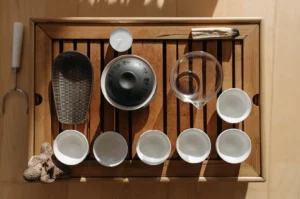
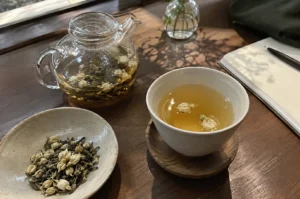
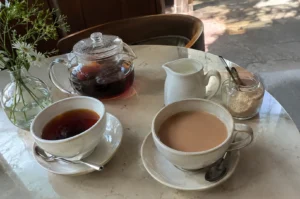
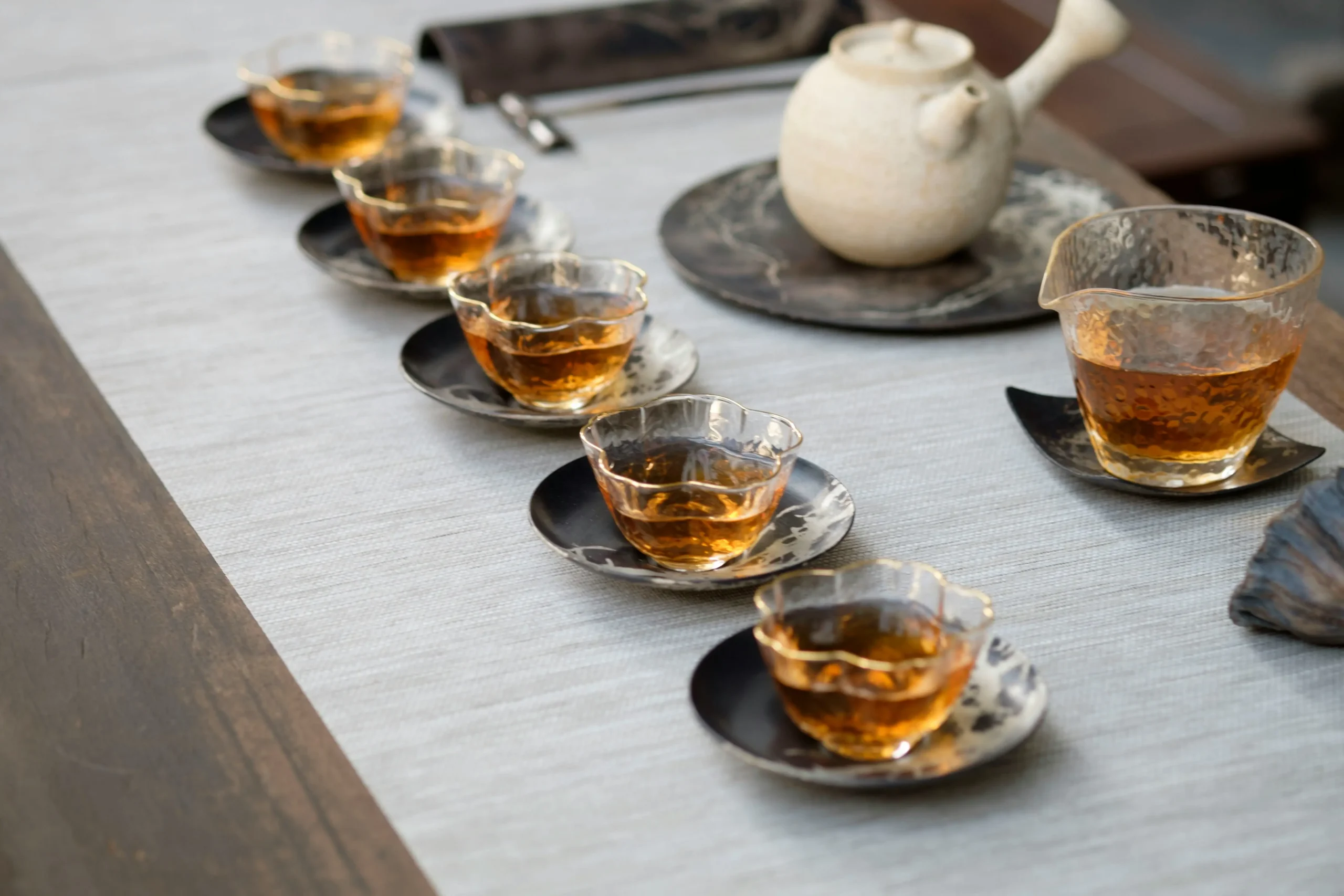
The best tea shops are rarely loud. They are not trying to compete for attention. Instead, they create a kind of softness around the experience. Warm lighting. Gentle conversation. The quiet sound of water being poured into cups.
Even the pauses feel intentional.
Perhaps this is why tea shops attract people looking for something slightly different from the usual café experience. Not necessarily silence, but a slower kind of atmosphere. A space where there is no pressure to hurry through the moment.
Tea seems to create that naturally.
A single pot can stretch across an hour-long conversation. Sometimes longer.
And maybe that is the real charm of tea shops.
Not just the tea itself, but the strange way they make time feel less urgent for a little while.
— Maria Tan
On tea, culture, and everyday rituals.

Stop Buying Tea for the Aesthetic: How Packaging Hijacks Taste
There is something fascinating about the way we buy tea today. Before we taste the leaves, we have already formed an opinion. The box is elegant. The label is beautifully designed. The colours suggest calm, luxury, or tradition. The story feels carefully written. And before the first sip, we have already decided that the tea…
-
A Tea Table in the Clouds: The Westin Singapore High Tea Review
It was one of those afternoons when the city felt too loud and too fast, and I wanted to sit somewhere quiet without really explaining why. So I went up. All the way up, to Level 32 of The Westin Singapore, where the Lobby Lounge sits above the noise like it knows something the rest…
-
“Caffeine-Free Tea” Confuses Everyone—Let’s Fix the Language
I have noticed that tea conversations can become surprisingly confusing. Not because tea itself is complicated, but because we sometimes use the same words to mean completely different things. One phrase that always catches my attention is “caffeine-free tea.” It sounds simple enough. A tea without caffeine. But is that really what we mean? Because…
-
The Pull, Pour, and Ritual Behind Singapore’s Favourite Milk Tea: Teh Tarik
It starts with a sound. A long ribbon of tea, arcing from one metal mug held high to another held low. The stream catches the light. Then the froth rises, pale and soft, and the whole thing gets poured back and lifted again. Nobody at the stall looks up. This happens a hundred times a…
-
Stop Chasing Tasting Notes: Tea Isn’t Wine and That’s a Relief
I have a small confession to make. Sometimes I have absolutely no idea what I am supposed to be tasting. A tea description might promise orchid, honey, toasted nuts, stone fruit, and something wonderfully mysterious called a “long mineral finish.” I take a sip. I taste tea. And then I start wondering if everyone else…
-
Chinese Tea Sets: Beautiful on the Table, But How Do They Brew?
There is a small arrangement on the table this evening, and I have not touched it yet. A pale bowl with a lid resting slightly askew. A round pitcher beside it, waiting to be filled. Cups no larger than a thumb and two fingers, lined up like a quiet sentence. The surfaces catch the last…
-
Floral Teas Are Not “For Beginners”—They’re For People With Taste
There is a curious assumption in tea culture that I have never quite understood. If you are new to tea, you begin with something floral. Jasmine. Rose. Osmanthus. Lightly scented blends. Then, supposedly, you move on. You discover roasted oolongs. Aged teas. More complex leaves. Stronger flavours. Eventually, you become a “serious” tea drinker. I…
-
How to Make Cold Brew Tea: The Slow Method for a Smoother Cup
There is a jar on the top shelf of my refrigerator that I did not need this morning. I filled it last night, before the kitchen went dark. Loose tea leaves, cool water, a lid resting loosely on top. Then I closed the door and left it alone, the way you leave bread to rise…
-
Milk Tea Isn’t “Ruining” Tea—But Some Milk Tea Is Ruining Milk Tea
I have noticed that few things can start an argument among tea drinkers quite as quickly as milk. Mention adding milk to a good tea and suddenly everyone has an opinion. Some insist that milk covers the flavour of the leaves. Others will tell you that certain teas were practically made for it. I have…
-
There Are Always Good Things to Eat at The Marmalade Pantry
The afternoon rain had just eased when I climbed up to Level 4 of ION Orchard, home to the Marmalade Pantry Ion. Outside, Orchard Road was doing its usual thing: too many people, too much noise, everyone somewhere to be in the bustle of the city. Inside, at a corner table, someone was pouring tea…