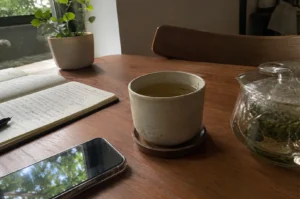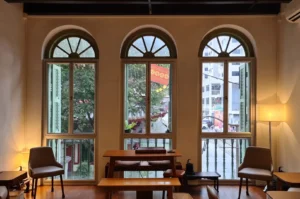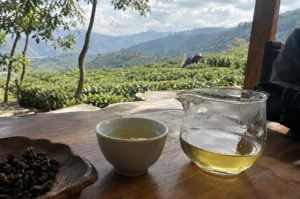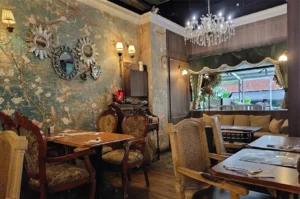
I’ve noticed something interesting over the years.
People behave differently in tea shops.
Not dramatically different, of course. No one suddenly becomes wiser the moment tea is poured. But the atmosphere tends to shift in subtle ways. Conversations slow down. Phones appear less often. Even silence feels more comfortable somehow.
Tea shops carry a different kind of energy from cafés.
Coffee culture often feels built around momentum. People arrive mid-rush, laptops open quickly, orders are taken rapidly, and conversations happen against the sharp sound of espresso machines.
Tea spaces rarely feel like that.
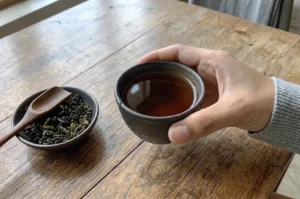
Even modern tea shops seem to encourage lingering. The brewing process itself takes longer. Tea arrives slowly. Sometimes a second infusion appears before anyone realizes how much time has passed.
And perhaps that changes the mood of the room.
In many traditional tea cultures, tea was never treated as something rushed. Whether in Chinese tea houses or quiet Japanese tea rooms, tea gatherings often centered around presence rather than productivity.
You can still feel traces of that today, especially as more spaces begin embracing tea-focused experiences over fast-paced café culture. It’s part of the reason why tea is quietly reshaping parts of Singapore’s café scene in unexpected ways.
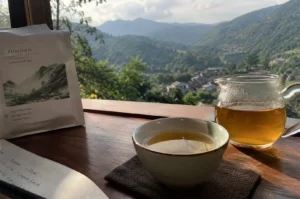
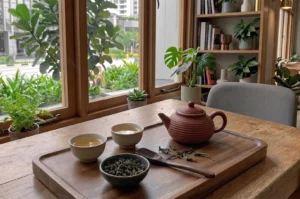
The best tea shops are rarely loud. They are not trying to compete for attention. Instead, they create a kind of softness around the experience. Warm lighting. Gentle conversation. The quiet sound of water being poured into cups.
Even the pauses feel intentional.
Perhaps this is why tea shops attract people looking for something slightly different from the usual café experience. Not necessarily silence, but a slower kind of atmosphere. A space where there is no pressure to hurry through the moment.
Tea seems to create that naturally.
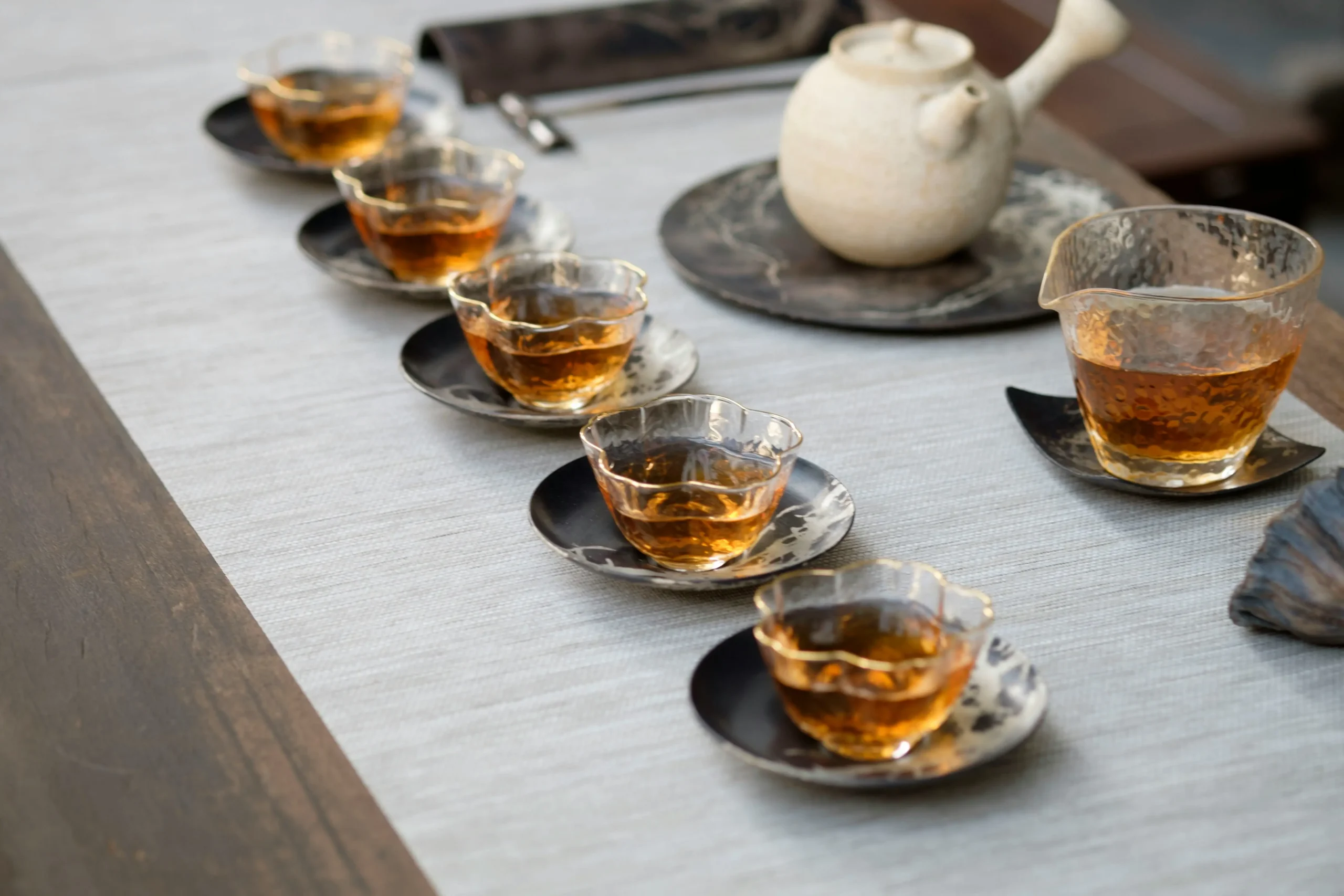
A single pot can stretch across an hour-long conversation. Sometimes longer.
And maybe that is the real charm of tea shops.
Not just the tea itself, but the strange way they make time feel less urgent for a little while.
— Maria Tan
On tea, culture, and everyday rituals.

The Teacup as a Compass: What My Daily Brew Taught Me About Pace
I never intended for tea to become a way of keeping track of my days. It just happened. There are mornings when I drink the first cup quickly, barely noticing the taste because my mind is already somewhere else. Then there are afternoons when I make tea and somehow manage to sit with it for…
-
Silk Tea Bar Review: A Quiet Climb Worth Making on Sago Street
I almost walked past it. Sago Street was loud that afternoon, the way Chinatown often is. Voices, footsteps, the clatter of a hundred small transactions. I was looking for a door and nearly missed the narrow one that led upstairs. Then I climbed. And somewhere between the ground floor and the second, the noise fell…
-
“Artisan” Doesn’t Mean Ethical: The Supply Chain Questions We Avoid
I have always been drawn to the word “artisan.” Maybe because it creates a certain image in my mind. Someone carefully working with their hands. Someone who knows their craft deeply. Someone preserving a tradition that has existed long before the rest of us discovered it. When I see “artisan tea” on a label, I…
-
A Quiet Afternoon at A Beautiful Day Café
The rain had just started when I stepped in off Paya Lebar Road. Not heavy. Just enough to soften the light and slow everyone down. Inside, someone was pouring tea, and the sound of it carried further than it should have. A small room can do that. It can make a pour feel like a…
-
The Problem With “Single-Origin” Tea Obsession
There was a time when knowing where a tea came from was enough. Now, it sometimes feels as though we need to know everything. The mountain. The village. The garden. The harvest date. The particular plot where the leaves were grown. Single-origin tea has become a mark of quality in modern tea culture. The idea…
-
Where Singapore’s Tea Traditions Still Steep: Pek Sin Choon
The first thing I noticed was the smell. Not perfume, not incense. Something warmer and older than both. Roasted tea leaves, drifting out onto Mosque Street before I even reached the door. It’s the kind of smell that makes you slow your steps without knowing why. Pek Sin Choon has been on this corner of…
-
Not All Comfort Is Sweet: The Bitterness I Now Appreciate
I used to think comfort was supposed to be easy. A familiar drink. A familiar taste. Something that immediately made me feel better. For a long time, I gravitated towards teas that were gentle. Soft flavours. Natural sweetness. Anything that felt welcoming from the first sip. Then I started appreciating bitter teas. Not because I…
-
Understanding the Herb Behind the Refreshing Cup: Peppermint Tea
There is a moment, just after the hot water meets the fresh peppermint leaves, when the whole room seems to change. A sharp, green coolness lifts from the cup and settles somewhere behind your eyes. Drinking peppermint tea does this quietly, without fuss. It asks for nothing and offers a great deal. Most of us…
-
Why Most People Hate Oolong: Overcomplicated Advice Ruined It
I have always found it interesting that oolong tea is one of the most misunderstood teas. People often describe it as complicated. Too many varieties. Too many brewing methods. Too many rules. The leaves should be prepared this way. The water should be at this temperature. The teapot should be a certain material. The first…
-
Kempinski Singapore High Tea Review: When Afternoon Tea Feels Like an Occasion
The rain had come and gone by the time I arrived, leaving the street outside slick and quiet. I stepped in without knowing quite what I wanted from the afternoon. Only that I wanted it to be slow. The Lobby Lounge at The Capitol Kempinski Hotel Singapore does not rush you. It waits. And there…