I’ve always thought of tea as a companion of sorts. Not a person, not a friend, but something that sits quietly beside you while the day moves forward. A cup of tea doesn’t interrupt your thoughts. It doesn’t demand attention. It simply exists, warm and steady, while you figure out what comes next.
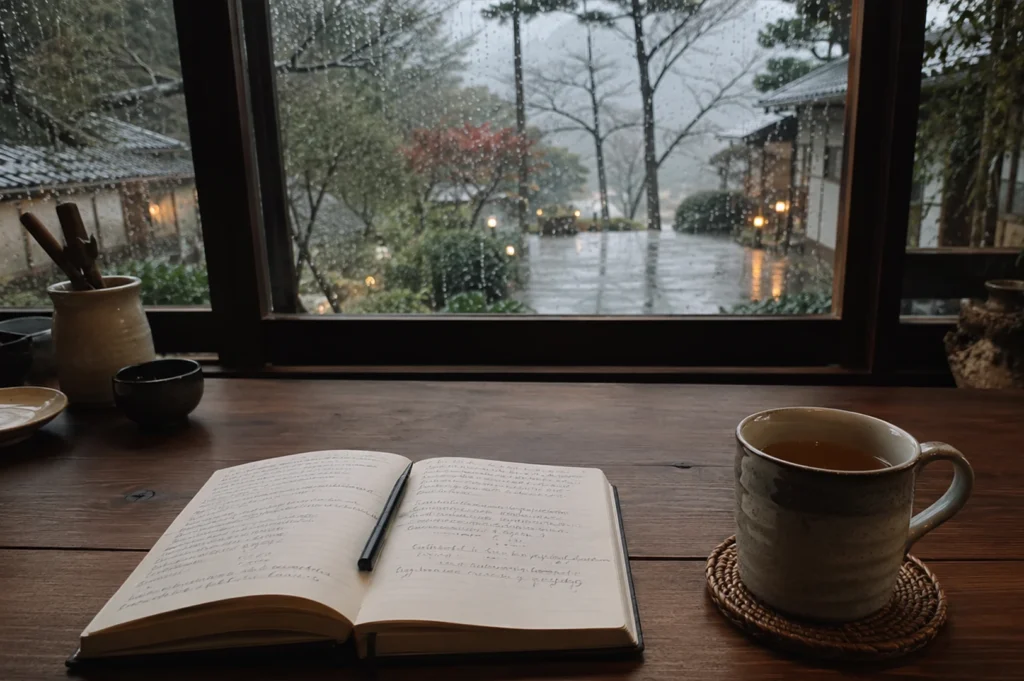
Some teas feel more companionable than others. I remember a delicate oolong I drank on a rainy afternoon. The room was quiet, the streets outside were wet and empty, and for a moment, it felt as if the tea itself was listening. It didn’t judge the scattered notes in my mind. It didn’t demand focus or ceremony. It just was.
Other teas are different. Bold black teas on a hectic morning feel like conversation that pushes you forward, even if you don’t want to move. Matcha can feel meditative, almost insistently calm, asking you to pay attention even when your thoughts are elsewhere. Each tea carries its own personality, quietly shaping the moments it inhabits.
What fascinates me is how much of our experience comes from context. A tea shared with someone you care about becomes something entirely different from the same tea brewed alone. The flavor doesn’t change, but the way it sits in memory does. Even a simple, inexpensive leaf can feel extraordinary if it is present in the right moment with the right company.
Tea reminds us that experience is not just about what is in the cup, but about how we arrive at it, where we are, and who we are with. Perhaps that is why I keep returning to the same teas over and over again. Not because they are perfect, but because they are companions to the moments I carry with them.
And it makes me wonder: are we drinking tea, or are we letting tea drink us?
What do you think? Which tea has quietly become a companion in your life?
— Maria Tan
On tea, culture, and everyday rituals.

Stop Buying Tea for the Aesthetic: How Packaging Hijacks Taste
There is something fascinating about the way we buy tea today. Before we taste the leaves, we have already formed an opinion. The box is elegant. The label is beautifully designed. The colours suggest calm, luxury, or tradition. The story feels carefully written. And before the first sip, we have already decided that the tea…
-
A Tea Table in the Clouds: The Westin Singapore High Tea Review
It was one of those afternoons when the city felt too loud and too fast, and I wanted to sit somewhere quiet without really explaining why. So I went up. All the way up, to Level 32 of The Westin Singapore, where the Lobby Lounge sits above the noise like it knows something the rest…
-
“Caffeine-Free Tea” Confuses Everyone—Let’s Fix the Language
I have noticed that tea conversations can become surprisingly confusing. Not because tea itself is complicated, but because we sometimes use the same words to mean completely different things. One phrase that always catches my attention is “caffeine-free tea.” It sounds simple enough. A tea without caffeine. But is that really what we mean? Because…
-
The Pull, Pour, and Ritual Behind Singapore’s Favourite Milk Tea: Teh Tarik
It starts with a sound. A long ribbon of tea, arcing from one metal mug held high to another held low. The stream catches the light. Then the froth rises, pale and soft, and the whole thing gets poured back and lifted again. Nobody at the stall looks up. This happens a hundred times a…
-
Stop Chasing Tasting Notes: Tea Isn’t Wine and That’s a Relief
I have a small confession to make. Sometimes I have absolutely no idea what I am supposed to be tasting. A tea description might promise orchid, honey, toasted nuts, stone fruit, and something wonderfully mysterious called a “long mineral finish.” I take a sip. I taste tea. And then I start wondering if everyone else…
-
Chinese Tea Sets: Beautiful on the Table, But How Do They Brew?
There is a small arrangement on the table this evening, and I have not touched it yet. A pale bowl with a lid resting slightly askew. A round pitcher beside it, waiting to be filled. Cups no larger than a thumb and two fingers, lined up like a quiet sentence. The surfaces catch the last…
-
Floral Teas Are Not “For Beginners”—They’re For People With Taste
There is a curious assumption in tea culture that I have never quite understood. If you are new to tea, you begin with something floral. Jasmine. Rose. Osmanthus. Lightly scented blends. Then, supposedly, you move on. You discover roasted oolongs. Aged teas. More complex leaves. Stronger flavours. Eventually, you become a “serious” tea drinker. I…
-
How to Make Cold Brew Tea: The Slow Method for a Smoother Cup
There is a jar on the top shelf of my refrigerator that I did not need this morning. I filled it last night, before the kitchen went dark. Loose tea leaves, cool water, a lid resting loosely on top. Then I closed the door and left it alone, the way you leave bread to rise…
-
Milk Tea Isn’t “Ruining” Tea—But Some Milk Tea Is Ruining Milk Tea
I have noticed that few things can start an argument among tea drinkers quite as quickly as milk. Mention adding milk to a good tea and suddenly everyone has an opinion. Some insist that milk covers the flavour of the leaves. Others will tell you that certain teas were practically made for it. I have…
-
There Are Always Good Things to Eat at The Marmalade Pantry
The afternoon rain had just eased when I climbed up to Level 4 of ION Orchard, home to the Marmalade Pantry Ion. Outside, Orchard Road was doing its usual thing: too many people, too much noise, everyone somewhere to be in the bustle of the city. Inside, at a corner table, someone was pouring tea…