There are easier gifts to buy than tea.
Gift cards, flowers, candles. They require very little thought. Most people will appreciate them, and if they don't, no real harm is done.
Tea feels different.
Giving someone tea involves a small act of interpretation. You are making a quiet guess about what they might enjoy. Something floral. Something roasted. Something comforting for rainy afternoons. Something they might reach for after a long day.
In other words, tea gifts often reveal as much about the giver as the recipient.
Perhaps that is why they feel so personal.
I have received tea as gifts before, and what I remember is rarely the tea itself. It is the thought behind it.
Someone saw a tea and thought of you.
Someone walked into a shop, picked up a tin, and imagined you drinking it.
That feels surprisingly meaningful in a world where so many things can be ordered in seconds without much consideration.
Tea also carries a certain optimism.
Unlike a bouquet of flowers that slowly fades, tea arrives with possibilities. Future mornings. Future conversations. Future quiet moments waiting to happen.
A single packet can become dozens of small experiences spread across weeks or months.
Maybe that is part of tea's charm.
It is never consumed all at once. The gift continues unfolding cup after cup, long after the moment of giving has passed.
Of course, there is always some risk involved. The recipient may prefer green tea over oolong. They may love bold black teas and dislike delicate white teas.
But perhaps that uncertainty is what makes the gesture feel genuine.
A tea gift says, "I thought about what you might enjoy."
Not perfectly.
Just thoughtfully.
And in many ways, that feels more valuable than getting it exactly right.
— Maria Tan
On tea, culture, and everyday rituals.

The Tea We Drink for No Reason
Tea is often praised for its ritual, its mindfulness, its ability to transform ordinary moments into quiet ceremonies. And I appreciate all of that. I really do. But there is another kind of tea, one that rarely gets mentioned in articles or recommended in guides. The tea we drink for no reason at all. I…
-
A Tea Lover’s Map to Elegant Finds in the City Teaware Shop
There is a particular quiet that settles when you pour hot water over tea leaves in a pot you chose with care. The weight of the clay in your hand. The porcelain capacity that holds just the right amount of warmth. A small ritual, repeated, until it becomes yours. Singapore knows tea in many languages….
-
Why We Pretend Every Tea Moment Should Be Peaceful
There is a quiet expectation we place on tea that I’m not sure we talk about enough. We expect it to calm us. To slow us down. To make everything feel a little more intentional, a little more put together, a little more peaceful than whatever came before it. But I’ve started to wonder if…
-
The Discipline of Grace in Every Bowl: Tea Ceremony in Japan
Water begins to move in a small iron kettle. The sound is faint, almost like wind through pines, and in a quiet room lined with tatami mats, it is enough to fill the silence. A host kneels in the tea room. A guest waits. Nothing is said, yet something has already begun. This is where…
-
The Tea I Keep Drinking When I Don’t Feel Like Myself
There are days when tea feels unnecessary. Not because I stop liking it, but because I don’t feel like the version of myself who usually drinks it slowly, thoughtfully, and with attention. On those days, I still make tea anyway. Not out of ritual, but out of habit. It is never the elaborate kind of…
-
Tea Ceremony Kyoto: A Slow Dance of Bowls and Breath
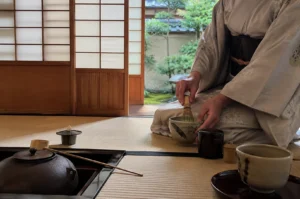
The room is quiet enough to hear water. Somewhere beyond the paper screens of this traditional tea ceremony venue, a garden drips after morning rain. Inside a tea house on a tatami mat worn soft by years of kneeling, a tea master lifts a bamboo whisk and begins tea making. There is no rush in…
-
Why We Keep Romanticising Tea Moments That Never Happened
I sometimes wonder if we are drinking tea or remembering something that never really happened. A quiet morning that feels softer in memory than it ever was in real life. A perfect cup by the window that somehow always looks better in hindsight. A tea moment that feels cinematic, even though it probably lasted only…
-
Masala Chai Tea Origins: The Cultural Evolution of India’s Spiced Tea Tradition
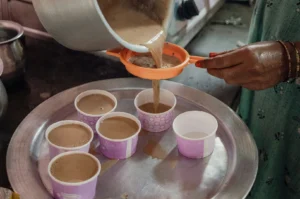
There is a sound that belongs to mornings across India: the hiss of milk rising in a battered pot, the clink of a spoon against metal, the low murmur of a tea seller calling out to passing crowds. Before the first sip, there is the scent. Cardamom pods, fresh ginger, and cinnamon stick curling into…
-
We Are Turning Tea Into Something It Was Never Meant to Be
There is something quietly strange happening in tea culture. The more popular the tea becomes, the more it starts to resemble everything it once stood apart from. Speed. Branding. Productivity. Performance. Tea, which once belonged to unhurried moments, is increasingly being asked to do more. To energize. To optimize focus. To replace coffee. To support…
-
Sencha Green Tea vs. Matcha Powder: Understanding the Differences in Japanese Green Tea
Two tins of tea powder sit side by side on a shelf. Both hold a fine green powder. Both promise the taste of authentic Japanese tea. To the eye, they look almost identical, and that is precisely where the confusion begins. One is matcha powder, often used in matcha lattes and desserts. The other is…