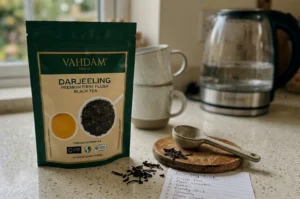
There are easier gifts to buy than tea.
Gift cards, flowers, candles. They require very little thought. Most people will appreciate them, and if they don't, no real harm is done.
Tea feels different.
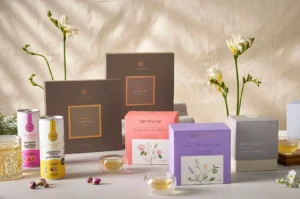
Giving someone tea involves a small act of interpretation. You are making a quiet guess about what they might enjoy. Something floral. Something roasted. Something comforting for rainy afternoons. Something they might reach for after a long day.
In other words, tea gifts often reveal as much about the giver as the recipient.
Perhaps that is why they feel so personal.
I have received tea as gifts before, and what I remember is rarely the tea itself. It is the thought behind it.
Someone saw a tea and thought of you.
Someone walked into a shop, picked up a tin, and imagined you drinking it.
That feels surprisingly meaningful in a world where so many things can be ordered in seconds without much consideration.
Tea also carries a certain optimism.
Unlike a bouquet of flowers that slowly fades, tea arrives with possibilities. Future mornings. Future conversations. Future quiet moments waiting to happen.
A single packet can become dozens of small experiences spread across weeks or months.
Maybe that is part of tea's charm.
It is never consumed all at once. The gift continues unfolding cup after cup, long after the moment of giving has passed.
Of course, there is always some risk involved. The recipient may prefer green tea over oolong. They may love bold black teas and dislike delicate white teas.
But perhaps that uncertainty is what makes the gesture feel genuine.
A tea gift says, "I thought about what you might enjoy."
Not perfectly.
Just thoughtfully.
And in many ways, that feels more valuable than getting it exactly right.
— Maria Tan
On tea, culture, and everyday rituals.

The Timeless Charm of Tea Culture Through English Breakfast Singapore
There is a small ritual I return to on the warmest Singapore afternoons. The city outside shimmers with heat, the air conditioning hums softly, and I reach for a familiar tin of English Breakfast tea. The kettle clicks, steam rises, and within a minute or two the kitchen fills with a warm, malty aroma that…
-
The Tea That Reminds Me of Home
I still remember the first cup of tea I drank after returning from a long trip. It was nothing remarkable, a simple black tea brewed in my kitchen but it tasted different from any cup I had drunk abroad. It wasn’t the leaves themselves. It wasn’t the water or the pot. It was the familiarity…
-
A Tea Lover’s Honest Review of Gryphon Tea Company Singapore
There is a particular hush that settles over my kitchen on a weeknight, after the dishes are done and the day finally loosens its grip. That is when I open a new box of tea from Gryphon Tea Company Singapore. Last week, the box belonged to Gryphon Singapore, and the moment I lifted the lid,…
-
Why Tea Can Teach Us About Mindful Consumption
I’ve been thinking a lot about waste lately. Not just the kind we notice-the piles of packaging, leftover food, discarded cups-but the quiet, everyday kind: the tea leaves left unused, the leaves steeped once and thrown away, the water poured down because the cup is “not perfect.” Tea has a way of making you notice…
-
Why We Secretly Judge Tea Shops by Their Music
I never thought much about music in tea shops, until I started noticing patterns. The tea is brewed, the cups are warm, and the aroma drifts through the room. But then the music starts, and suddenly, the entire experience changes. Some shops play classical or soft jazz. Conversations linger. Sips are slow. Even the tea…
-
The Best Everyday and Gift-Worthy Blends from Gryphon Tea Singapore
I have a small confession. For the longest time, I treated tea like a background character in my day. It was just the thing I gulped between meetings, barely tasting it. Then a friend handed me a proper cup one quiet afternoon, and I finally slowed down enough to notice the aroma, the warmth, the…
-
We Talk Too Much About Tea and Not Enough About Drinking It
Tea culture has become remarkably good at talking about tea. We discuss origins. Elevation. Harvest seasons. Processing methods. Water temperatures. Brewing vessels. There are endless conversations about tea. And yet I sometimes wonder whether we spend enough time simply drinking it. This may sound like an odd criticism coming from someone who enjoys learning about…
-
High Tea St Regis: A Grand Afternoon Ritual at Regis Singapore
The light in the late afternoon does something quiet to a room. It softens. It lingers on the rim of a porcelain cup in the elegant Tea Room, slides along the curve of a silver pot, and settles into the folds of a linen napkin without asking for attention. There is a stillness here, the…
-
Why We Keep Looking for the Perfect Tea
I used to think there would be a moment when my tea journey felt complete. A tea so good that I would stop searching. A tea that would make every other tea feel unnecessary. Years later, I can confidently say that moment has never arrived. And I’m starting to think that’s the point. Tea drinkers…
-
Darjeeling First Flush: Capturing the Himalayan Spring in a Teacup
I still remember the first time someone handed me a cup of Darjeeling First Flush, a prized form of black tea, and asked me, quite seriously, not to add milk. I almost laughed. Tea without milk felt like toast without butter. But I humored my friend, took a sip, and paused. The liquid was pale…