Introduction
Across centuries of Chinese culture, tea has held a place of quiet importance. It appears in homes, markets, and tea houses across China, where the simple act of sharing a cup reflects patience, hospitality, and tradition. For many people, Chinese tea is not only a beverage. It is a moment of reflection and a way to slow down.
Although tea may appear simple at first glance, the world of types of Chinese tea is remarkably diverse. From delicate white teas to deep and earthy pu’er, each tea reveals how the handling of a single leaf can shape flavour, aroma, and colour.
All traditional tea varieties come from the same plant, Camellia sinensis. What creates the diversity of flavours is the production process, which determines how the tea leaves are heated, oxidised, rolled, or aged. Over centuries, tea makers in China developed a system that classifies tea into six categories, commonly known as the six types of Chinese tea.
Understanding these tea types helps explain why one cup feels fresh and light while another tastes roasted, creamy, or earthy. It also reveals the deep craftsmanship behind one of the world’s most respected drinks.
The Six Types of Chinese Tea at a Glance
Traditional Chinese tea classification recognises six types of tea. Each type reflects a different balance of oxidation, heating, and fermentation.
The six categories are:
- Green tea
- White tea
- Yellow tea
- Oolong tea
- Red tea (known as black tea in the West)
- Dark tea
Each type begins with the same tea leaves, harvested from the tea bush. What follows in the production process determines the character of the final tea.
These main categories form the foundation of traditional Chinese tea culture, allowing tea drinkers to explore a wide spectrum of flavours and aromas.
Green Tea: Fresh and Vibrant
Green Tea
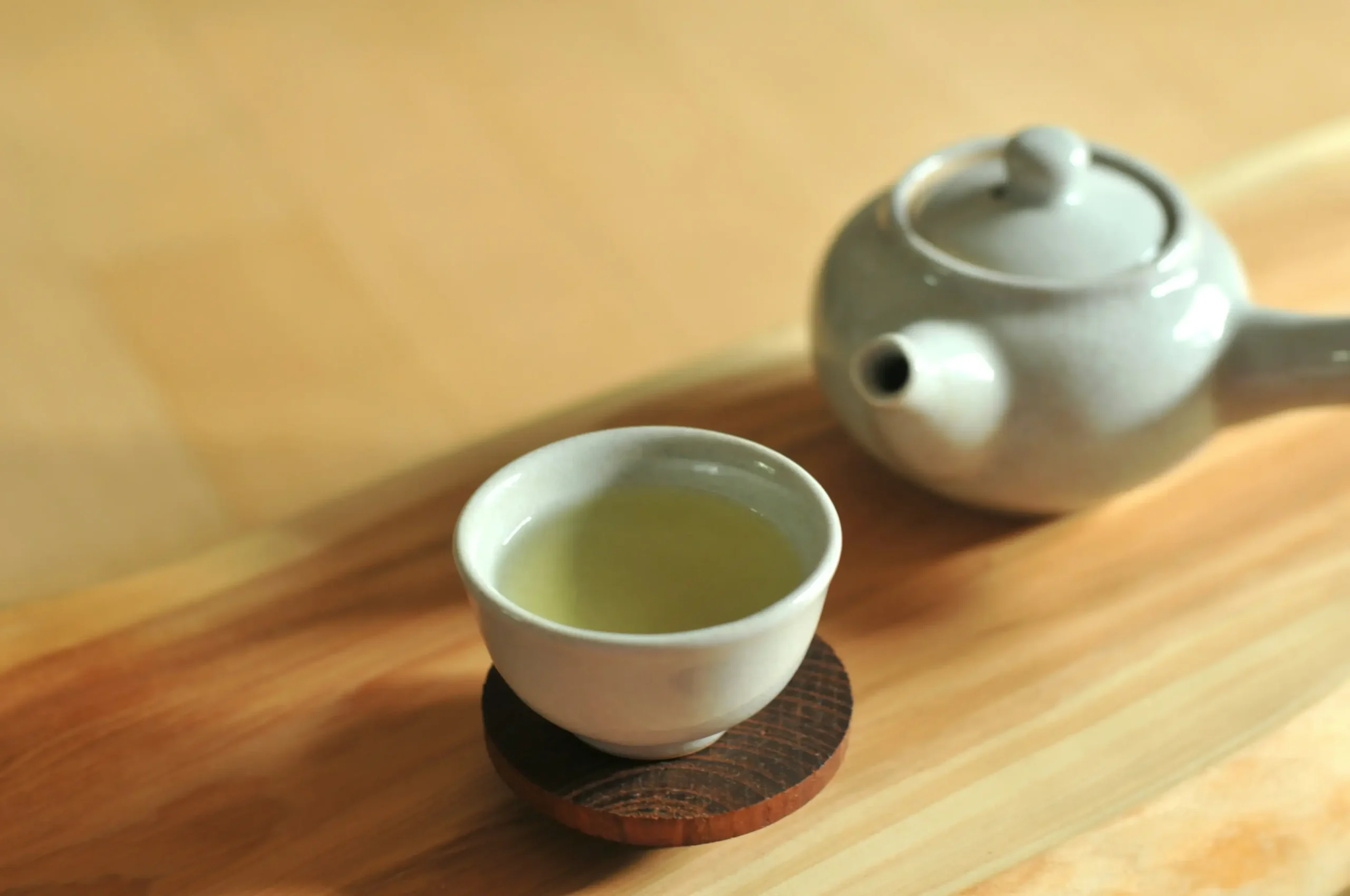
Among the most well known types of Chinese tea, green tea is valued for its bright and refreshing character.
After harvest, the leaves are quickly heated to stop oxidation, which preserves their green colour and fresh flavour. In China, this heating is often done by pan firing, though some teas are gently steamed.
Because green tea undergoes minimal oxidation, its flavour is often described as clean, slightly grassy, and lively.
Some of the most famous Chinese teas belong to this category:
- Bi Luo Chun – a delicate tea known for its floral fragrance
- Dragon Well (Longjing) – smooth, slightly nutty, and highly respected
- Huangshan Maofeng – light with gentle sweetness
Green tea is often brewed multiple times, allowing tea drinkers to enjoy multiple infusions from the same leaves.
White Tea: Simplicity and Minimal Handling
White Tea
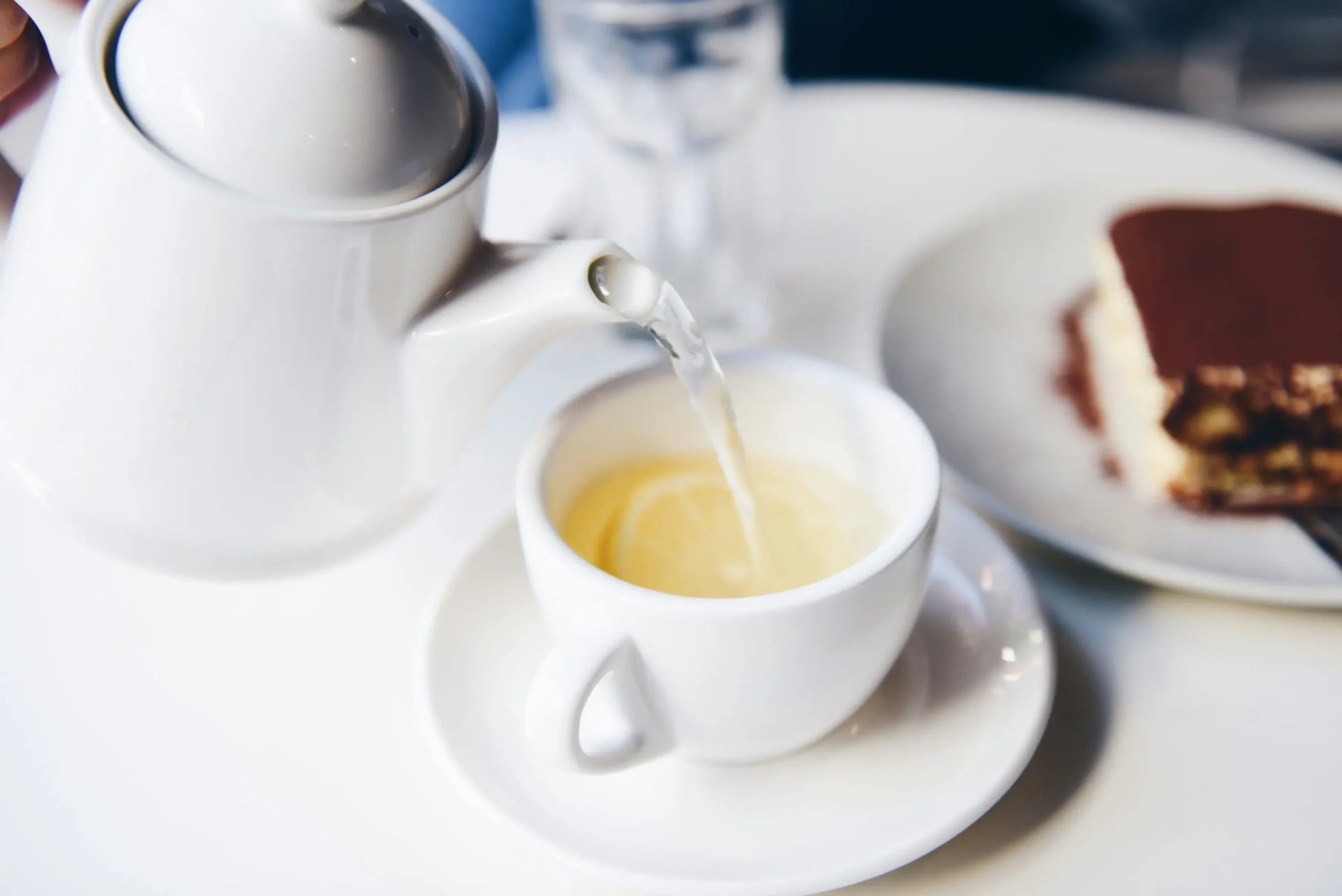
White tea represents one of the most delicate tea types in China.
Unlike many other teas, white tea undergoes minimal handling. The leaves and buds are simply harvested and allowed to dry naturally. This gentle approach preserves the natural sweetness of the leaf.
Many white teas are made from one bud or young leaves covered with fine silvery hairs.
Two famous varieties include:
- Silver Needle – made almost entirely from young buds
- White Peony – a tea made from buds and leaves that produces a soft floral taste
White tea is appreciated for its light body and subtle aroma. The brewed colour is pale and luminous, reflecting the tea’s delicate character.
Oolong Tea: The Craft of Partial Fermentation
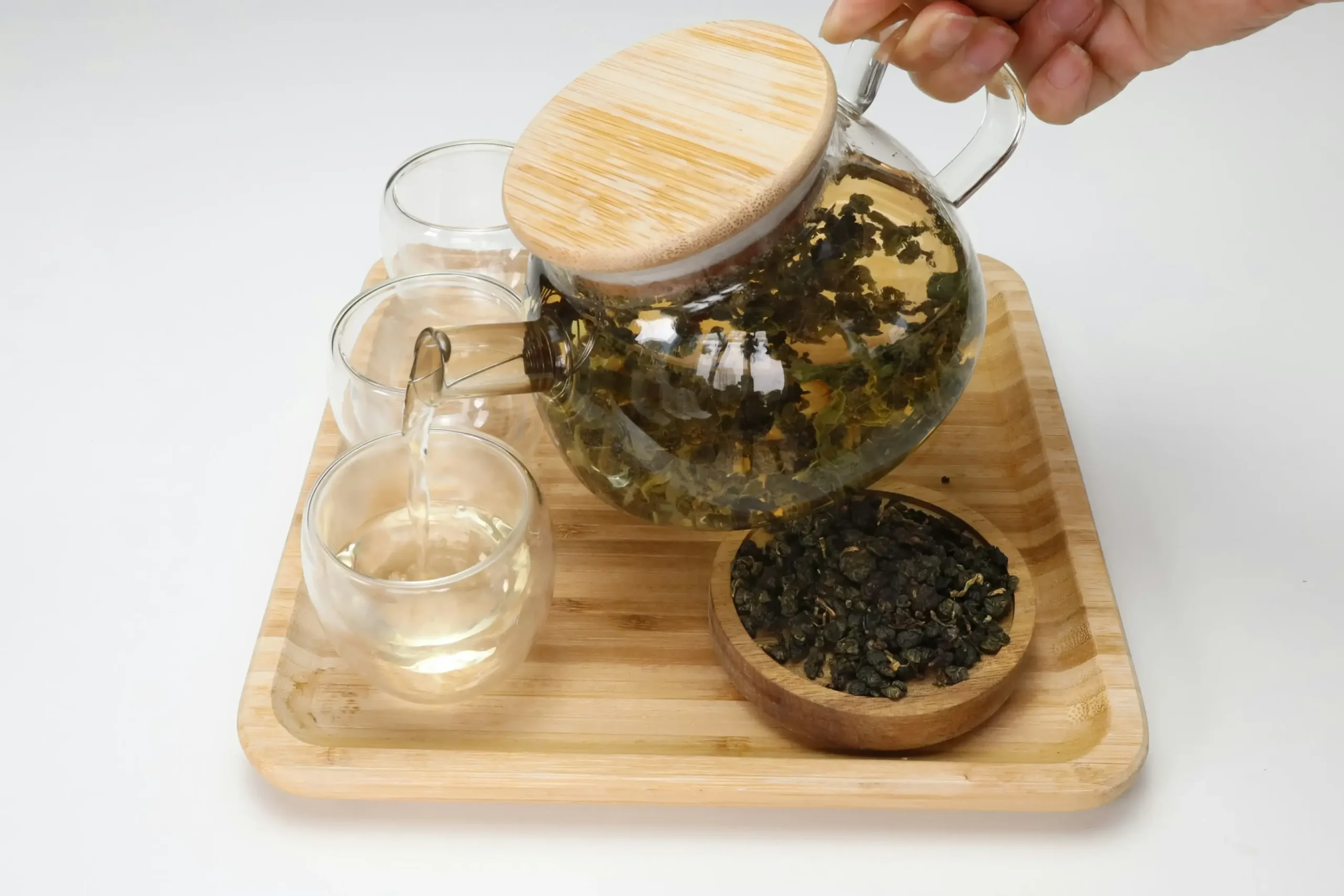
Oolong Tea
Few teas demonstrate the skill of tea makers as clearly as oolong tea.
Oolong leaves are lightly fermented, placing them between green tea and fully oxidised teas. This partial oxidation creates remarkable diversity in flavour.
Some oolongs are light and floral. Others are darker and roasted.
Notable examples include:
- Da Hong Pao, also known as Big Red Robe, a famous roasted tea
- Fujian oolong tea grown in the Wuyi Mountains
- Taiwanese oolong teas known for creamy and floral aromas
When brewed, oolong leaves slowly unfurl in the teapot. Many oolong teas are enjoyed through multiple infusions, revealing layers of flavour over time.
Red Tea: Known Globally as Black Tea
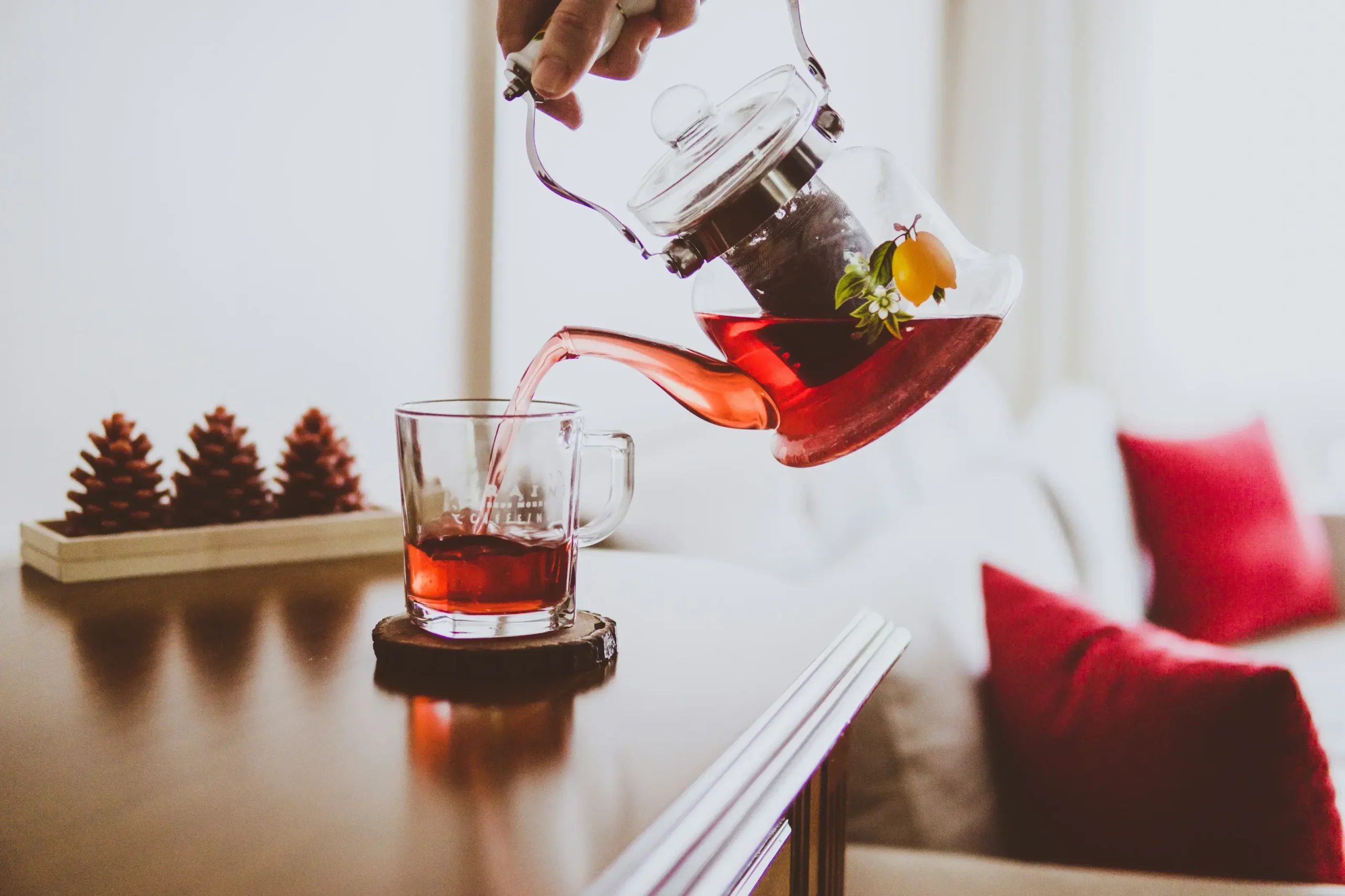
Red Tea
In Chinese classification, red tea refers to what the Western world calls black tea.
The name comes from the warm reddish colour that appears in the cup. During the production process, the leaves are fully oxidised, which creates deeper flavours and darker tones.
Examples of Chinese red tea include:
- Lapsang Souchong, known for its smoky aroma
- Keemun, a tea prized for its smooth character
Red tea often produces a rich, slightly sweet flavour that pairs well with food or morning drinking.
Yellow Tea: Rare and Carefully Crafted
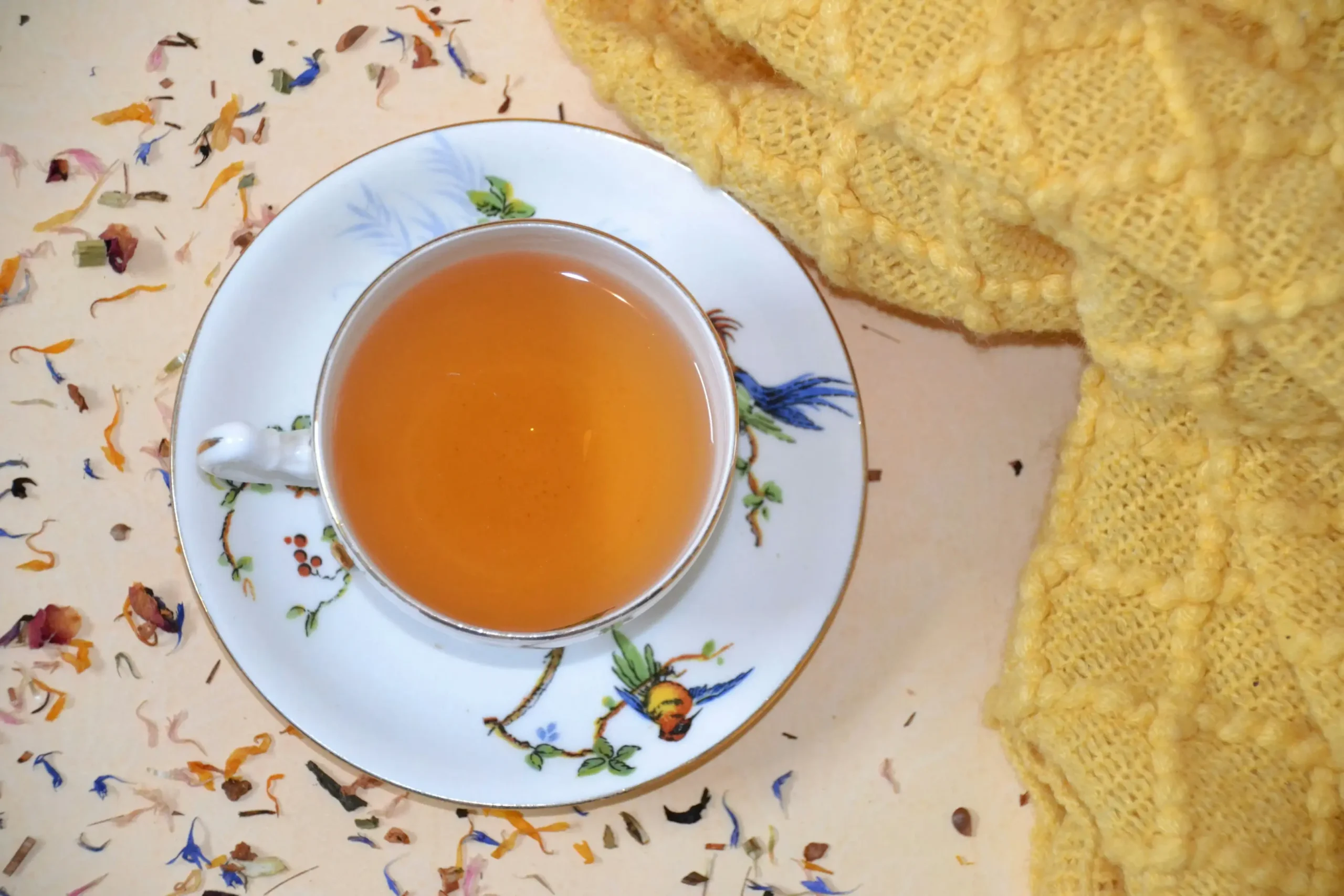
Yellow Tea
Among the six types of Chinese tea, yellow tea is one of the rarest.
Its production involves an additional stage known as sealed yellowing. After heating, the leaves are gently wrapped, allowing them to mellow before drying.
This process softens the grassy character often found in green tea and creates a smoother taste.
Yellow tea is less common outside China, but it remains an important part of traditional tea craftsmanship.
Dark Tea and the World of Pu’er
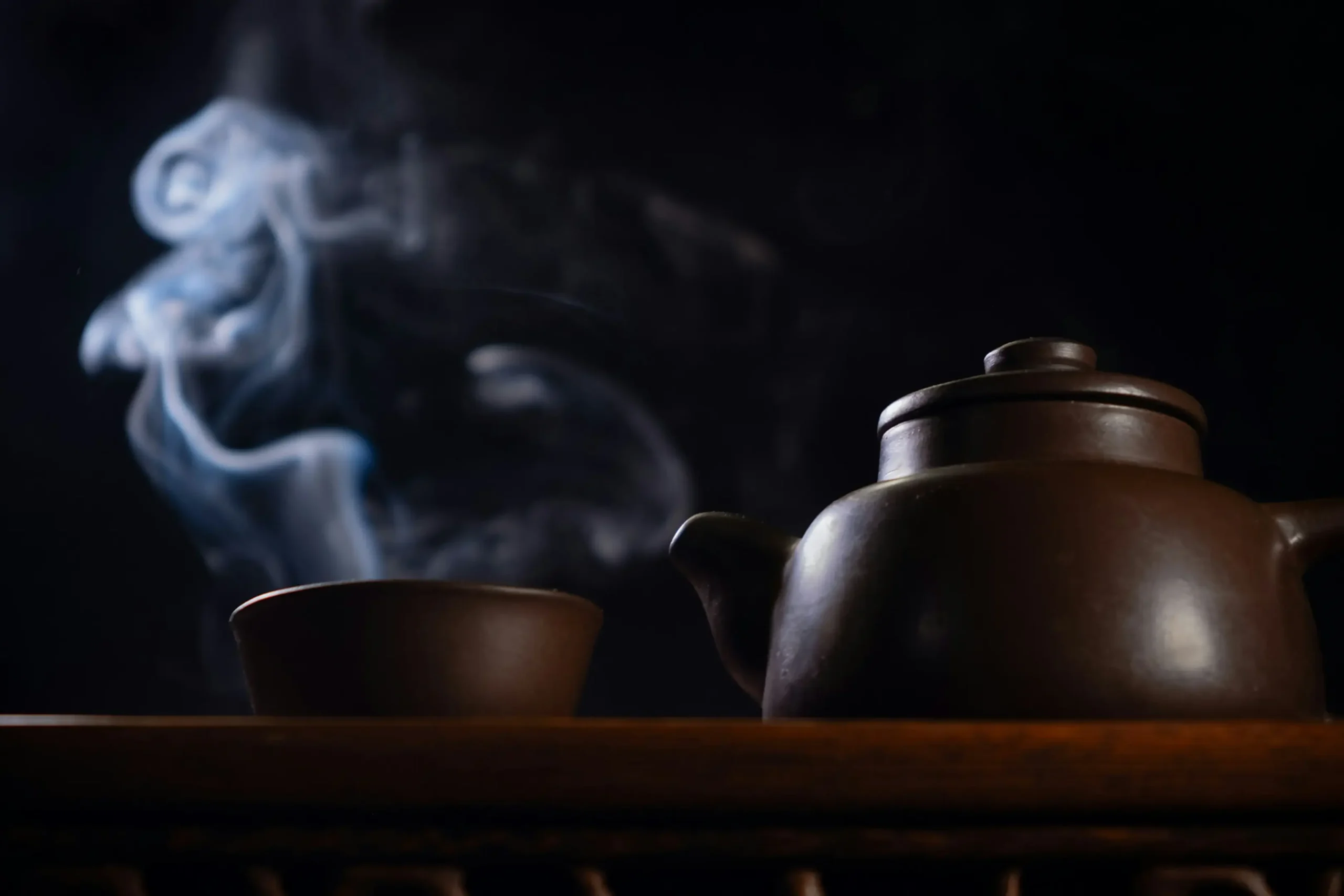
Dark Tea
The final category in the six types of Chinese tea is dark tea.
Unlike other teas, dark tea undergoes microbial fermentation after processing. This makes it a post fermented tea.
The most famous example is Pu’er tea, produced mainly in Yunnan Province. Many pu’er teas come from ancient tea trees growing in regions such as Yiwu Mountain.
Key characteristics of dark tea include:
- Colour: deep reddish to dark brown
- Flavour: earthy, smooth, and aged
- Production: microbial fermentation and aging
Pu’er tea is often pressed into cakes and aged over time. With proper storage, the flavour becomes deeper and more complex.
Chinese Tea Culture and Tea Appreciation
Understanding the types of Chinese tea also means appreciating the cultural traditions surrounding tea.
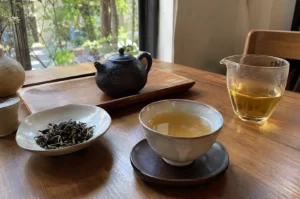
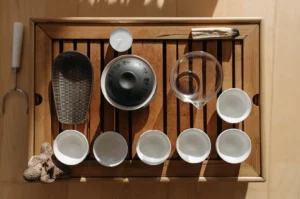
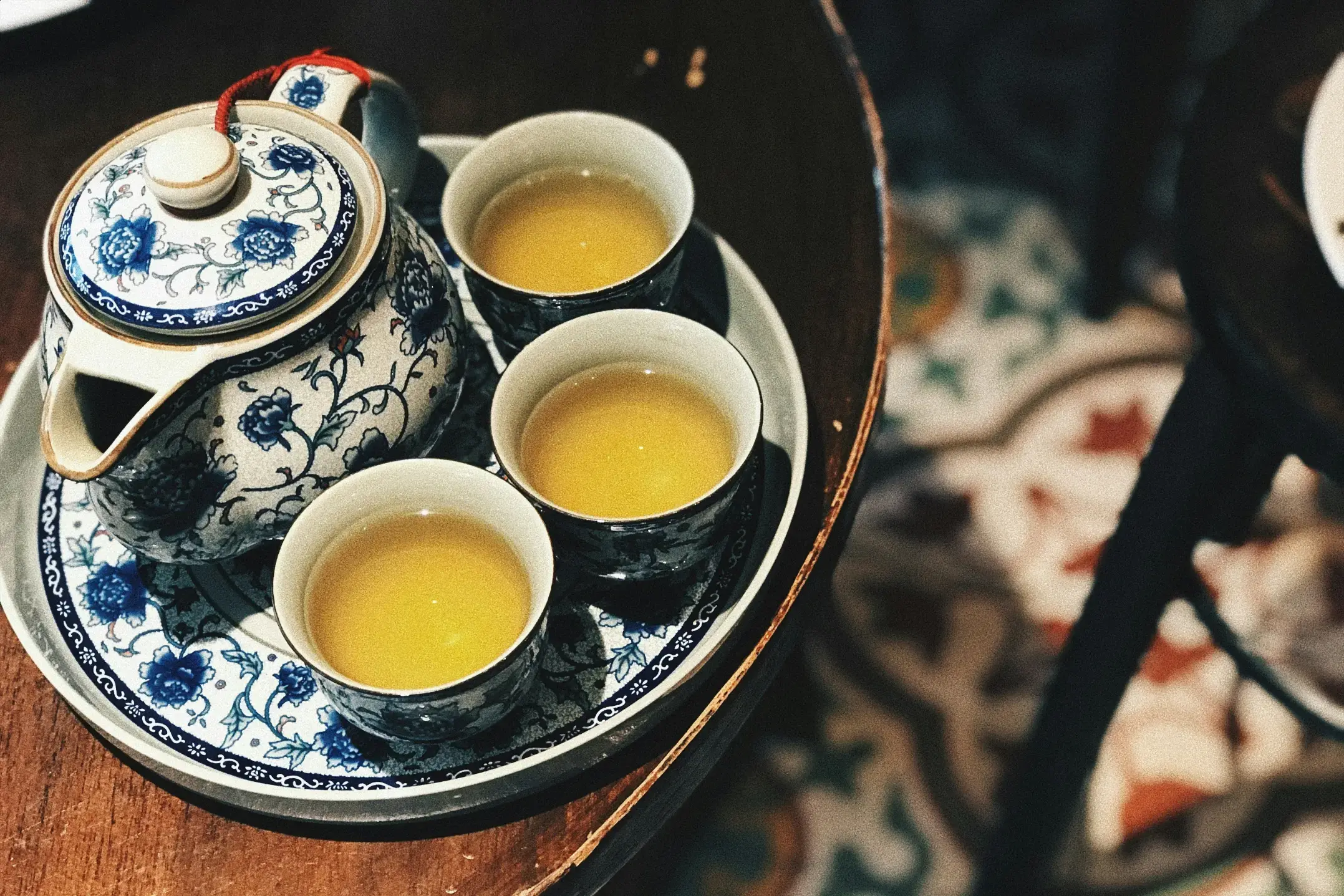
In many tea houses across China, tea is served slowly and thoughtfully. Visitors sit around wooden tables while tea is brewed in clay teapots and poured into small cups.
Places such as Yixing Xuan Teahouse demonstrate this quiet ritual of tea appreciation.
Tea drinking here is not rushed. Each infusion allows the drinker to notice subtle changes in aroma, colour, and taste.
This approach reflects a broader idea in Chinese tea culture. Tea is not simply consumed. It is experienced.
The Journey From Tea Trees to the Cup
Every cup of Chinese tea begins in the fields where tea trees grow.
Farmers harvest young leaves from the tea bush, often during early spring. From there, the production process transforms the leaf through heating, rolling, oxidation, or fermentation.
The result is a wide world of flavours that emerge from the same plant.
From the freshness of green tea to the deep earthiness of pu’er, the six types of Chinese tea reveal the remarkable diversity that can emerge from a single leaf.
For tea lovers, learning about these tea types adds depth to every cup. It turns an everyday drink into a quiet journey through tradition, craft, and the landscapes where tea first took root.

“Rare” Tea Is Often Manufactured Scarcity: Here’s How to Tell
There is a word in tea that carries unusual power. Rare. It immediately creates curiosity. A rare harvest. A rare batch. A rare tree. A tea that may never return. The suggestion is simple: if something is difficult to obtain, it must be more valuable. Sometimes, this is true. Some teas are genuinely limited because…
-
LiHO Tea Singapore: A Greeting You Can Drink
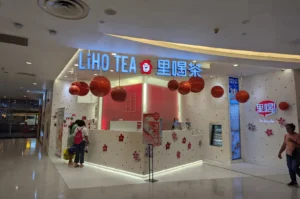
Some words carry a whole childhood inside them. Li ho. I heard it at kopitiam tables, across corridors, from uncles who never waited for a real answer. It meant “how are you,” but it also meant I see you. So when I saw that name on a tea shop sign, somewhere in the middle of…

The Myth of “Perfect” Tea: What I Stopped Chasing
For a long time, I thought I was looking for the perfect tea. I imagined there would be a moment when I found the one. The tea that made every other tea feel unnecessary. The tea I would recommend to everyone. The tea that would finally make me understand what true appreciation was supposed to…
-
Teh O: Understanding the Tea Order Behind the Name
There is a stall near where I grew up that has changed hands twice, but the tea has stayed the same. I still remember the first time I ordered teh o on my own, sometime in my early teens, mumbling the words at the counter and half-expecting to get them wrong. The uncle didn’t blink….
-
Stop Buying Tea for the Aesthetic: How Packaging Hijacks Taste
There is something fascinating about the way we buy tea today. Before we taste the leaves, we have already formed an opinion. The box is elegant. The label is beautifully designed. The colours suggest calm, luxury, or tradition. The story feels carefully written. And before the first sip, we have already decided that the tea…
-
A Tea Table in the Clouds: The Westin Singapore High Tea Review
It was one of those afternoons when the city felt too loud and too fast, and I wanted to sit somewhere quiet without really explaining why. So I went up. All the way up, to Level 32 of The Westin Singapore, where the Lobby Lounge sits above the noise like it knows something the rest…
-
“Caffeine-Free Tea” Confuses Everyone—Let’s Fix the Language
I have noticed that tea conversations can become surprisingly confusing. Not because tea itself is complicated, but because we sometimes use the same words to mean completely different things. One phrase that always catches my attention is “caffeine-free tea.” It sounds simple enough. A tea without caffeine. But is that really what we mean? Because…
-
The Pull, Pour, and Ritual Behind Singapore’s Favourite Milk Tea: Teh Tarik
It starts with a sound. A long ribbon of tea, arcing from one metal mug held high to another held low. The stream catches the light. Then the froth rises, pale and soft, and the whole thing gets poured back and lifted again. Nobody at the stall looks up. This happens a hundred times a…
-
Stop Chasing Tasting Notes: Tea Isn’t Wine and That’s a Relief
I have a small confession to make. Sometimes I have absolutely no idea what I am supposed to be tasting. A tea description might promise orchid, honey, toasted nuts, stone fruit, and something wonderfully mysterious called a “long mineral finish.” I take a sip. I taste tea. And then I start wondering if everyone else…
-
Chinese Tea Sets: Beautiful on the Table, But How Do They Brew?
There is a small arrangement on the table this evening, and I have not touched it yet. A pale bowl with a lid resting slightly askew. A round pitcher beside it, waiting to be filled. Cups no larger than a thumb and two fingers, lined up like a quiet sentence. The surfaces catch the last…