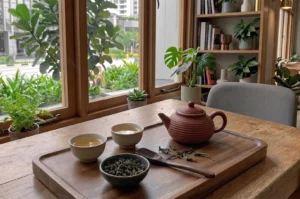
One of the things I love most about Singapore is that we never really chose between kopi and tea.
We kept both.
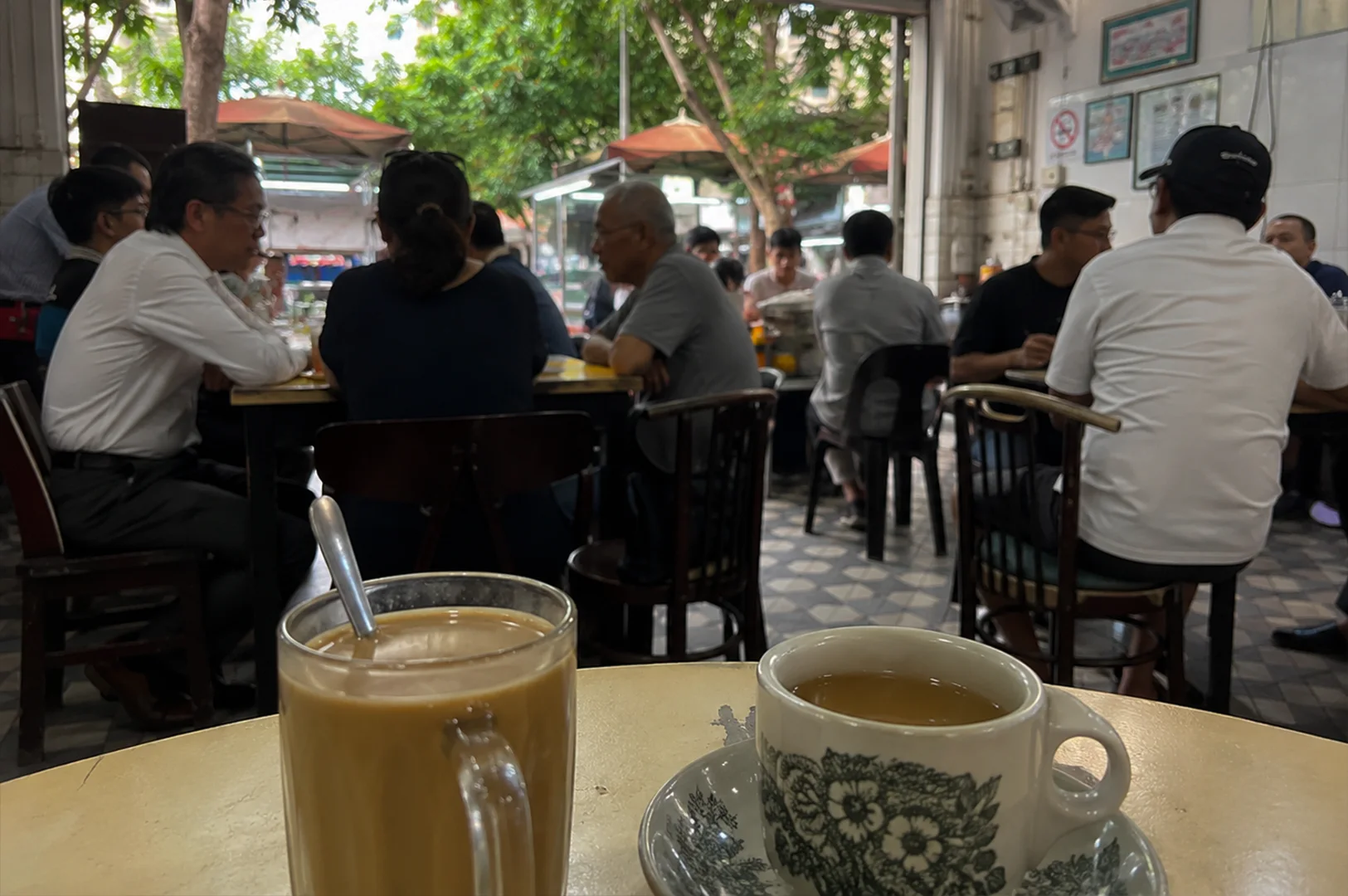
Walk into almost any hawker centre or coffee shop and you'll see it immediately. One person orders kopi-o. Another asks for teh-c. Someone else is drinking Chinese tea from a flask they brought from home, echoing how tea is increasingly shaping Singapore’s café culture in its own right, as Tea Manor explores.
The table somehow makes room for all of it.
For years, I assumed kopi and tea belonged to different worlds. Kopi felt practical and energetic. Tea felt slower and more reflective. One was associated with morning routines and busy coffee shops. The other seemed tied to tea houses, family gatherings, and quiet afternoons.
The older I get, the less convinced I am that the distinction is so clear.
Both drinks are deeply woven into everyday life here.
Kopi tells a story about adaptation. Coffee arrived from elsewhere, but Singapore made it its own. The roasting methods, the preparation style, even the language surrounding kopi feel uniquely local. Our friends at SG Street Eats Blog recently explored how coffee culture in Singapore stretches from traditional hawker stalls to modern specialty cafés, highlighting just how diverse the local coffee scene has become.
Tea tells a different story. It connects Singapore to centuries of Chinese, Indian, Malay, and international traditions. Every community seems to have found its own way of welcoming tea into daily life.
And yet they often exist side by side.
I find that fascinating.
Many countries have strong coffee cultures. Many have strong tea cultures. Singapore somehow embraces both without asking people to choose a side.
Perhaps that reflects something larger about the country itself.
Singapore has always been a place where traditions overlap rather than replace one another. Different influences sit next to each other, sometimes blending together and sometimes remaining distinct.
Kopi and tea do the same.
A person can start the day with kopi and end it with tea without feeling contradictory. One drink does not cancel out the other.
Both belong.
Maybe that is why debates about which is better have never interested me very much.
The more interesting question is why Singapore continues making space for both.
In a world that increasingly asks people to pick a side, there is something refreshing about a culture that simply says yes to another cup.
Whether it happens to be kopi or tea.
— Maria Tan
On tea, culture, and everyday rituals.

The Problem With “Single-Origin” Tea Obsession
There was a time when knowing where a tea came from was enough. Now, it sometimes feels as though we need to know everything. The mountain. The village. The garden. The harvest date. The particular plot where the leaves were grown. Single-origin tea has become a mark of quality in modern tea culture. The idea…
-
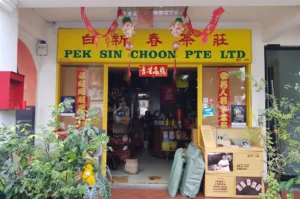
Where Singapore’s Tea Traditions Still Steep: Pek Sin Choon
The first thing I noticed was the smell. Not perfume, not incense. Something warmer and older than both. Roasted tea leaves, drifting out onto Mosque Street before I even reached the door. It’s the kind of smell that makes you slow your steps without knowing why. Pek Sin Choon has been on this corner of…
-
Not All Comfort Is Sweet: The Bitterness I Now Appreciate
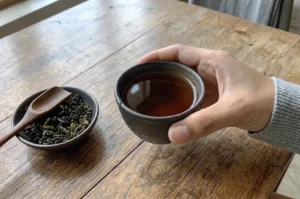
I used to think comfort was supposed to be easy. A familiar drink. A familiar taste. Something that immediately made me feel better. For a long time, I gravitated towards teas that were gentle. Soft flavours. Natural sweetness. Anything that felt welcoming from the first sip. Then I started appreciating bitter teas. Not because I…
-
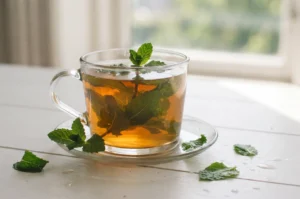
Understanding the Herb Behind the Refreshing Cup: Peppermint Tea
There is a moment, just after the hot water meets the fresh peppermint leaves, when the whole room seems to change. A sharp, green coolness lifts from the cup and settles somewhere behind your eyes. Drinking peppermint tea does this quietly, without fuss. It asks for nothing and offers a great deal. Most of us…
-
Why Most People Hate Oolong: Overcomplicated Advice Ruined It
I have always found it interesting that oolong tea is one of the most misunderstood teas. People often describe it as complicated. Too many varieties. Too many brewing methods. Too many rules. The leaves should be prepared this way. The water should be at this temperature. The teapot should be a certain material. The first…
-
Kempinski Singapore High Tea Review: When Afternoon Tea Feels Like an Occasion
The rain had come and gone by the time I arrived, leaving the street outside slick and quiet. I stepped in without knowing quite what I wanted from the afternoon. Only that I wanted it to be slow. The Lobby Lounge at The Capitol Kempinski Hotel Singapore does not rush you. It waits. And there…
-
Scent, Memory, and a Kettle: How Tea Anchors My Days
There are certain smells that bring us somewhere else before we even realise it. The scent of rain on warm pavement. A familiar perfume. The food someone used to make when we were younger. For me, tea belongs in that category. Sometimes, before I even take a sip, the aroma is enough to bring back…
-
The Chinese Yixing Teapot: More Than a Teapot, a Living Tea Tradition
The first time I held a Chinese Yixing teapot, I wasn’t ready for how warm it would feel. Small, reddish-brown, sitting in my palm like a river stone that had been kept somewhere warm. I’d just rinsed it with hot water, the way you’re supposed to before the first brew, and the clay drank up…
-
Your “Tea Sommelier” Might Be Selling You a Vibe, Not a Better Cup
There is a particular moment that has become increasingly familiar in modern tea culture. A tea is presented. Before the first sip, we are introduced to its story. The region. The altitude. The history. The carefully chosen words that describe its character. Perhaps there are notes of wildflowers, distant forests, roasted grains, or forgotten memories….
-
Does Tea Contain Caffeine? Understanding What’s Really in Your Tea
There’s a quiet moment many of us know well. The kettle clicks off. Steam curls up. You wrap your hands around a warm cup and feel your shoulders drop, just a little. Tea has always carried this sense of calm, of slowing down. So it can feel almost contradictory to ask: does tea contain caffeine?…