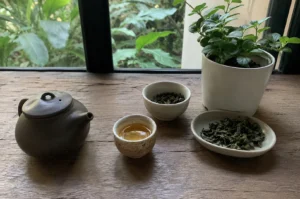
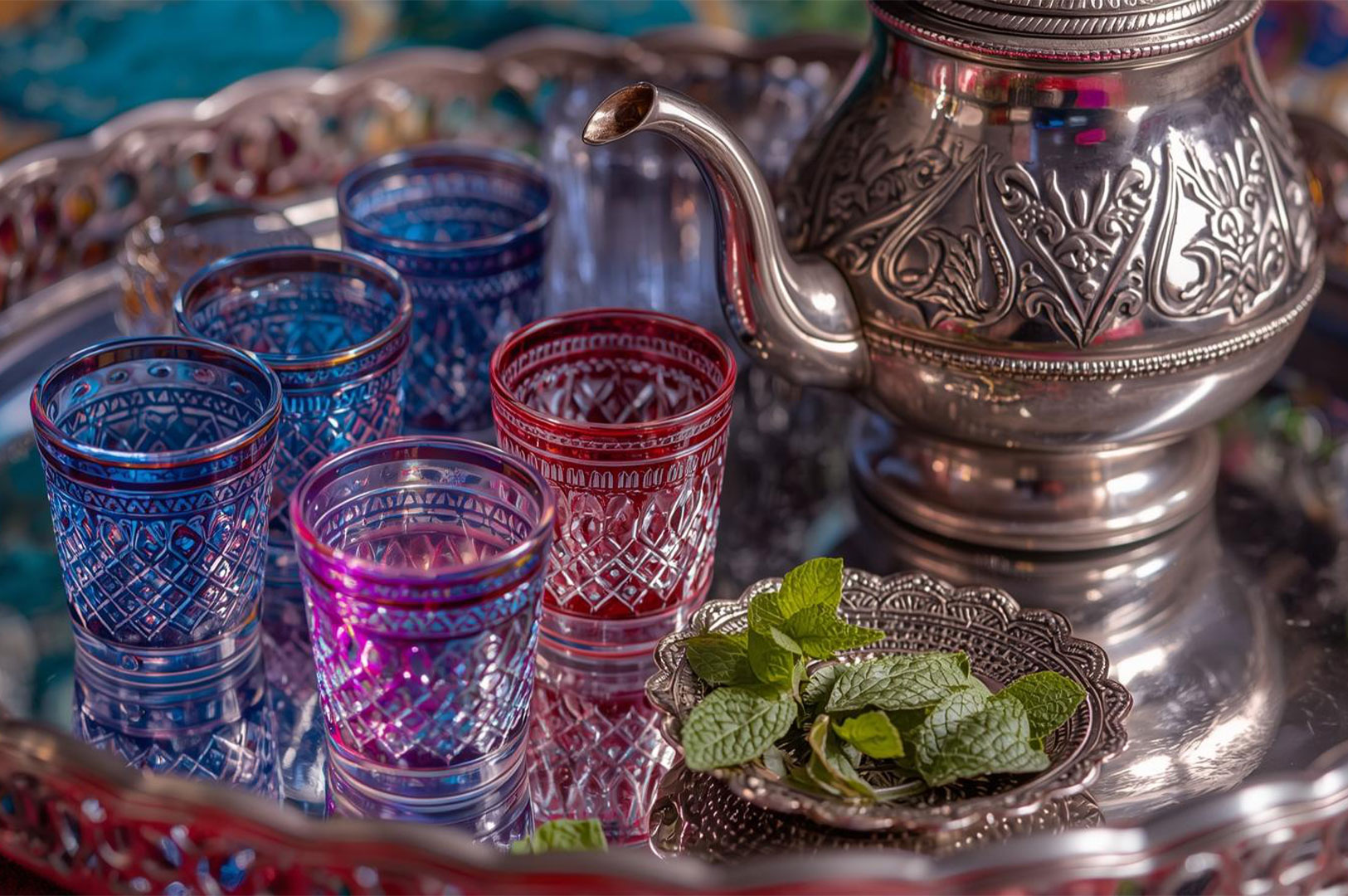
Imagine this: you’re seated on low cushions in a Marrakech riad, surrounded by patterned tiles and the scent of spices wafting through the air. Your host approaches with a polished silver teapot, or berrad, holding it high above a small glass. A thin stream of steaming green tea flows gracefully, landing perfectly in an ornate teacup. As it hits, a foamy layer blooms on top—a froth as beautiful as it is symbolic. The traditional way to serve Moroccan mint tea involves pouring from a height, creating this signature foam and adding a ceremonial touch to the experience.
This is the essence of the Moroccan tea service. Known for its elegance and savoir faire, this tea ceremony is more than the act of pouring a beverage. It’s a performance of hospitality, tradition, and artistry. The moroccan mint tea—sometimes called “Berber whiskey”—is not merely delicious; it is a symbol of friendship and generosity, a warm invitation into Moroccan culture. Alongside mint tea, a variety of drinks such as spiced coffee are often served, highlighting the diversity of beverages enjoyed at Moroccan tea gatherings. Take time to savor each sip to fully appreciate the aroma, flavor, and cultural significance of the tea.
A Tradition Steeped in History: From Green Tea to Moroccan Mint Tea
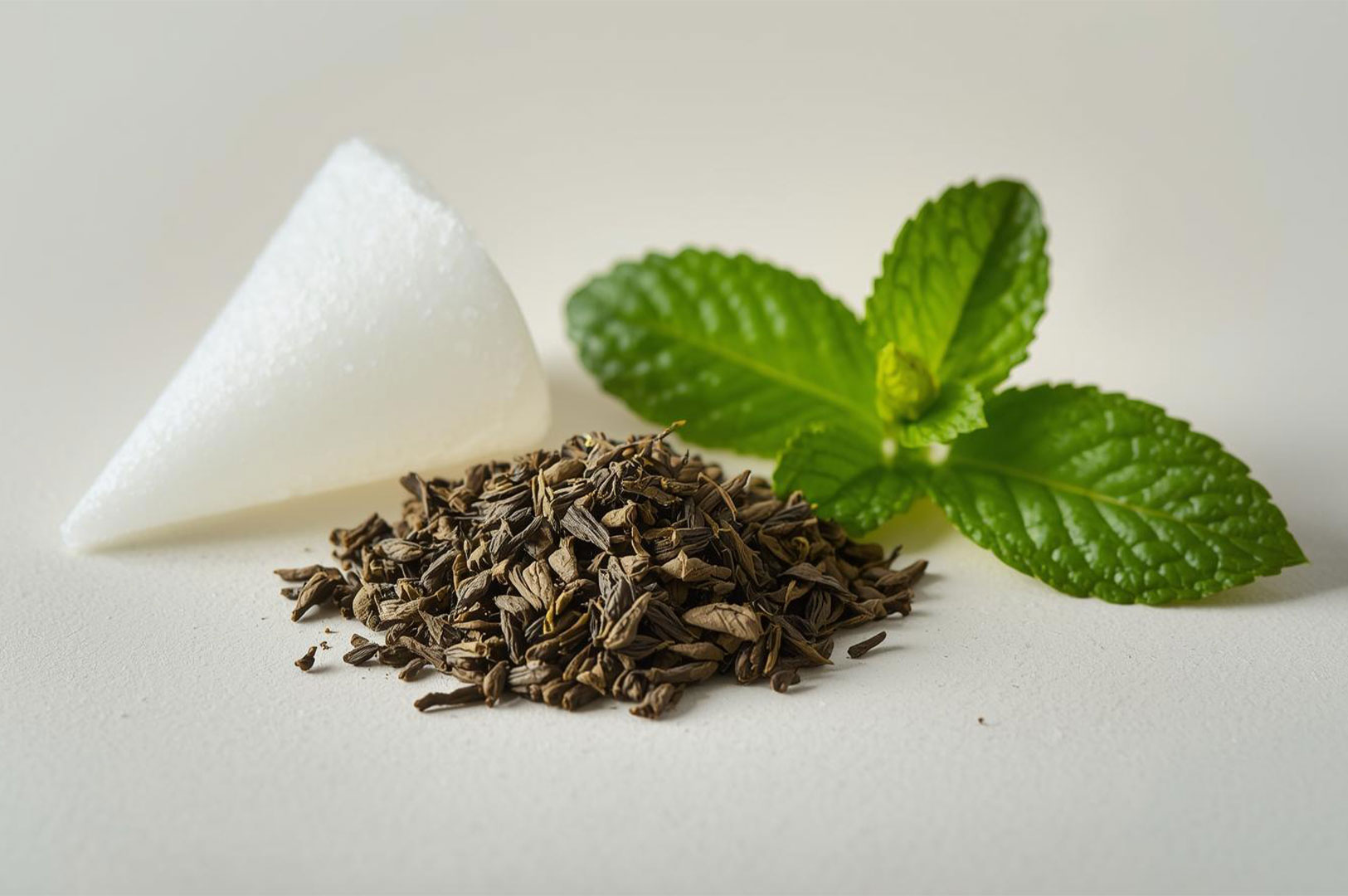
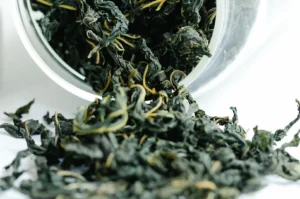
Tea was first introduced to Morocco in the 18th century by British merchants bringing loose leaf teas from China. Over time, Moroccans adopted gunpowder green tea, blending it with fresh mint leaves (na’na) and sugar to create a drink that would come to define the country’s style of tea making.
(For more on China’s historical green teas, see Tea Manor’s “The Dragon Well Legacy: Exploring China’s Legendary Longjing Tea”, which traces how teas like Longjing influenced global green tea culture.)
The process became deeply embedded in Moroccan life and food culture. Moroccan mint tea is often flavored with herbs, orange blossom, or aromatic spices, enhancing its sensory appeal and making each cup uniquely inviting. Among Berber communities in North Africa, serving tea to guests became a way to express warmth and welcome. To offer a cup of mint tea was to extend friendship, to turn a brief encounter into shared sips and conversation.
Over time, the ritualized tea ceremony became a centerpiece of Moroccan hospitality, blending a process similar to the Japanese tea ceremony with local character and rustic simplicity.
The Tea Ceremony: Preparing Authentic Moroccan Mint Tea
The Three Pours: A Journey of Life and Flavor

The Moroccan tea ceremony traditionally includes three rounds of pouring, each with symbolic meaning captured in the proverb:
“The first glass is as bitter as life. The second is as strong as love. The third is as gentle as death.”
During the ceremony, the tea is drunk slowly and with mindfulness, following proper etiquette to honor the tradition and savor each pour.
The First Glass: Bitter as Life
Brewed with intensity, the first pour carries the sharp, earthy notes of green tea, symbolizing the challenges one faces in life.
The Second Glass: Strong as Love
As boiling water is added and the tea leaves mellow, this cup turns sweet and balanced—representing the warmth of love and friendship shared among guests.
The Third Glass: Gentle as Death
The final pour is lighter, with a softened flavor, offering a serene conclusion. Each glass invites a few sips of reflection, just as the Japanese thin tea (usucha) softens the formal tone of a tea ceremony into something intimate and personal.
Participating in all three pours means embracing the full arc of Moroccan tradition, from bitterness to sweetness to peace.
Hospitality and Tradition: The Heart of Moroccan Tea
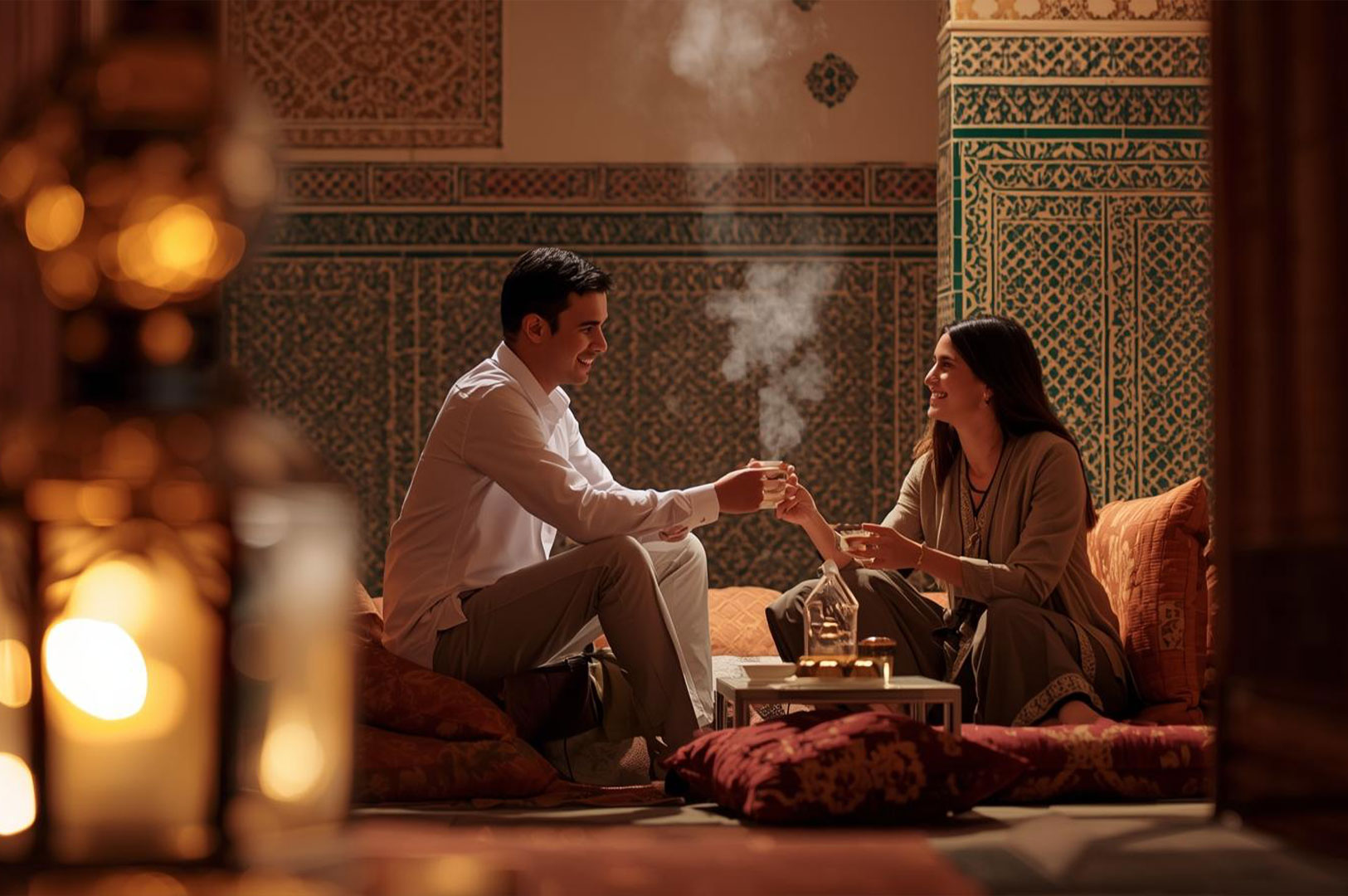
In Morocco, tea is more than a drink—it is a gesture of hospitality that transcends occasion, time, or place. Whether visiting a merchant’s store in Fez or entering a family room in Essaouira, a tray of tea will almost always appear before any food, coffee, or conversation.
Refusing tea is rarely done—it’s akin to declining friendship. The act of preparing, pouring, and sharing mint tea is one of the most important ceremonies in Moroccan life, just as the Japanese have formal tea ceremonies involving thin tea and thick tea (koicha). Both cultures express respect, mindfulness, and artistry through the ritual. While most tea ceremonies around the world are traditional, full-length events with multiple courses and specific rituals, the Moroccan tea ceremony stands out for its unique approach, focusing on hospitality and the communal enjoyment of mint tea.
The Moroccan host, through careful handling of the teapot, glasses, and tea tray, demonstrates the grace and patience of a true tea master—even without the whisk, scoop, or bowl found in Japan.
Comparison with Other Ceremonies: Moroccan Tea in a Global Context
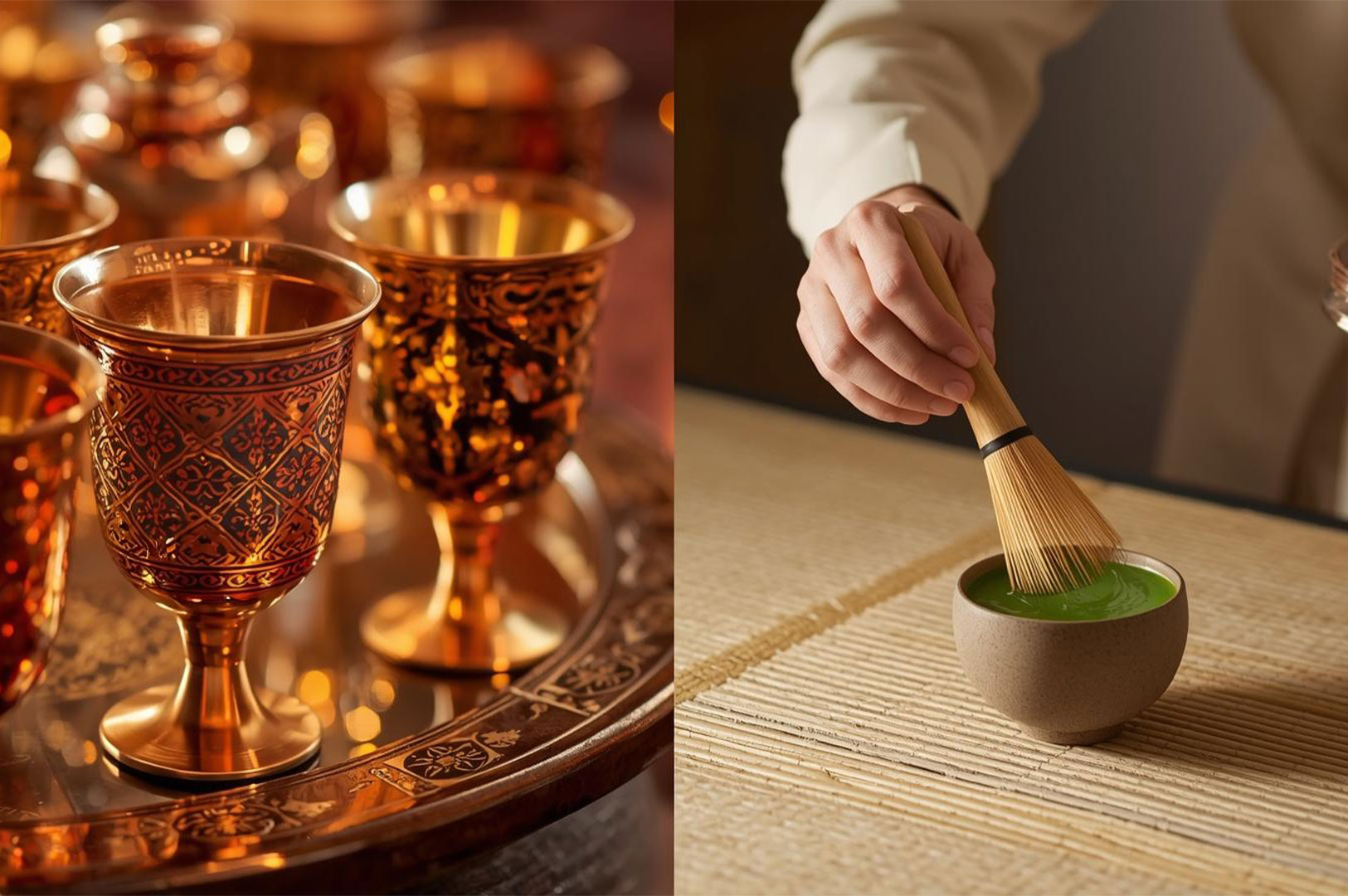
Across the world, tea ceremonies are a window into the soul of a culture, each with its own rituals, flavors, and sense of hospitality. Moroccan mint tea, with its vibrant blend of green tea, fresh mint leaves, and sugar, stands apart as a symbol of North African warmth and generosity. Yet, when placed alongside other renowned tea ceremonies—such as the Japanese tea ceremony—its unique character shines even brighter.
In Morocco, the art of tea making is rooted in tradition but thrives on social connection. The ceremony centers around the teapot, tea tray, and ornate glasses, with the tea master skillfully blending loose leaf teas, boiling water, and generous handfuls of mint. The result is a sweet, aromatic mint tea, served in small glasses and always accompanied by a spirit of welcome. The process is lively and communal, inviting guests to share in a few sips, laughter, and conversation.
Contrast this with the Japanese tea ceremony, where rustic simplicity and mindful precision reign. Here, the tea master prepares matcha—a powdered green tea—using specialized tea utensils like the tea scoop and tea whisk. The ceremony unfolds on a tatami floor, with each movement carefully choreographed, from scooping the tea leaves to whisking the hot water in a tea bowl. The Japanese formal tea ceremony is a meditative experience, emphasizing harmony, respect, and the beauty of imperfection.
While both traditions celebrate the act of serving tea, their approaches differ. Moroccan mint tea is all about bold flavors, sweet notes, and the joy of gathering, with the tea master pouring from a height to create a signature froth. The Japanese ceremony, on the other hand, is defined by its quiet elegance, the subtle taste of thin tea or thick tea, and the use of traditional tea equipment.
Modern Adaptations: Evolving the Moroccan Tea Service
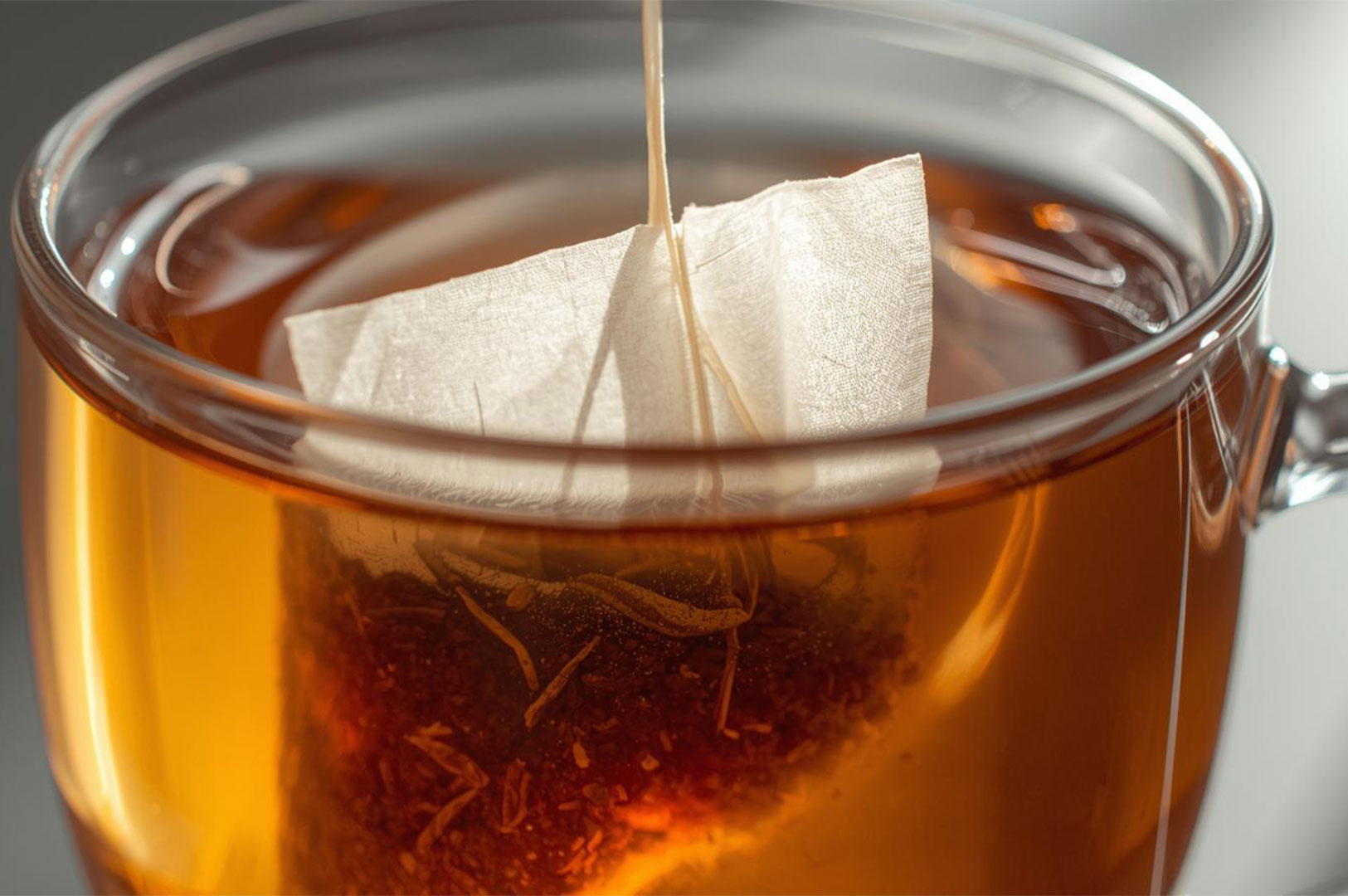
While deeply traditional, the moroccan tea service has adapted to the modern world. In chic cafes across Casablanca and Marrakech, mint tea is sometimes prepared quickly with teabags, or sugar served separately. For modern tea drinkers, using a tea bag offers added convenience and speed. Still, for any important occasion—a wedding, a guest’s arrival, or a family meal—the formal tea ceremony remains unchanged.
Regional styles also bring unique nuances:
- In North Africa’s Sahara region, tea is brewed stronger and served in tiny cups, sometimes through a three-pot process similar to tasting thin tea and thick tea in a Japanese tea ceremony.
- In Tangier, orange blossom water and flowers are often added for a fragrant twist.
- In Fez, hosts may pour tea at elaborate angles to showcase their skill—a nod to Morocco’s blend of artistry and savoir faire.
(For comparison, Tea Manor’s “Ceylon High Grown Tea” explores how terroir and preparation techniques shape regional flavor and ceremony elsewhere in the world.)
Experience Moroccan Tea: A World of Flavor and Connection
To experience moroccan mint tea is to experience Morocco itself—a country where hospitality is expressed through every pour, every cup, and every smile. It teaches the value of slowing down, of savoring a few sips with intention.
In Moroccan tea culture, it is common for pastries or sweets to be served and eaten before drinking tea, enhancing the overall tea experience and echoing similar traditions found in Japanese tea ceremonies.
Whether you visit a tea house in Marrakesh, prepare a pot at home, or explore related topics like the Japanese tea ceremony, each ceremony reveals the same universal truth: tea is a bridge between people, cultures, and moments of shared peace.
So next time you lift your teapot, remember: in both Moroccan and Japanese traditions, the art lies not just in how tea is made, but in how it is shared.

The Tea That Keeps Me Coming Back
I have a tea I return to more than any other. It is not rare. It is not expensive. In fact, most people would probably pass it by without a second thought. And yet, somehow, it has become a quiet companion over the years. I first drank it on a rainy afternoon. I had been…
-
Tie Guan Yin: The Iron Goddess of Chinese Oolong Tea
Tie Guan Yin, also known as Iron Goddess or Iron Goddess Oolong, is a celebrated Chinese oolong tea originating from Anxi County in Fujian Province, China. This tea from Anxi Fujian holds a special place among other teas due to its unique aroma, flavour, and rich cultural story. It is made from the tea plant…
-
Why Tea Shops Might Be the Last Quiet Places We Have
There is a growing habit in Singapore that I find both comforting and slightly unsettling. People are working everywhere now. Cafés, co-working spaces, neighborhood bakeries, even small corner shops. A laptop seems to turn any table into an office. And in many ways, this flexibility is impressive. It reflects how life has adapted to work,…
-
Why Not Every Tea Deserves Your Attention
Tea culture encourages curiosity. There are endless varieties, origins, and rituals to explore. Some teas are rare, some are aged, some are celebrated in distant mountains. The temptation is to try them all, to chase novelty in the hope that every cup will surprise you. But not every tea deserves your attention. I have learned…
-
Sipping Serenity: Where to Enjoy Chamomile Tea Singapore in the City
Singapore moves quickly. The trains run on time, the workdays stretch long, and the humidity outside rarely lets anyone slow down by choice. Yet within this busy rhythm, a quiet counter-current persists. People look for small pockets of stillness, and increasingly, they find one in a warm cup of chamomile tea. There is something fitting…
-
Why Some Teas Taste Better When Shared
I’ve always found that tea, more than most drinks, seems to gain something when shared. A cup alone can be comforting, quiet, even meditative. But a cup shared with someone else, whether a friend, a family member, or a stranger in a small tea house, somehow becomes richer, fuller, more alive. It’s not just the…
-
The Timeless Charm of Tea Culture Through English Breakfast Singapore
There is a small ritual I return to on the warmest Singapore afternoons. The city outside shimmers with heat, the air conditioning hums softly, and I reach for a familiar tin of English Breakfast tea. The kettle clicks, steam rises, and within a minute or two the kitchen fills with a warm, malty aroma that…
-
The Tea That Reminds Me of Home
I still remember the first cup of tea I drank after returning from a long trip. It was nothing remarkable, a simple black tea brewed in my kitchen but it tasted different from any cup I had drunk abroad. It wasn’t the leaves themselves. It wasn’t the water or the pot. It was the familiarity…
-
A Tea Lover’s Honest Review of Gryphon Tea Company Singapore
There is a particular hush that settles over my kitchen on a weeknight, after the dishes are done and the day finally loosens its grip. That is when I open a new box of tea from Gryphon Tea Company Singapore. Last week, the box belonged to Gryphon Singapore, and the moment I lifted the lid,…
-
Why Tea Can Teach Us About Mindful Consumption
I’ve been thinking a lot about waste lately. Not just the kind we notice-the piles of packaging, leftover food, discarded cups-but the quiet, everyday kind: the tea leaves left unused, the leaves steeped once and thrown away, the water poured down because the cup is “not perfect.” Tea has a way of making you notice…