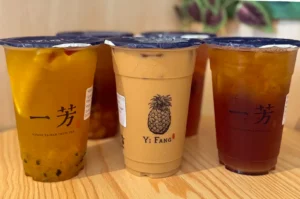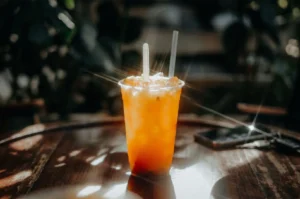
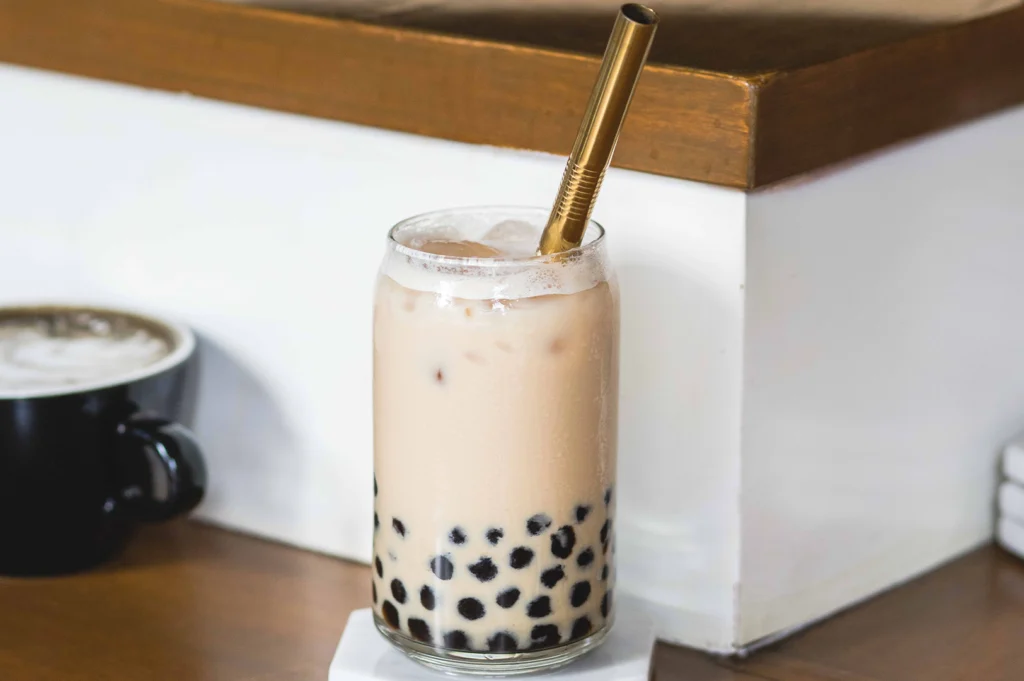
I have nothing against drinking dessert through a straw.
Actually, I think it’s one of the more enjoyable things about modern bubble tea culture.
Brown sugar pearls. Creamy toppings. Flavoured jellies. Drinks that look more like something you’d order after dinner than a traditional cup of tea.
They’re fun, and I understand the appeal.
But I’ve been wondering why we still insist on calling some of these creations tea when the tea itself has practically disappeared.
Because shouldn’t we be able to taste it?
I don’t expect every bubble tea to have the delicate character of a carefully brewed oolong. Milk, sugar, and toppings naturally change the experience, and that’s part of what makes these drinks popular.
But there’s a difference between complementing tea and completely covering it up.
A good jasmine milk tea should still have some of that lovely floral character. A roasted oolong milk tea can offer a gentle toasted depth beneath the creaminess. Even a strong Assam can hold its own against milk and sweetness.
Those flavours deserve a little space.
Instead, I sometimes feel we’re more interested in how many things we can add to a drink before it becomes something entirely different.
And maybe that’s okay.
What if we simply admitted that some bubble teas are desserts?
There’s no shame in enjoying something sweet. I don’t think every drink needs to justify itself through antioxidants, tradition, or the promise of being a healthier choice.
Sometimes you want tea.
Sometimes you want brown sugar pearls swimming in something creamy and delicious.
Both are perfectly reasonable.
What I’d love to see is more honesty in how bubble tea shops present their drinks. Celebrate the dessert-inspired creations, but give the actual tea blends some attention too.
Tell us what leaves you’re using. Let their flavours come through. Give customers a reason to notice the tea beyond the toppings.
Because I don’t think bubble tea needs to become more traditional to be taken seriously.
It just needs to be comfortable with what it is.
And if that happens to be dessert in a cup?
Honestly, I’d still order it.
I’d just appreciate knowing what I’m drinking.
— Maria Tan
On tea, culture, and everyday rituals.

A Taste of Taiwan in Every Pour: Yi Fang Taiwan Fruit Tea
There are drinks that catch your eye before you even take a sip. A tall cup, fruit pressed gently against the plastic, tea glowing amber underneath. Something about it feels right for a warm afternoon. Light. A little cheerful. Easy to carry. But if you slow down for a moment, some of those cups have…
-
Your Tea Isn’t Bitter—You’re Overbrewing It (And It’s Not Your Fault)
There is a particular disappointment that comes from making a cup of tea that tastes bitter. You choose the leaves carefully. You heat the water. You wait. Then the first sip arrives, and something feels wrong. For a long time, I assumed bitterness meant the tea itself was not very good. Perhaps the leaves were…
-
When Tea Meets Tropical: 5 Fruit Teas in Singapore to Try
There’s a specific kind of Singapore afternoon. The air feels thick, your shirt clings a little, and every mall entrance feels like a reward. On days like that, I don’t want anything heavy. I want something cold, bright, and full of fruit, but still recognizably tea. That’s where fruit teas come in. In Singapore, they’ve…
-
Temperature Rules Are Overblown: The Real Brewing Variable Nobody Mentions
I used to think making tea required a thermometer. Not literally, perhaps, but almost. Every tea seemed to have a number attached to it. Green tea at this temperature. Oolong at another. Black tea a little hotter. Too hot and you had apparently ruined everything. For a while, I took these rules quite seriously. Then…
-
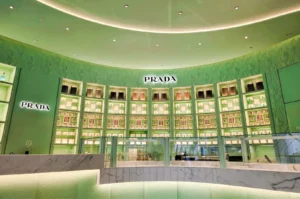
Afternoon Tea at Prada Caffè ION Orchard: A Green Room, a Pale-Blue Cup
Afternoon tea has always been about the pause for me. Not the tiers or the silverware. Just the moment when the cup is set down, the steam rises, and everything outside seems to slow a little. So I wondered what a pause would feel like inside a fashion house. One floor above Orchard Road, past…
-
A Love Letter to Oolong: The In-Between That Changed My Mind
I did not understand oolong when I first encountered it. It seemed unnecessarily complicated. Green tea was green tea. Black tea was black tea. I understood where they stood. Oolong seemed determined to remain somewhere in between. Perhaps that was what initially kept me from appreciating it. Over time, however, I began to realise that…
-
Tea from Assam: The Geography, Craft, and Character Behind the Brew
The colour arrives first. A deep amber that darkens towards red as the tea leaves give up their strength. Then comes the aroma. It is warm and rounded, often compared to malt or the crust of fresh bread. The first sip has weight. It fills the mouth with a rich body and leaves a slight,…
-
Why “No Bitterness” Is a Terrible Goal (And Makes Tea Boring)
I used to think a good tea was supposed to be smooth. No bitterness. No sharp edges. Nothing that made me pause and wonder whether I was doing something wrong. It seemed logical. We naturally gravitate toward things that are easy to enjoy. A tea that is sweet, gentle, and immediately comforting feels like a…
-
Best Tea Brands Singapore: 10 Names Worth Knowing
There’s a small sound I’ve always liked. It’s the soft knock of a teapot lid settling back into place, just before the first pour. It happens at home. It happens in old shophouses and in bright mall boutiques like those in Suntec City. The setting changes, but the pause stays the same. This list is…
-
“Rare” Tea Is Often Manufactured Scarcity: Here’s How to Tell
There is a word in tea that carries unusual power. Rare. It immediately creates curiosity. A rare harvest. A rare batch. A rare tree. A tea that may never return. The suggestion is simple: if something is difficult to obtain, it must be more valuable. Sometimes, this is true. Some teas are genuinely limited because…