I have noticed that tea conversations can become surprisingly confusing.
Not because tea itself is complicated, but because we sometimes use the same words to mean completely different things.
One phrase that always catches my attention is “caffeine-free tea.”
It sounds simple enough.
But is that really what we mean?
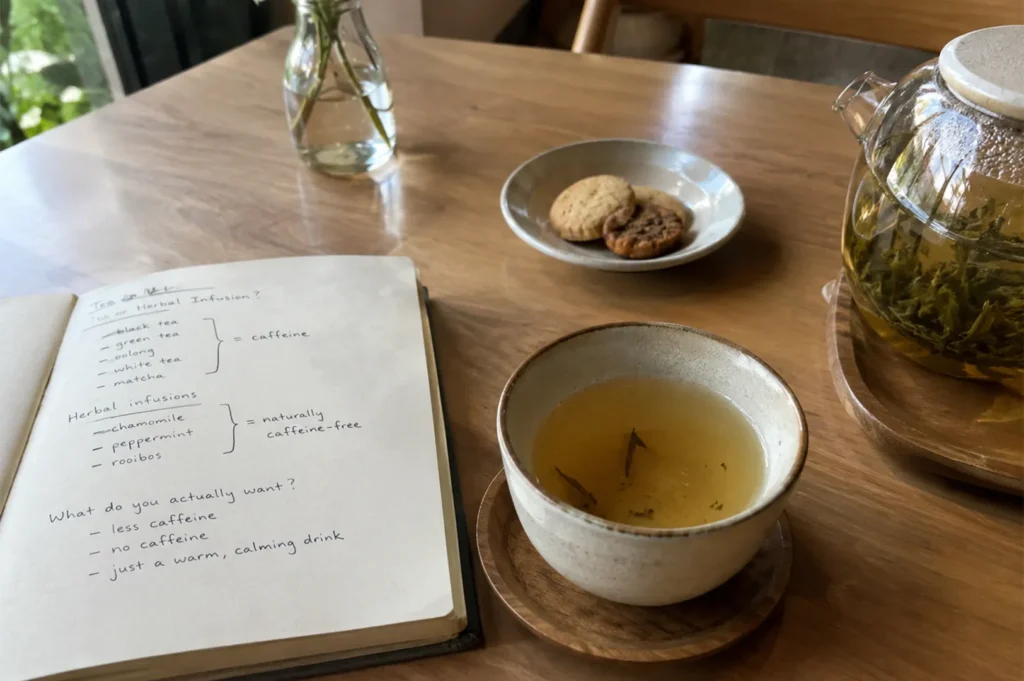
Because technically, many traditional teas are not completely caffeine-free. Black tea, green tea, oolong, white tea, and matcha all naturally contain caffeine because they come from the Camellia sinensis plant.
What many people are actually looking for is something slightly different.
A tea with little or no caffeine.
Or perhaps a naturally caffeine-free herbal infusion.
The distinction seems small, but it matters.
I think part of the confusion comes from how we casually use the word “tea” for almost everything we steep in hot water. A cup of chamomile, peppermint, or rooibos is often called tea, even though they are technically herbal infusions rather than traditional tea.
And honestly, I understand why.
Language follows everyday life. Most people are not thinking about botanical categories when they are choosing a comforting drink before bed.
They simply want something warm.
Something calming.
Something that will not keep them awake.
But perhaps understanding the difference can make our choices easier.
A person looking for a naturally caffeine-free option might enjoy herbal infusions. Someone who wants the flavour and tradition of tea but less caffeine might explore lighter teas or adjust how they brew them.
Neither choice is more correct.
This is what I find interesting about tea. The more we learn about it, the more we realise how many assumptions we carry.
We think we know what tea means.
Then we discover there is another layer.
But I also think we should be careful not to make tea feel like a vocabulary lesson. At the end of the day, people are not searching for the perfect term. They are searching for a drink that fits their lives.
Sometimes that means a delicate green tea in the morning.
Sometimes it means a cup of chamomile before bed.
Sometimes it means simply knowing what is actually inside your cup.
Maybe the goal is not to correct everyone who says “caffeine-free tea.”
Maybe the goal is to make the conversation clearer.
Because tea is already interesting enough without making it harder to understand.
— Maria Tan
On tea, culture, and everyday rituals.

Dong Ding Oolong: The Artisanal Craft Behind Taiwan’s Most Famous Tea
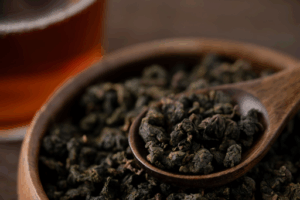
Imagine a warm, inviting aroma that fills the room with essence reminiscent of delicate flowers, toasted nuts, honeycomb, chocolate, and ripe stone fruit. The initial scent from a freshly opened tin of Dong Ding Oolong loose leaf tea can feel almost transportive. Upon brewing, the tea’s infusion shines with a brilliant golden colour, and your…

Yerba Mate Tea: Argentina’s Ancient Energy Brew and Modern Revival
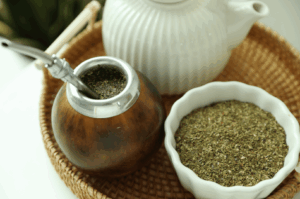
Picture a sun-drenched plaza in Buenos Aires, where the air hums with laughter and the scent of fresh flowers. In the center, friends gather in a close-knit circle, a cherished gourd filled with fragrant yerba mate tea making its way from hand to hand. Each person sips this herbal tea-brewed from green yerba mate leaves-through…

The Complete Guide to Kenyan Tea Industry Transformation in the Great Rift Valley
Imagine standing at the edge of Kenya’s Great Rift Valley, the birthplace of world-renowned Kenya tea. Here, undulating hills blanket the landscape in a lush sea of deep green, where rows of thriving tea bushes stretch across the horizon. This breathtaking region forms the core of the Kenyan tea industry-a powerhouse producing some of the…
-
Ceylon High Grown Tea: The Bright, Crisp Profiles of Nuwara Eliya
Imagine standing amidst a sea of emerald green on the island of Sri Lanka, where manicured tea bushes climb rolling hills and disappear into a cool, persistent mist. This is the world of Ceylon high grown tea, centred in Nuwara Eliya – a region characterized by bright sunshine in the morning and cool, misty nights….
-
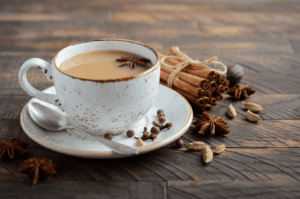
Masala Chai Origins: The Cultural Evolution of India’s Spiced Tea Tradition
The rhythmic clanging of metal kettles echoes through narrow lanes as steam rises from countless chai stalls across India. The intoxicating aroma of cardamom, cinnamon, and fresh ginger mingles with robust black tea, creating an olfactory symphony that has captivated souls for centuries. This is masala chai-not merely a beverage, but a cultural phenomenon that…
-
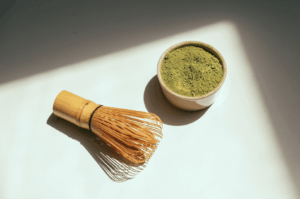
Matcha Tea: The Versatile Japanese Green Tea Powder
The vibrant green powder that transforms simple hot water into liquid jade has captivated tea enthusiasts worldwide. Matcha tea represents more than just a trendy beverage-it’s a bridge connecting ancient Japanese traditions with modern culinary innovation. This unique form of powdered green tea offers endless possibilities, from meditative ceremonial drinking to creative kitchen applications that…
-
The Dragon Well Legacy: Exploring China’s Legendary Longjing Tea
Among the world’s most revered green teas, few carry the prestige and cultural significance of China’s legendary Dragon Well. This premium tea has captivated tea enthusiasts for centuries, earning its place as an imperial favourite and modern icon alike. From its mystical origins at West Lake to its meticulous processing methods, Longjing represents the pinnacle…