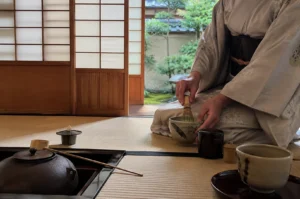
In a quiet tea room, a host moves with deliberate grace. The sound of hot water being ladled from an iron pot fills the air. This is the Japanese tea ceremony, known as Chanoyu or the Way of Tea, an art form that transforms the simple act of drinking tea into a profound experience. Far more than just serving tea, this tradition is a structured spiritual practice guided by core Japanese tea ceremony principles.
The origins of Japanese tea culture trace back to Buddhist monks who brought tea seeds from China. Initially consumed for its medicinal properties, the preparation of powdered green tea evolved, heavily influenced by Zen Buddhism. Over centuries, this practice was refined, especially for formal occasions, culminating in the philosophy codified by the legendary tea master Sen no Rikyū. He distilled the essence of the tea ceremony into four guiding concepts: Harmony (Wa), Respect (Kei), Purity (Sei), and Tranquility (Jaku). These principles, sometimes referred to as wa kei sei jaku, are the heart of Japanese tea culture and offer timeless wisdom for modern life.
Wa (和): Creating Harmony in the Present Moment
The first principle, Harmony, is the foundation of every tea gathering. It represents the seamless balance between the host, guests, nature, and the tea utensils. When guests arrive, they leave the outside world behind, stepping into a carefully curated environment designed to foster a deeper connection.
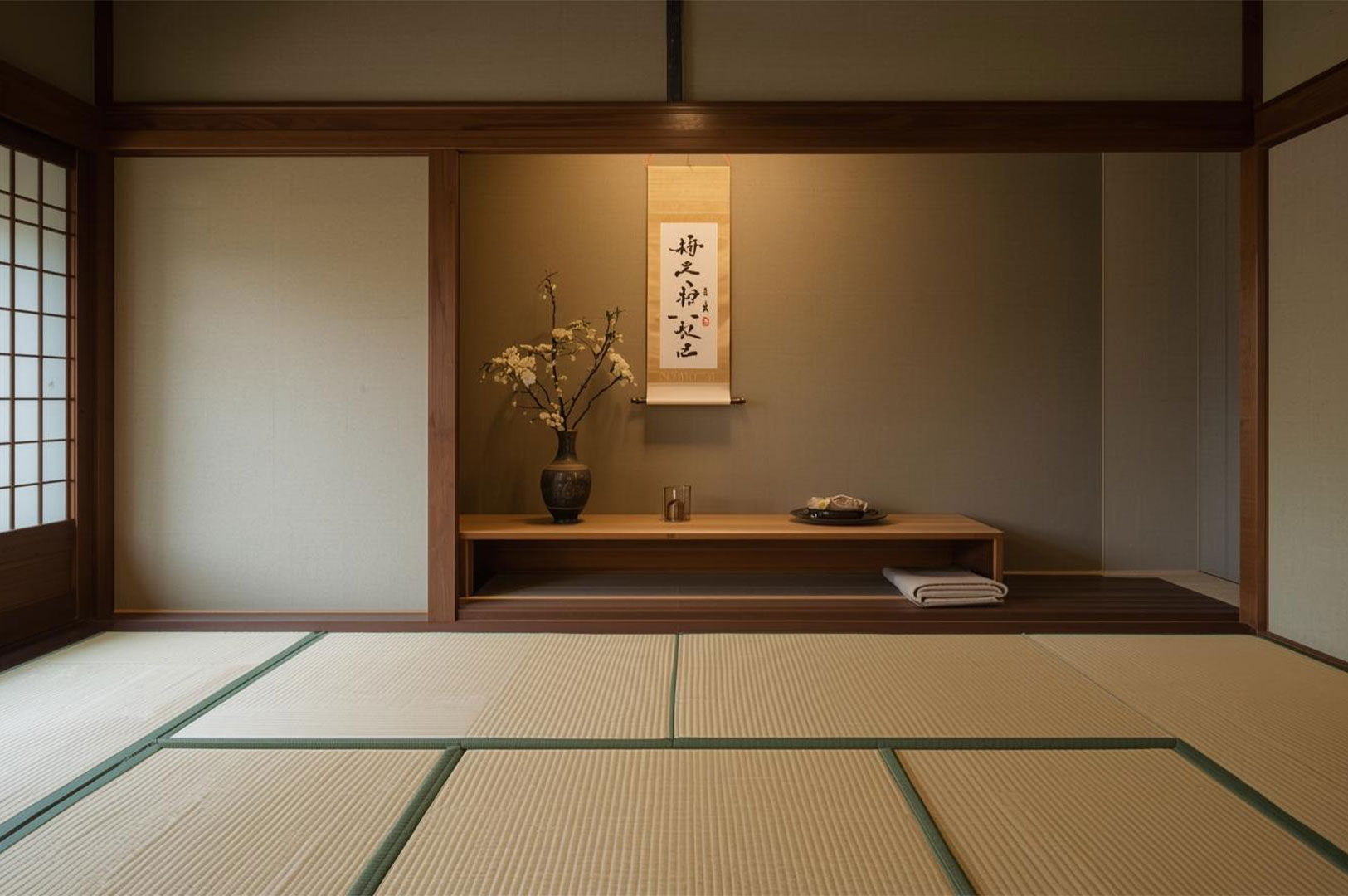
Harmony begins before anyone even enters the tea house. The tea garden, or roji, is designed to quiet the mind, with stepping stones and natural foliage that encourage guests to focus on the present moment. Inside, the tea room itself is a study in balance. The space is often simple, featuring tatami mats and walls made from natural materials. The host selects a hanging scroll and a seasonal flower arrangement to set the tone, creating a unified aesthetic sense.
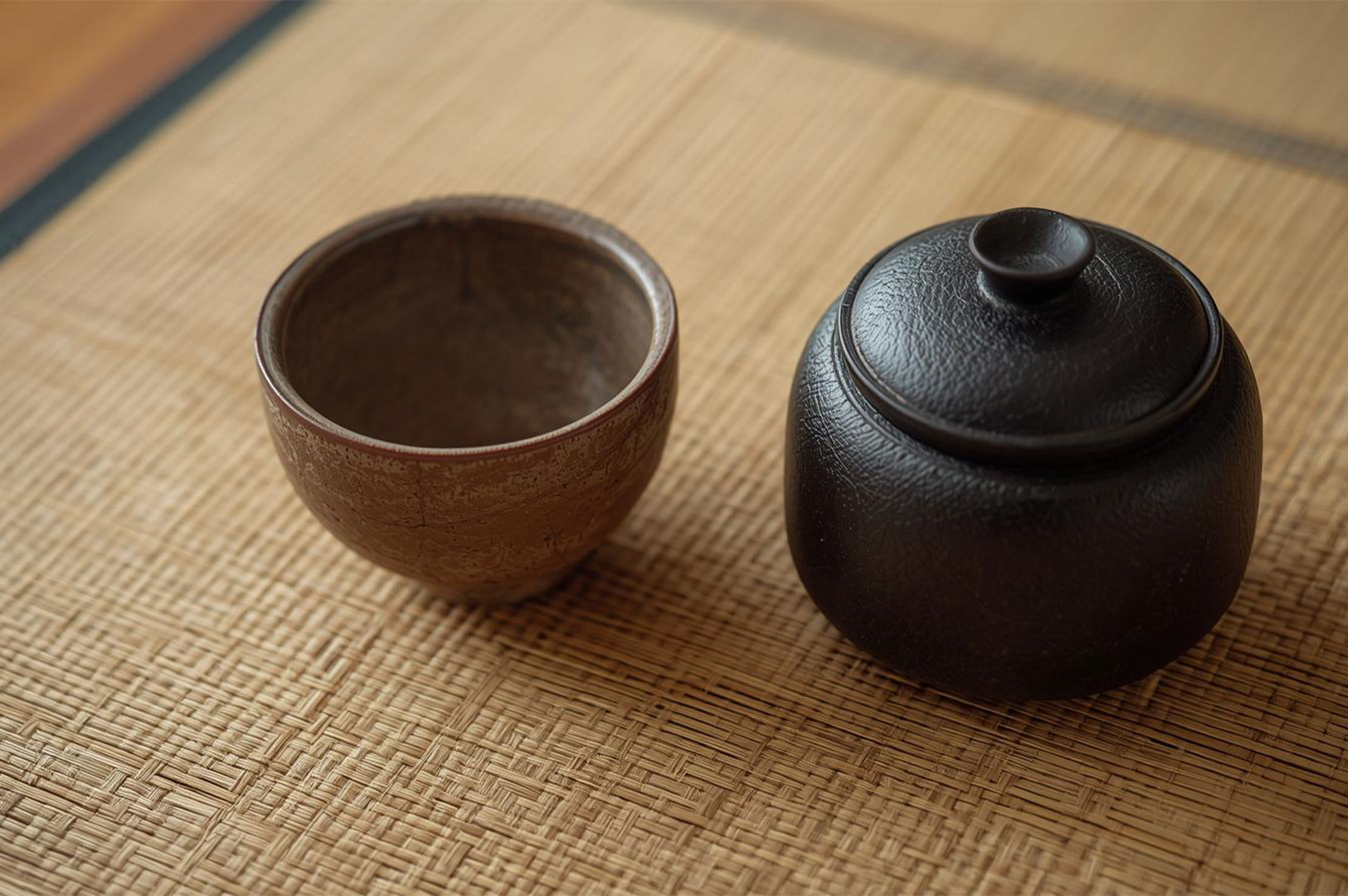
The host prepares for the ceremony by creating harmony among the objects. A rough, earthy tea bowl might be paired with a smooth, lacquered tea caddy. No single object is meant to dominate; instead, they work together to create a pleasing whole. This same sense of balance extends to the social dynamics. Within the tea room, hierarchies of Japanese society are set aside. Everyone is equal, sharing in the experience of one bowl of tea. This shared experience, whether for local or foreign guests, cultivates a unique sense of unity.
In Practice: A host might choose a hanging scroll with calligraphy that mentions water to complement a rainy day. This small detail connects the ceremony to the world outside, creating a holistic, harmonious experience for all.
Kei (敬): The Expression of Sincere Respect
The second of the Japanese tea ceremony principles is Respect. This is not a mere formality but a sincere expression of gratitude that flows in all directions. It is respect for the host's efforts, for the other guests, for the history of the tea culture, and for the objects themselves.
Respect is demonstrated through specific actions and etiquette. When guests enter the tea room from the waiting room, they might make a silent bow to the hanging scroll in the alcove. This gesture acknowledges the host's thoughtful preparations and the theme of the gathering. The practice of respect is a cornerstone of Japanese culture and is central to the tea ceremony.
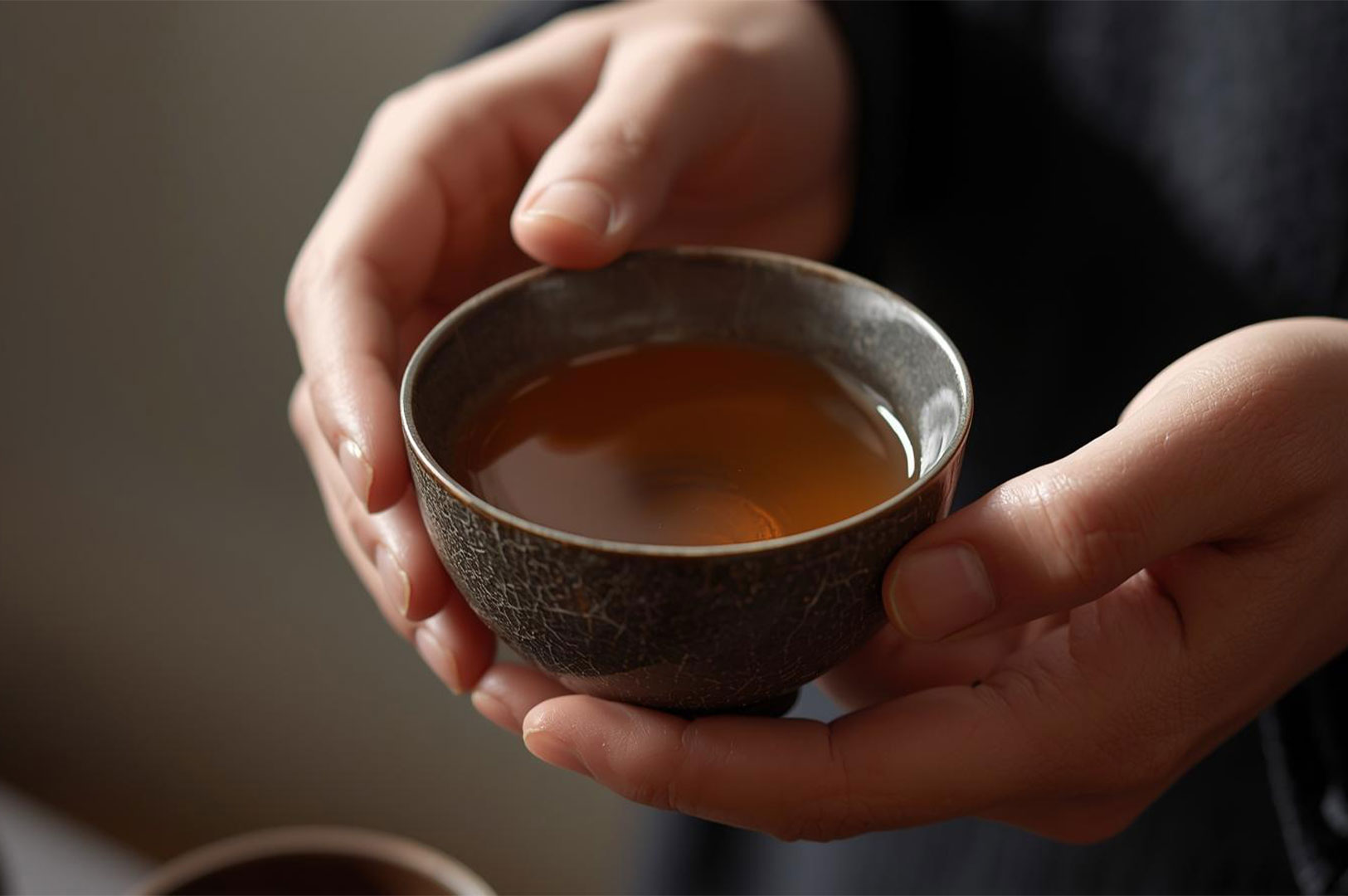
This principle is beautifully illustrated in the handling of the tea utensils. When the first guest receives the tea bowl containing powdered tea, they take a moment to appreciate it. Before drinking tea, the guest rotates the bowl slightly. This action is to avoid drinking from the "front" of the bowl—the side the host presented as the most beautiful. It is a humble acknowledgment of the host's gesture. After taking a few sips, the guest wipes the rim of the same bowl before passing it on if sharing thick tea (koicha).
This deep respect extends even to the tools used for making tea. The tea scoop (chashaku), often carved from a single piece of bamboo, and the tea caddy (natsume) are handled with immense care. By treating these objects with reverence, participants honor the artisan who made them and the tradition they represent.
In Practice: The host cleanses the tea scoop and tea caddy with a silk cloth (fukusa) in a series of precise, practiced movements. This is not just about cleaning; it is a visible demonstration of respect for the tools and the guest.
Sei (清): The Path to Purity of Heart and Mind
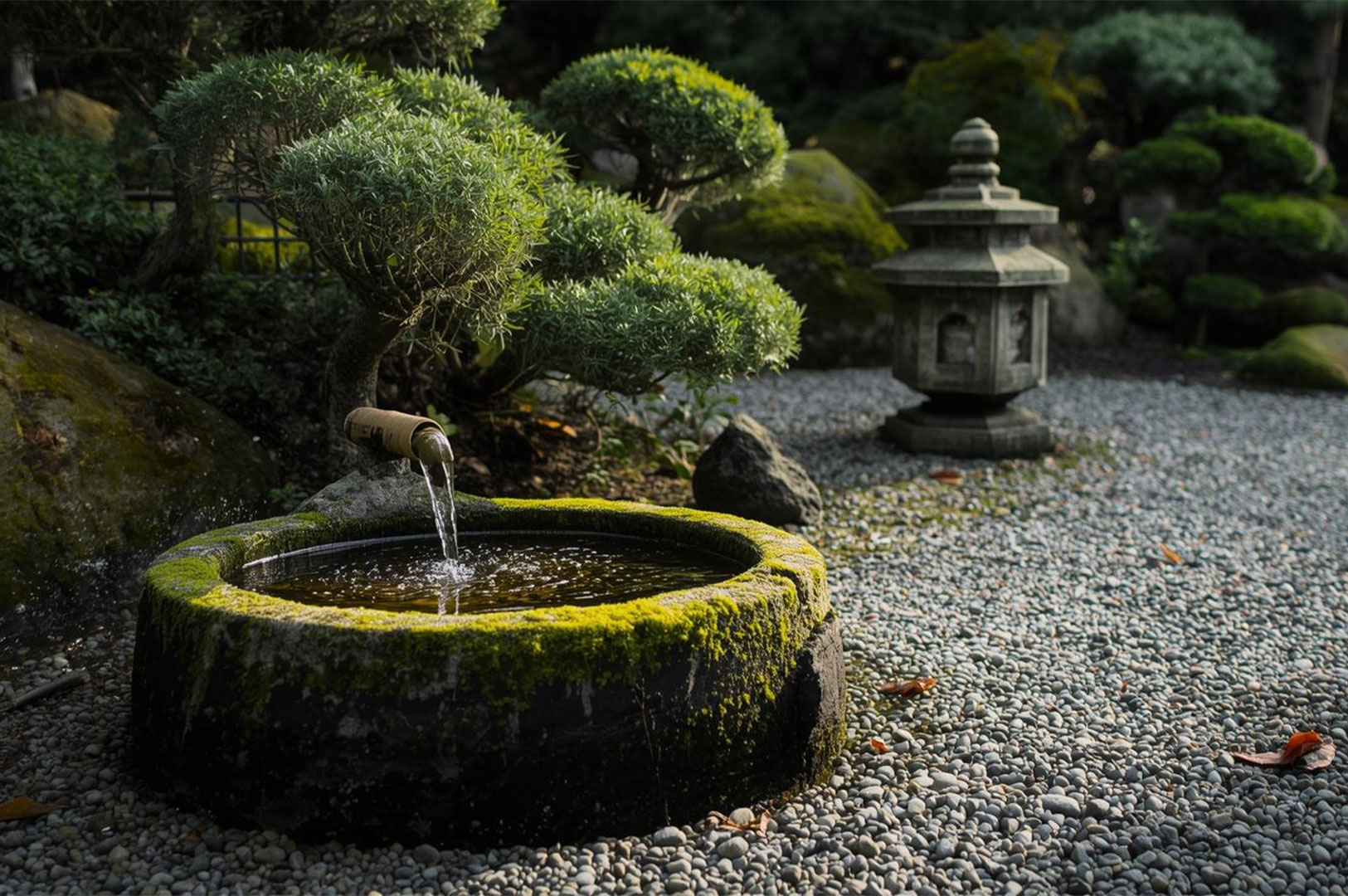
Purity is the third pillar of Chanoyu. This concept encompasses both physical and spiritual cleanliness. Before the ceremony begins, the host ensures that the tea room, tea garden, and every utensil are immaculate. This external cleanliness helps create an atmosphere free from worldly distractions.
Upon arrival, guests perform a ritual act of purification at a stone basin (tsukubai). They use a ladle to pour water from a fresh water container over their hands and rinse their mouths, symbolically washing away the "dust" of the outside world. This prepares them to enter the sacred space of the tea ceremony with a clear mind and a pure heart.
Beyond the physical, Sei points toward an internal state. The Zen philosophy that greatly influenced the Way of Tea emphasizes a mind free from clutter. The focused, deliberate actions of the ceremony help participants quiet their inner monologue. As the host whisks the green tea with a bamboo whisk, the focused movements become a form of meditation. Worries and ambitions fade, leaving only the experience of the present. This pursuit of spiritual purity is a central goal of the tea gathering, aiming for a state of mind that is open and sincere. It is a form of spiritual awakening through a simple, focused ritual.
In Practice: The use of a fresh ladle to scoop water from the iron pot for each serving of tea, and the meticulous cleaning of the tea whisk and bowl after each use, are physical acts that reflect the pursuit of inner purity.
Jaku (寂): Attaining Tranquility and Inner Peace
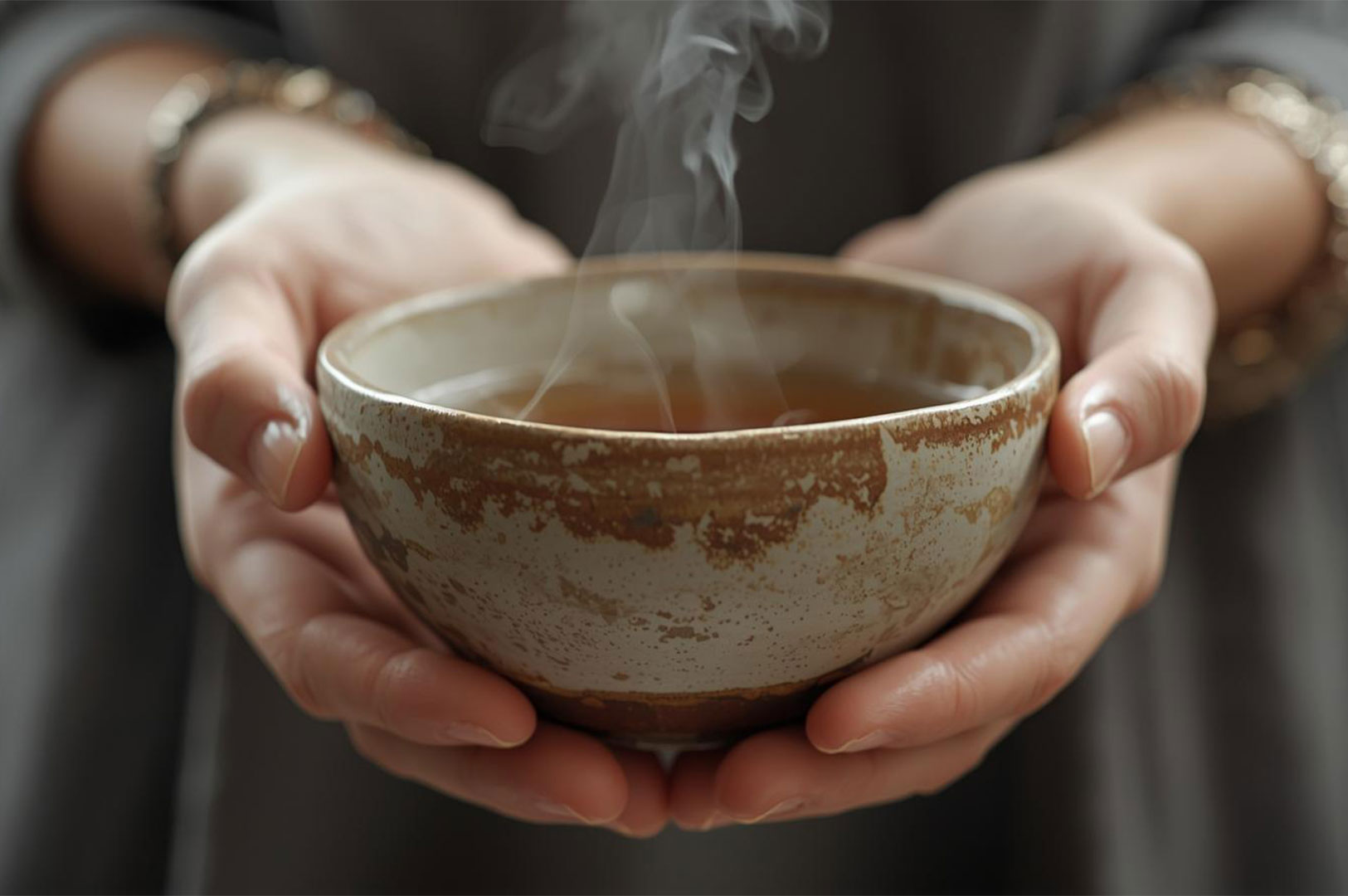
The final principle, Tranquility, is the culmination of the preceding three. When Harmony, Respect, and Purity (harmony respect purity) are fully present, a profound state of inner peace naturally arises. This is Jaku. It isn't an active pursuit but the beautiful result of embracing the complete Zen philosophy of the ceremony.
This state is where the deeper aesthetic sense of wabi-sabi—finding beauty in imperfection and transience—is most deeply felt. Tea master Sen no Rikyū championed this idea. He preferred simple, rustic tea bowls, sometimes with imperfections, over flawless, expensive ones. In a state of Jaku, one can perceive the quiet beauty in a slightly asymmetrical shape or a crack in the glaze, seeing it as part of the object's unique history.
Tranquility is the moment in the ceremony when the boundaries between self and the environment dissolve. The sound of the wind outside the tea house, the warmth of the tea bowl in one's hands, and the subtle taste of the thin tea (usucha) all merge into a single, unified experience. It is a quiet contentment that lingers long after the final act of the ceremony. During some formal tea ceremony events, a light meal (kaiseki) is served, and its simple, seasonal nature also contributes to this ultimate state of peacefulness. Different tea schools may have variations in their practice, but the pursuit of Jaku remains a universal goal.
In Practice: After the last of the tea served has been enjoyed, a period of quiet contemplation often follows. The host cleans the utensils and puts them away, perhaps over a fading charcoal fire. The silence is not empty but filled with a shared sense of peace—the very essence of Jaku.
Bringing Japanese Tea Ceremony Principles into Modern Life

You don't need access to formal tea parties or a dedicated tea room to benefit from these Japanese tea ceremony principles. Their wisdom can be woven into the fabric of your daily routine.
- Embrace Harmony: Find balance in your schedule. Create a small, harmonious space in your home with a plant or a single piece of art. When you have a cup of coffee or Japanese tea, focus only on that act.
- Practice Respect: Give your full attention to people when they speak. Handle your everyday objects, from your phone to your favorite mug, with care and appreciation.
- Cultivate Purity: Declutter your physical and digital spaces to clear your mind. Practice mental purity by letting go of small annoyances and focusing on positive intentions.
- Seek Tranquility: Schedule moments of quiet in your day. Take a short walk without your phone, listen to music without multitasking, or simply sit and breathe for a few minutes to find your inner peace.
The Way of Tea offers a powerful reminder that beauty and meaning can be found in the simplest acts. By integrating the principles of Harmony, Respect, Purity, and Tranquility, we can transform our own lives, finding moments of profound connection and peace in a bustling world.
By embracing the art of tea, we not only cultivate a deeper sense of presence but also connect with diverse tea cultures around the world. Take, for example, the Ceylon High-Grown Teas, where the bright, crisp profiles of Nuwara Eliya offer a distinct experience rooted in Sri Lanka's verdant highlands. Alternatively, The Dragon Well Legacy takes us to China, where the centuries-old tradition of Longjing tea continues to captivate with its smooth, toasty flavors and rich cultural significance.
By immersing ourselves in the rituals and stories behind each cup, we find that the true essence of tea lies not in the beverage itself, but in the mindful journey it invites us to take.

The Tea I Keep Drinking When I Don’t Feel Like Myself
There are days when tea feels unnecessary. Not because I stop liking it, but because I don’t feel like the version of myself who usually drinks it slowly, thoughtfully, and with attention. On those days, I still make tea anyway. Not out of ritual, but out of habit. It is never the elaborate kind of…
-
Tea Ceremony Kyoto: A Slow Dance of Bowls and Breath
The room is quiet enough to hear water. Somewhere beyond the paper screens of this traditional tea ceremony venue, a garden drips after morning rain. Inside a tea house on a tatami mat worn soft by years of kneeling, a tea master lifts a bamboo whisk and begins tea making. There is no rush in…
-
Why We Keep Romanticising Tea Moments That Never Happened
I sometimes wonder if we are drinking tea or remembering something that never really happened. A quiet morning that feels softer in memory than it ever was in real life. A perfect cup by the window that somehow always looks better in hindsight. A tea moment that feels cinematic, even though it probably lasted only…
-
Masala Chai Tea Origins: The Cultural Evolution of India’s Spiced Tea Tradition
There is a sound that belongs to mornings across India: the hiss of milk rising in a battered pot, the clink of a spoon against metal, the low murmur of a tea seller calling out to passing crowds. Before the first sip, there is the scent. Cardamom pods, fresh ginger, and cinnamon stick curling into…
-
We Are Turning Tea Into Something It Was Never Meant to Be
There is something quietly strange happening in tea culture. The more popular the tea becomes, the more it starts to resemble everything it once stood apart from. Speed. Branding. Productivity. Performance. Tea, which once belonged to unhurried moments, is increasingly being asked to do more. To energize. To optimize focus. To replace coffee. To support…
-
Sencha Green Tea vs. Matcha Powder: Understanding the Differences in Japanese Green Tea
Two tins of tea powder sit side by side on a shelf. Both hold a fine green powder. Both promise the taste of authentic Japanese tea. To the eye, they look almost identical, and that is precisely where the confusion begins. One is matcha powder, often used in matcha lattes and desserts. The other is…
-
Discovering Gryphon Tea Company’s Earl Grey in Singapore
I recently tried the Earl Grey from Gryphon Tea Company Singapore, and I have to admit, it surprised me. Not because it was flawless-it wasn’t, but because it felt like a tea that knew exactly what it wanted to be. The aroma is the first thing that hits you. Bergamot is present but subtle, not…
-
Hojicha: The Roasted Japanese Green Tea With A Mellow Twist
There is a moment, just after the hot water meets the hojicha tea leaves, when the kitchen fills with the aroma of something toasted. Not grassy. Not sharp. Warm, like roasted nuts or the edge of a freshly baked loaf. That moment is where hojicha begins. Hojicha (sometimes spelled houjicha) is a roasted green tea…
-
A Quiet Afternoon at Yixing Xuan Teahouse
I recently spent a quiet afternoon at Yixing Xuan Teahouse, a place that feels like a pause in the city. The moment you step inside, the world seems slower. The air carries the gentle aroma of steeped leaves, and the staff move with quiet precision. I chose an oolong, simple yet familiar. Watching the leaves…
-
The Controversial Smoky Tea That Divides Enthusiasts: Lapsang Souchong Black Tea
There is a tea that empties rooms and fills them in equal measure. Open a box of loose leaf lapsang souchong black tea, and someone nearby will lean in with delight while another quietly steps away. Few teas provoke such immediate, honest reactions. That divide is part of its story. This smoked lapsang souchong smells…