Black tea pekoe is all about whole-leaf black tea made from those long leaves and buds, usually the youngest ones right near the shoot tips. And when you hear Orange Pekoe, it’s not about orange flavor at all; it’s actually the name of that grade. For tea lovers or anyone curious about quality Sri Lankan black tea, that little label gives you real hints about the leaf style, where it’s from, and what kind of cup you’re in for.
Picture the mist slowly rolling over the highlands, just like it always does.
A pot of Sri Lanka’s Ceylon Orange Pekoe tea holds more than just its color. It carries a story shaped by altitude, weather, patient hands, and a craft passed down through generations. Before you even take a sip, that leaf has already been on quite a journey.
What Orange Pekoe Really Means in Black Tea Grading
Let us clear up the confusion first, because it trips up almost everyone.
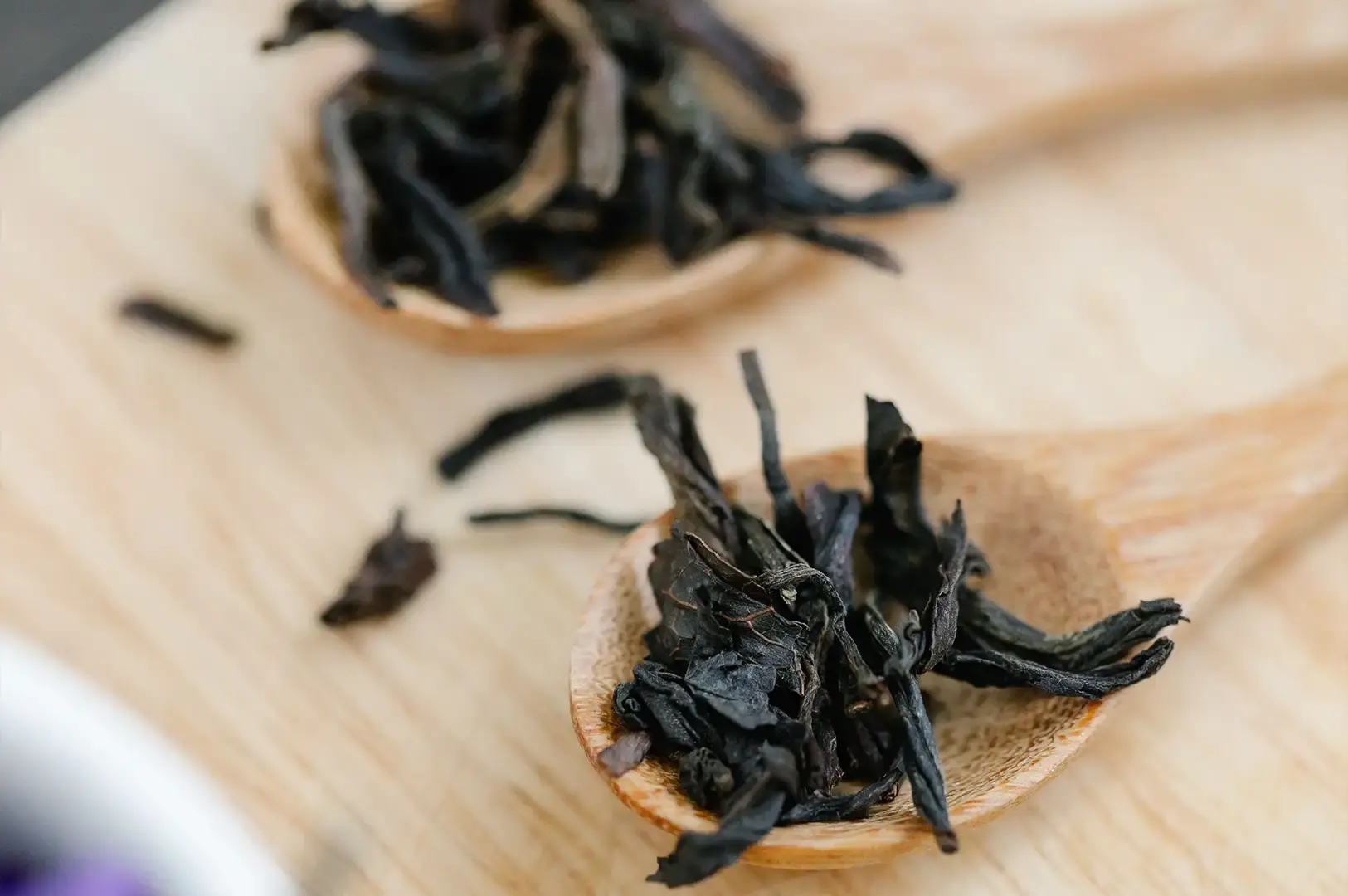
Orange Pekoe is actually a term from the black tea grading system. Black tea itself comes from the leaves of the Camellia sinensis plant, and Pekoe refers to the quality of the leaf rather than the type of tea. So, despite the name, it has nothing to do with orange flavor or flavored black tea. Instead, Orange Pekoe points to a grade of tea made from long leaves and leaf buds, usually the youngest leaves right at the tip of the shoot. The word "pekoe" probably comes from a Chinese tea term that describes the soft, downy white hairs on these buds.
When we talk about black tea, it’s fully oxidized, but Pekoe is all about the leaf quality. So Orange Pekoe typically means whole leaf black tea with wiry leaf, tightly wound leaves that are mostly intact, not broken or crushed like smaller broken grades such as broken pekoe or broken orange pekoe.
There are higher grades too, like Flowery Orange Pekoe and Golden Flowery Orange Pekoe, which have more tips or leaf buds. The finest grade, called Finest Tippy Golden Flowery Orange, has an abundance of golden tips.
If you’re new to this, just remember: when you see Orange Pekoe on a tea package, it’s telling you about the leaf’s form and quality, not its flavor or flavor orange. For seasoned tea drinkers, it’s a helpful clue, one of many to consider when choosing a tea.
Sri Lanka's Tea Heritage and the Rise of Ceylon Orange Pekoe
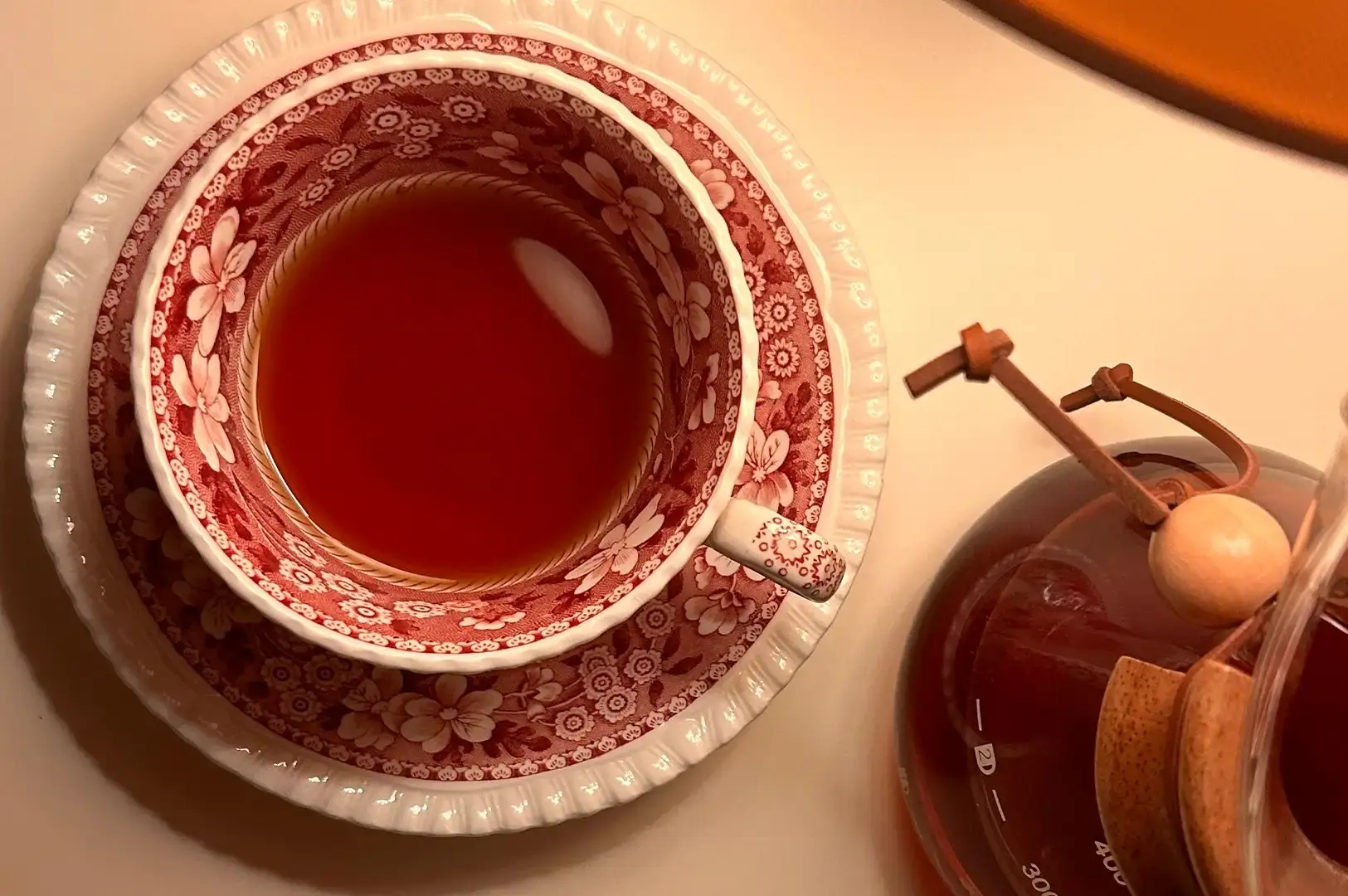
Tea and Sri Lanka have been bound together for well over a century.
What started as a bit of an agricultural gamble turned into something much bigger, an identity. Ceylon tea, named after the island’s old name, became one of the most recognized names in the tea world. The Dutch East India Company played a big role in making tea popular in Europe, setting the stage long before modern branding came along.
Even today, seeing the word Ceylon on a tea tin means something special, even to people who’ve never been to the island.
Tea shaped the country’s estates, its export culture, and the daily rhythm of life in the hill regions. It’s still a huge part of how Sri Lanka shows itself to the world.
Tea lovers often appreciate Sri Lankan black tea pekoe as part of the broader reputation South Asian teas have for their bright, lively character, clean aroma, and impressive variety depending on where they’re grown. There’s no single flavor that defines it and that’s exactly what makes it so appealing.
From Plantation to Plucking: The Tea Leaf Journey in Sri Lanka
The land does much of the work before anyone touches a tea leaf.
Sri Lanka’s tea estates climb from lowland warmth to cool, misty highlands. Elevation, rainfall, and the movement of monsoon winds all leave their mark on the tea leaves. A tea grown high and cold tastes different from one grown low and humid, even when the tea plant and the picking are the same.
This is why tea growing regions matter so much here.
- Nuwara Eliya, the highest growing area, tends toward delicate, fragrant, almost floral teas reminiscent of flush Darjeeling.
- Uva carries a distinctive briskness, shaped by the dry winds that sweep across it.
- Dimbula offers a clean, well-balanced brightness with balanced sweetness.
- Kandy, at a mid elevation, gives a fuller, more robust character.
- Ruhuna and Sabaragamuwa, both low-country regions, lean darker and stronger, with deeper colour and body.
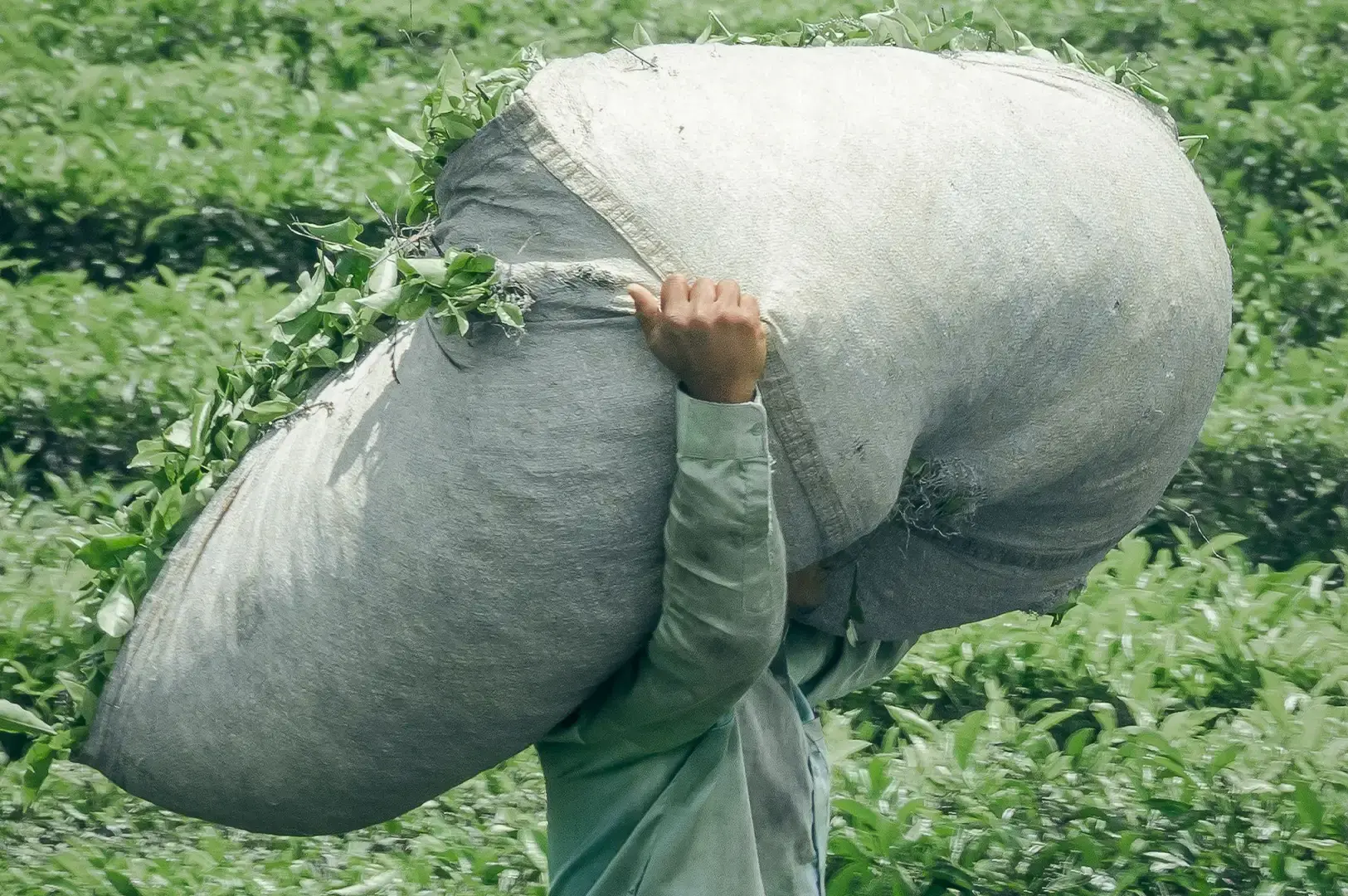
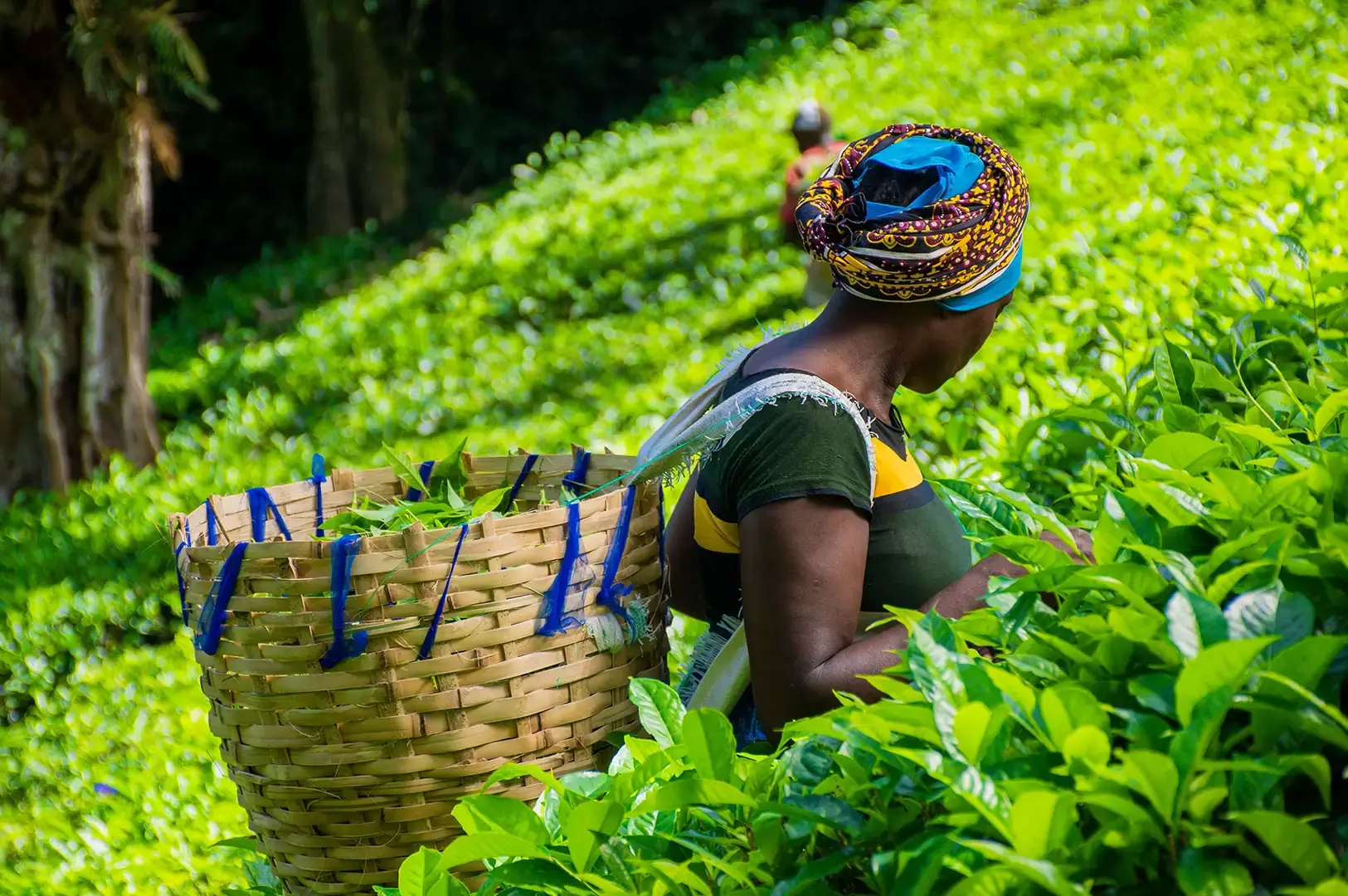
Then there is the plucking itself. The finest teas rely on the old standard of two leaves and a bud, the tender tip of each shoot gathered by hand. It is slow, careful work, and it is the reason a good Orange Pekoe begins with such young, gentle leaf buds and fleshy leaf.
The Craft Behind Orange Pekoe Tea Processing and Black Tea Production
Once picked, the black tea leaves enter the hands of the factory, and craftsmanship takes over.
The transformation from fresh green leaf to dark, fragrant black tea is not mechanical drudgery. It is a series of judgements, made by people who read moisture, temperature, and time the way a baker reads dough.
The main stages unfold like this:
- Withering: the fresh leaves rest and lose moisture, turning soft and pliable.
- Rolling: the leaves are gently twisted, bruising the cells and releasing the compounds that shape flavour.
- Oxidation: exposed to air, the leaf darkens and develops its depth and aroma.
- Drying: heat halts the process, locking in the character.
- Sorting and grading: the finished tea is separated by leaf sizes and form, distinguishing whole leaves from broken grades, and this is where whole leaf tea grades such as Orange Pekoe are identified, while Flowery Broken Orange Pekoe denotes a higher broken grade that still contains tips or buds.
None of these steps is purely technical. Each one shapes the aroma, colour, body, and taste of what finally reaches the cup. Rush the withering or misjudge the oxidation, and the finest highland leaf can be undone.
How Sri Lankan Orange Pekoe Tea Tastes in the Cup
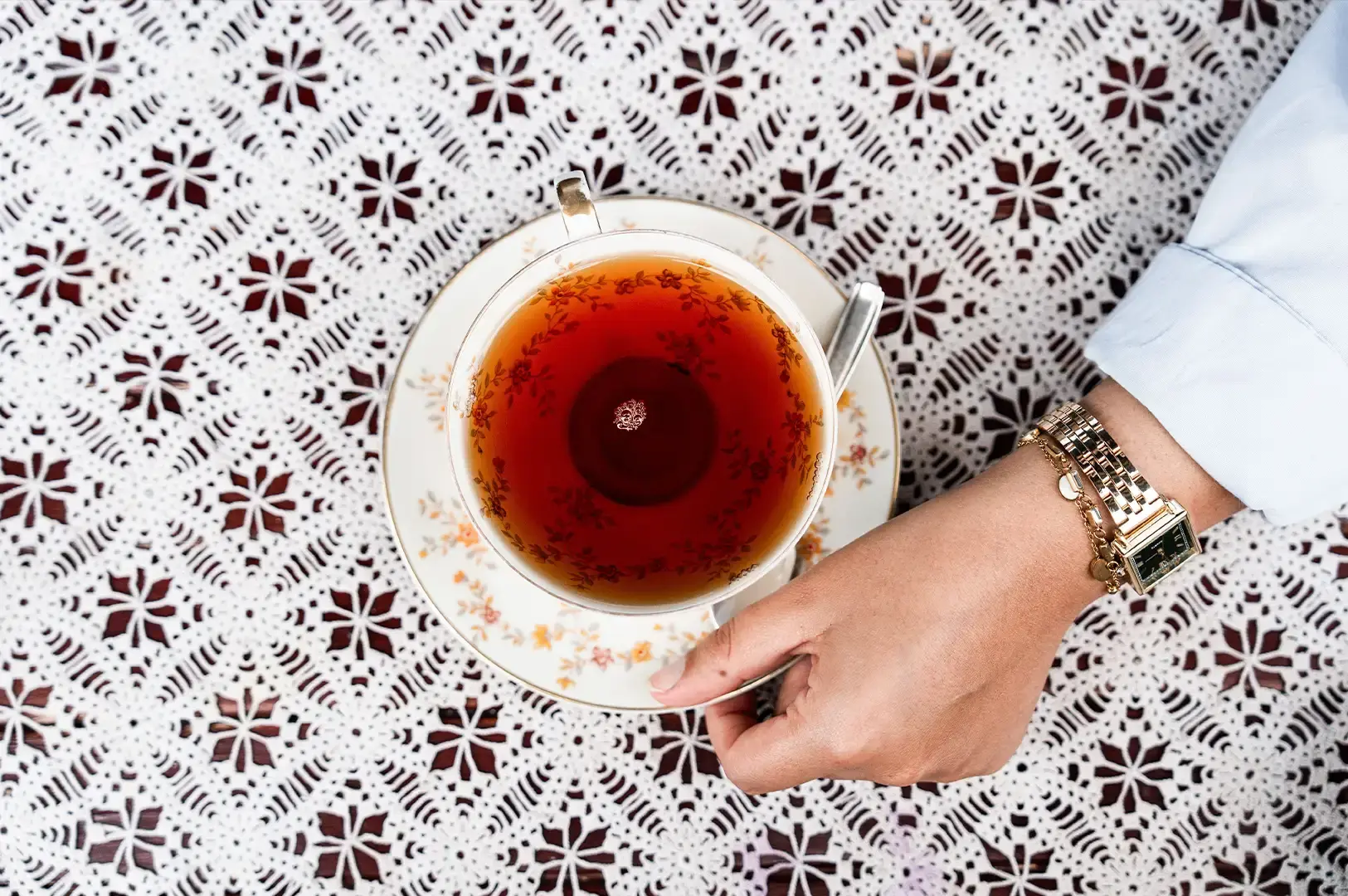
Pour a well-made Sri Lankan orange pekoe tea, and the first thing you notice is light passing through it.
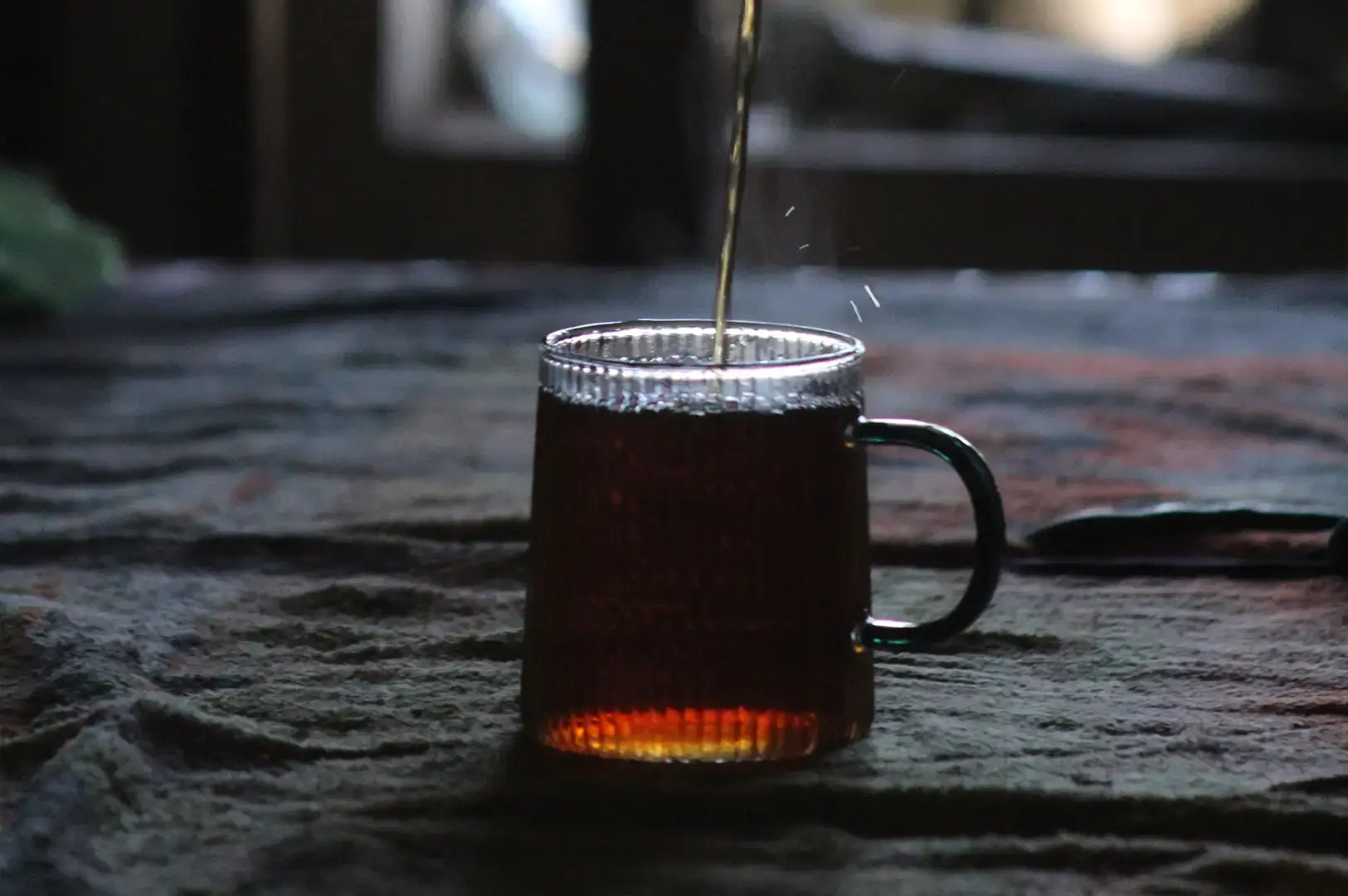
The liquor tends to run a bright amber, sometimes edging toward copper. It looks alive in the glass. The aroma is clean rather than heavy, and there is often a brisk, lively quality to the taste, a gentle sharpness that keeps the tea from feeling dull. Orange Pekoe tea also typically has a moderate caffeine content. Black tea generally has a higher caffeine level than green or white tea.
Beneath that briskness sit softer notes, sometimes reminiscent of warm brown sugar or a faint maltiness. A citrus-like brightness lifts the whole cup. Depending on the region, you might catch something floral from the high country or a woodier depth from lower estates. For example, teas from the Lumbini Tea Estate in southern India or Bangladesh teas can offer distinct profiles. Brewed with care, it finishes smooth, without harshness, a hallmark of a light bodied tea.
In the world of black leaf tea, the grade leaves play an important role. The common broken pekoe grade and finest broken orange pekoe reflect different leaf sizes and qualities. Broken leaf teas, including black broken and orange fannings, are often used in tea bag production because their uniform particle size allows for consistent brewing. However, uneven leaves can affect the infusion quality.
Top grade teas, such as second grade or main grade leaves, often contain a higher proportion of few tips, which are prized for their flavor and aroma. Estates across regions like northern India, southern India, and even South America contribute to the diversity of black tea pekoe on the market.
The term 'Orange Pekoe' itself carries a hint of history, sometimes linked to the royal family and the Dutch House of Orange-Nassau, adding a touch of prestige to this grading system.
Why Orange Pekoe and Loose Leaf Tea Still Matter to Tea Drinkers
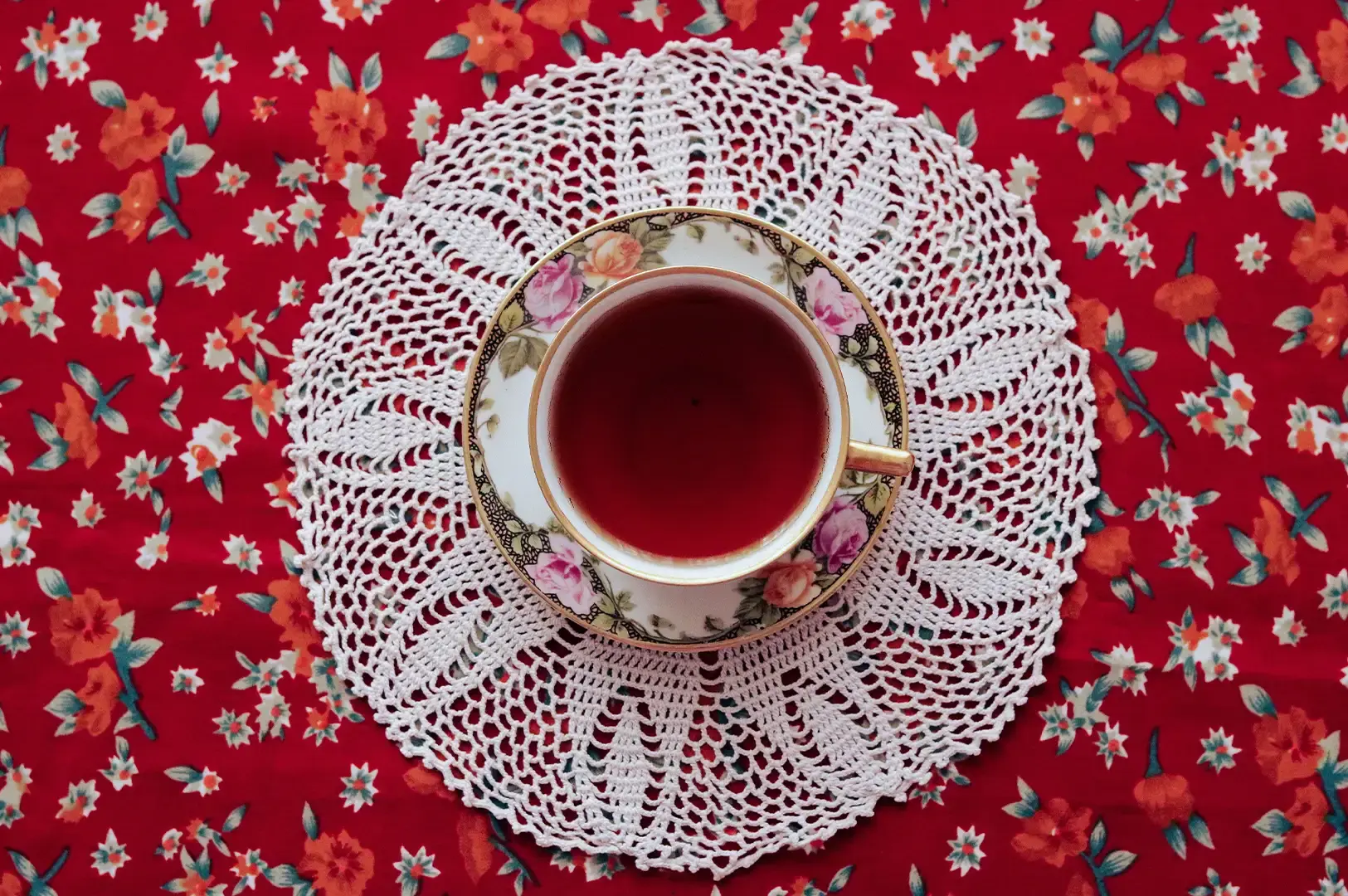
In a market crowded with tea bags and blends, the grade still earns its place.
For anyone trying to understand tea quality, Orange Pekoe offers a small, honest signal. It tells you that you are likely holding whole leaf black tea pekoe rather than the broken leaves or black tea dust that fill most everyday tea bags. That alone can change the drinking experience.
But the grade should never stand alone. It is most useful read alongside other things: where the tea was grown, how fresh it is, which estate produced it, and at what elevation. A grade describes the leaf’s form. Origin and freshness describe its soul.
Understood this way, Orange Pekoe becomes a doorway rather than a verdict, an invitation to look a little closer at what you are drinking.
Bringing the Journey Home: Brewing Your Orange Pekoe Tea
There is a quiet pleasure in honouring the leaf’s long journey once it reaches your kitchen.
You do not need special equipment or ceremony. You need only a little attention. Use boiling water, let the leaves have room to unfurl, and give them the time they ask for rather than snatching the cup away too soon.
Then slow down. Watch the colour deepen. Notice the aroma before the first sip. Taste without rushing, and let the differences reveal themselves, the brightness of one region, the body of another.
When you drink this way, the cup stops being a habit and becomes something closer to a small act of recognition. Every mouthful reflects a place, a climate, and the labour of hands you will never meet. That awareness costs nothing, yet it changes everything about how the tea tastes.
A Cup Worth Understanding: The Legacy of Sri Lanka’s Black Tea Pekoe
It would be easy to read the words Orange Pekoe and think of nothing much at all.
But behind that plain, slightly puzzling name lies a genuine journey. Misted highlands and hand-plucked shoots. The careful craft of withering and rolling and drying. A heritage of Ceylon tea that shaped a country, and a grading system that quietly points you toward whole, honest leaf.
The next time you brew a pot of Sri Lankan black tea pekoe, let it be with a little more curiosity. Look past the name. Consider the slope it grew on, the season it was picked in, the hands that gathered it.
Steep it slowly, taste it gently, and you may find that a simple cup of tea has far more to say than you expected. That is reason enough to seek it out, and to drink it with the attention it has quietly earned.
To disover more on Ceylon Tea, we recommend to click and visit our article: A Complete Overview of Ceylon Tea

Brew, Sip, Heal: The Powerful Chamomile Tea Benefits Explained
Singapore is a city that rarely stops moving. Between the hum of the MRT, the endless glow of screens, and the heavy humidity that clings to the air, finding a moment to genuinely wind down can feel like a luxury. For the longest time, my evening routine consisted of scrolling through my phone while finishing…

Why Tea Feels Different at Night
Tea changes after dark. The same leaves, brewed in the same pot, somehow feel quieter in the evening. The aroma lingers longer. The warmth of the cup feels more noticeable in the hands. Even conversation seems to soften slightly around tea at night. Perhaps it is because the world itself becomes quieter. During the day,…

Tea Health Benefits: Best Teas for Relaxation, Focus, and Sleep
Tea is one of the world’s most beloved drinks, enjoyed every day across countless cultures. When we talk about tea health benefits, it’s helpful to know the difference between true tea and herbal infusions. True tea comes from the Camellia sinensis plant, giving us popular varieties like green, black, white, and oolong tea. On the…

The Secret Joy of a Simple Cup of Tea
There’s something so deeply satisfying about a cup of tea-especially when it’s the simplest cup. No complicated brewing methods. No fancy leaves. Just tea, water, and a moment of quiet. I’ve had tea in many places, from grand tea houses to humble kitchen counters. But the most memorable tea moments often happen in the least…
-
A Quiet Tea Café in Somerset: Inside the Experience at Hvala
Amid Singapore’s bustling shopping hubs like Orchard, Club Street, and Tanjong Pagar, finding a peaceful spot to unwind can be a challenge. Hvala, a minimalist tea cafe Singapore locals and visitors adore, offers a serene teahouse experience brimming with natural light and calm vibes. Located on the ground floor of 111 Somerset, this bright, inviting…
-
The Tea We Return To Again and Again
Most tea drinkers have one. A tea they continue returning to, even after trying countless others. It is rarely the rarest tea they own. Often, it is not even the most impressive. It may lack the complexity of aged teas or the elegance of carefully crafted harvests. And yet, somehow, it becomes the tea they…
-
Pek Sin Choon vs Modern Teaware Shops: Two Tea Traditions in Singapore
Walking through Chinatown’s Mosque Street, you encounter two distinct tea traditions that embody Singapore’s rich heritage and evolving culture. Pek Sin Choon, one of the oldest tea merchants in Singapore, stands as a living root of Chinese tea culture, while modern teaware shops offer a fresh perspective on tea appreciation through design and brewing systems….
-
Why I Stopped Saving My “Good Tea” for Special Occasions
For the longest time, I treated my favorite teas like they needed a reason. I would buy something beautiful, maybe a delicate oolong or a tea that smelled faintly floral the moment I opened the tin, then immediately start rationing it in my head. I’ll save this for guests. For weekends. For days that feel…
-
Teapot Set: How It Shapes the Tea Experience
On certain afternoons in Singapore, when rain softens the edges of the day, I find myself lingering before the water reaches its boil. The teapot rests nearby, waiting. There is always a moment like this before tea (quiet, unhurried) when the world seems willing to pause with you. A teapot set belongs to these moments….
-
The Quiet Difference Between Drinking Tea Alone and With Someone
There are days when I reach for tea just to sit with myself for a while. No distractions, no need to fill the silence. Just the slow rhythm of pouring, waiting, sipping. When I’m alone, tea feels almost like a pause button. The kind that lets the day settle a little before continuing. But tea…