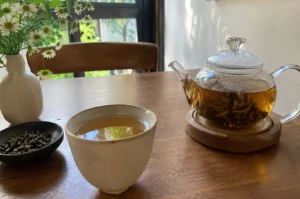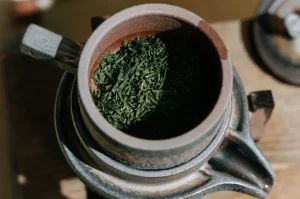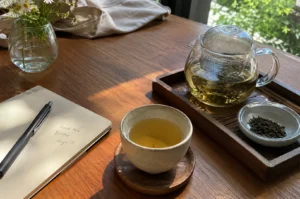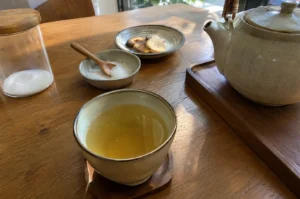
There is a certain irony about tea.
The more we learn about it, the easier it becomes to complicate it.
A simple cup of leaves and water slowly becomes surrounded by equipment, measurements, techniques, and expectations. We begin collecting teapots, comparing brewing methods, and searching for the perfect setup.
None of these things are wrong.
Care has always been part of tea. Attention to detail can deepen appreciation. The right vessel, the right temperature, and the right preparation can reveal something beautiful in the leaves.
But I sometimes wonder if we have forgotten that tea was never dependent on any of these things.
Before there were carefully designed tea rooms and specialised equipment, there was simply tea.
Water.
Time.
I have found that some of my most meaningful tea moments have been the simplest ones. A familiar cup in the morning. A quiet brew after a long day. A tea prepared without much thought, yet somehow arriving at exactly the right moment.
There was no perfect setup.
No elaborate ritual.
Just tea.
Perhaps this is why minimalism has always felt naturally connected to tea. Not because we need fewer things, but because we begin to notice more when there is less competing for our attention.
A simple cup allows us to focus on what is already there.
The aroma before the first sip.
The warmth of the cup in our hands.
The subtle changes in flavour as the tea cools.
These small details have always existed. We simply become better at noticing them when we stop searching for something more.
Modern tea culture sometimes encourages us to believe that better tea requires better tools. A better teapot. A better collection. A better understanding.
But perhaps better tea begins somewhere much quieter.
With better attention.
A modest tea brewed with patience can offer more satisfaction than a complicated preparation done without presence. The value of tea has never been only in the objects surrounding it. It has always been in the relationship between the drinker and the cup.
This does not mean we should abandon the beauty of tea wares or the knowledge passed down through generations. These things matter.
But they should serve the experience, not replace it.
Maybe the simplest way to drink better tea is not to add more.
Maybe it is to notice more.
With quiet regard,
N. P. Lim

Tea Snobs Made Brewing Hard—So I’m Making It Simple Again
Tea Snobs Made Brewing Hard—So I’m Making It Simple Again There was a time when I thought I was making tea incorrectly. The water was probably too hot. The leaves were probably wrong. The pot was certainly not the right one. At least, that was what I had been led to believe. Tea culture can…
-
The Leaf That Waits in the Dark: Understanding Gyokuro Tea
Anyone who has waited at a bus stop at midday in Singapore knows how much shade matters. You step under the roof, the glare softens, and everything slows down a little. Tea plants respond to shade too, though in their own way. In parts of Japan, farmers deliberately cover their tea bushes in the weeks…
-
What “Quality” Really Means (To Me) When Choosing Tea
I used to think choosing good tea meant knowing what to look for. The right origin. A respected producer. Beautiful leaves. A good harvest. Maybe even a price tag that made me think, “This must be worth it.” Over time, I realised I was making tea shopping much harder than it needed to be. Because…
-
Tea Cocktails: The Rise of Tea-Infused Mixology in Modern Bars
Tea usually arrives quietly. Steam rising from a pot, a cup set down on a saucer, the scent of roasted tea leaves or jasmine drifting across a kitchen table. A cocktail bar keeps a different rhythm. The light is low, the glassware is chilled cocktail glass, and ice rattles sharply in a cocktail shaker. Yet…
-
Stop Adding Sugar First: You’re Training Your Tongue Wrong
There is a habit I have noticed among tea drinkers. Sugar goes in before the first sip. Perhaps it is only a small spoonful. Perhaps two. But the tea is sweetened before it has been given a chance to introduce itself. I used to do this too. It seemed harmless. Tea was bitter, sugar made…
-
Is Tea a Diuretic? What Your Daily Cup Really Does for Hydration
Picture a sticky afternoon in Singapore. The kind where the air sits heavy on your shoulders and the walk from the MRT feels longer than it should. You reach for something cold. Maybe a teh peng from the drinks stall, ice clinking in a plastic cup. Maybe a bottle of green tea from the convenience…
-
Cold Brew Tea Isn’t Lazy, Hot Purists Just Don’t Like Being Wrong
I used to think cold brew tea was cheating. Not seriously, of course. But there was something about it that felt almost too easy. No kettle. No worrying about water temperature. No watching the clock while the leaves steep. Just tea, cold water, and a little patience. It seemed suspiciously effortless. Then I actually started…
-
A Taste of Taiwan in Every Pour: Yi Fang Taiwan Fruit Tea
There are drinks that catch your eye before you even take a sip. A tall cup, fruit pressed gently against the plastic, tea glowing amber underneath. Something about it feels right for a warm afternoon. Light. A little cheerful. Easy to carry. But if you slow down for a moment, some of those cups have…
-
Your Tea Isn’t Bitter—You’re Overbrewing It (And It’s Not Your Fault)
There is a particular disappointment that comes from making a cup of tea that tastes bitter. You choose the leaves carefully. You heat the water. You wait. Then the first sip arrives, and something feels wrong. For a long time, I assumed bitterness meant the tea itself was not very good. Perhaps the leaves were…
-
When Tea Meets Tropical: 5 Fruit Teas in Singapore to Try
There’s a specific kind of Singapore afternoon. The air feels thick, your shirt clings a little, and every mall entrance feels like a reward. On days like that, I don’t want anything heavy. I want something cold, bright, and full of fruit, but still recognizably tea. That’s where fruit teas come in. In Singapore, they’ve…