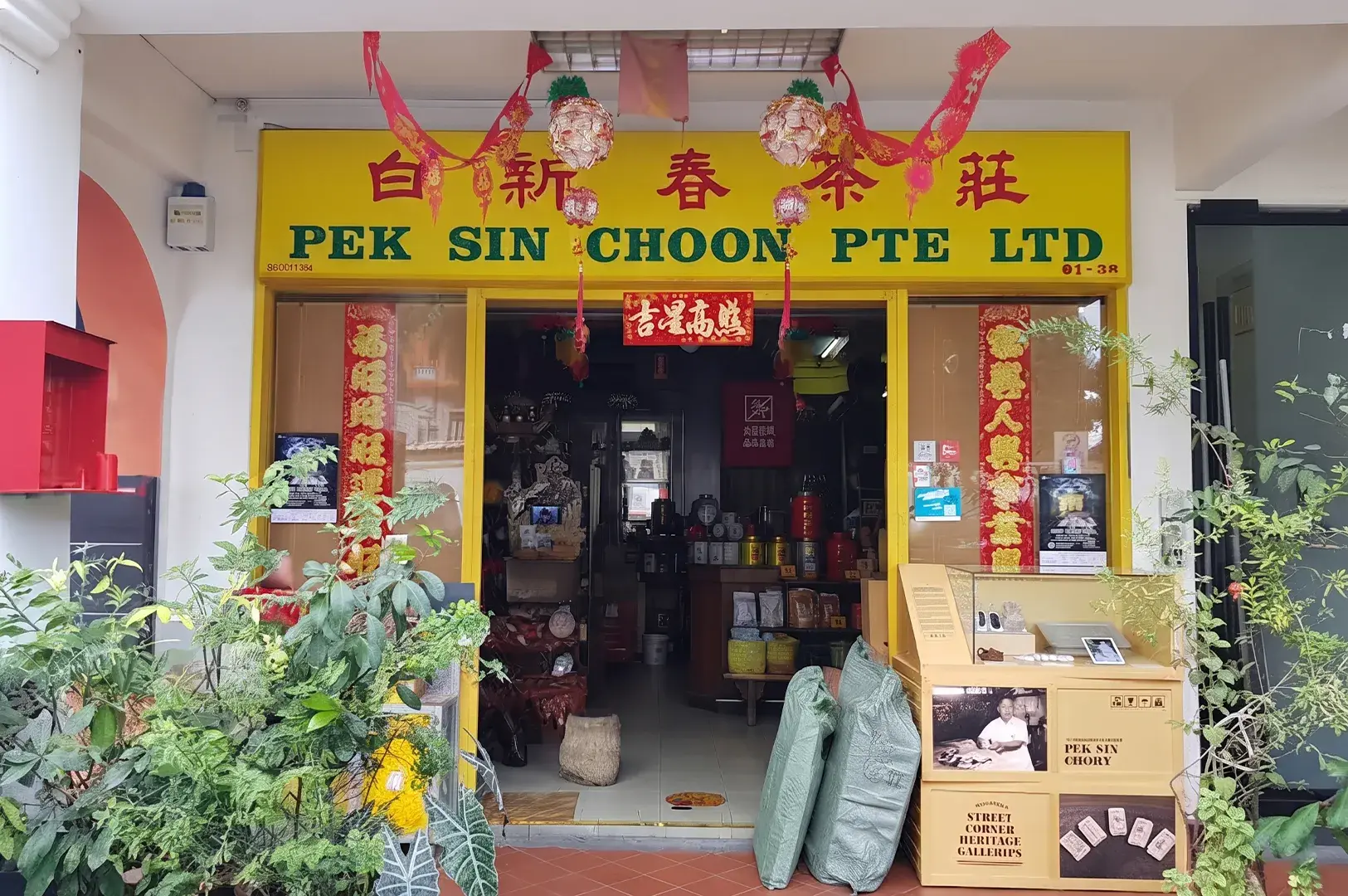
The first thing I noticed was the smell.
Not perfume, not incense. Something warmer and older than both. Roasted tea leaves, drifting out onto Mosque Street before I even reached the door. It's the kind of smell that makes you slow your steps without knowing why.
Pek Sin Choon has been on this corner of Chinatown for a long time. Since 1925, in fact, which makes it one of Singapore's oldest tea merchants. Fourth-generation owner Kenry Peh runs the company now, and the shop still carries that rare feeling of a place that never rushed to become something else.
Quality Chinese Tea: A Business Rooted in Tradition
Step inside and it's clear this is a working shop, not a showroom.
Tins line the walls. There are packets wrapped in pink paper, the way tea was always packed here, the same paper once used by Chinese medicine halls. Nothing here is styled for a photograph. It's simply how things have been done for close to a hundred years.
I learned that up to 120kg of tea leaves are blended and roasted here every single day. They still use a woven basket, said to be as old as the shop itself, and a roasting oven made right here in Singapore. That's a lot of quiet, unglamorous work behind a beverage most of us drink without a second thought.
You may already know their tea without realizing it. Pek Sin Choon supplies tea to over 80% of Singapore's bak kut teh establishments, as well as Chinese restaurants including Din Tai Fung. Chances are, you've tasted their work over a bowl of peppery pork rib soup and never once looked up the name.
Premium Tea: Rich Flavors from China
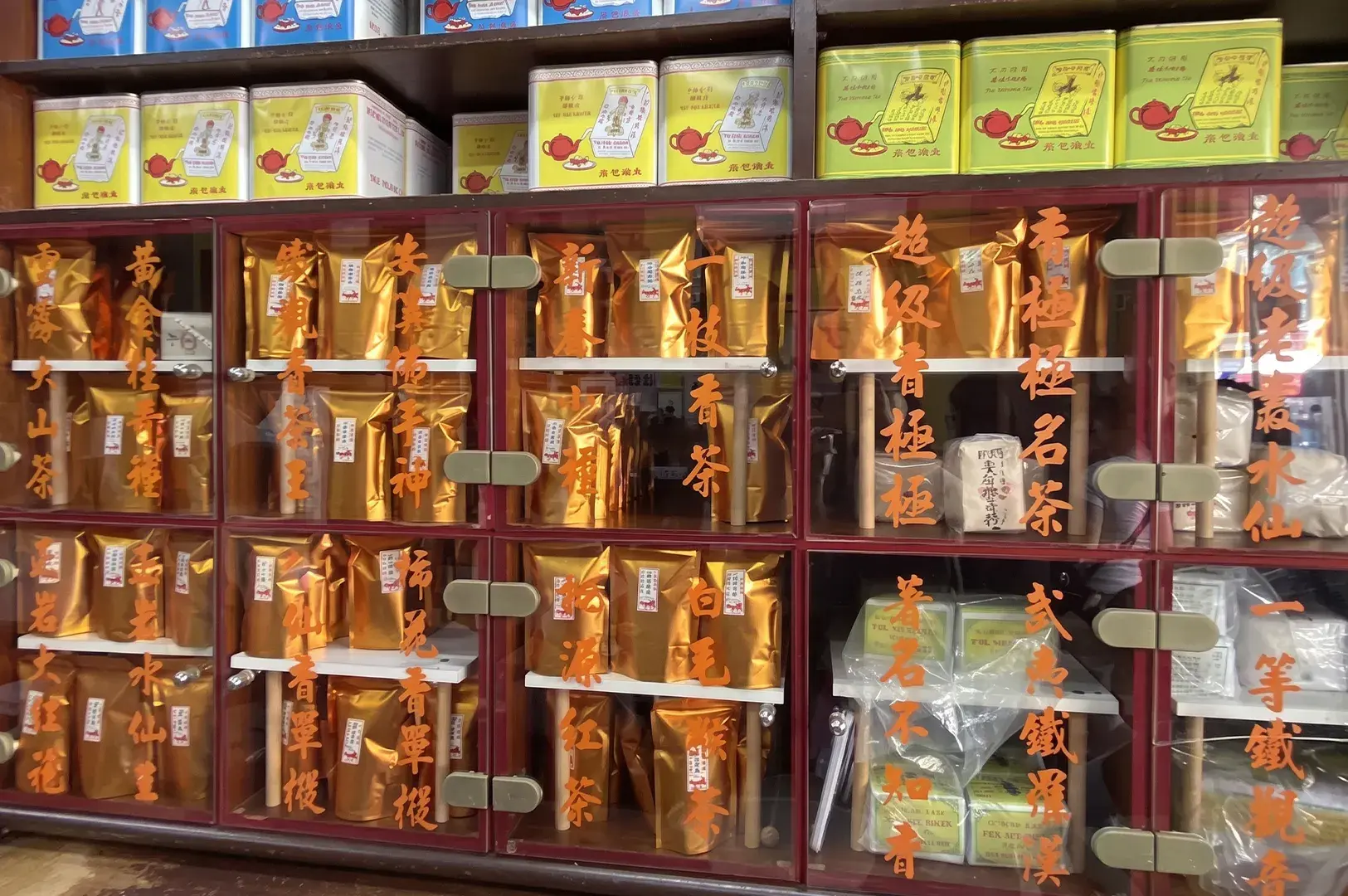
For quality Chinese tea, this is a place that rewards curiosity.
Their most famous product is the Renowned Unknown Fragrance, a a closely guarded traditional oolong blend recipe that regular customers simply trust. It runs from $10.50 to $52.50, depending on the tin, and it's the one I'd start with if you want to understand the house style.
If you're new to Chinese tea heritage, the more affordable roast tea options are a gentle way in. The Tie Guanyin Grade 1 sits between $6 and $29, and the Wuyi Iron Arhat from $7.50 to $33. Both are honest, everyday teas that offer a strong yet light taste.
The Nanyang Tea range is where their character really shows. These are traditional blends, roasted and packed here, made for the local palate rather than an imported ideal. The Sin Choon Shuixian ($33) belongs to this family, and it's a lovely, grounding cup that customers enjoy.
For those willing to go deeper, there are premium Chinese tea types worth lingering over. The Eight Immortal Fragrance Dancong ($29.80 to $89.40), the Dong Ding Oolong ($49.80 to $149.40), and the Da Hong Pao ($99.80 to $299.40) all carry more weight and history. And for a serious occasion, the Royal Tie Guanyin Competition Grade sits at $150.
Chinese Tea Heritage: A Company That Supports Tradition
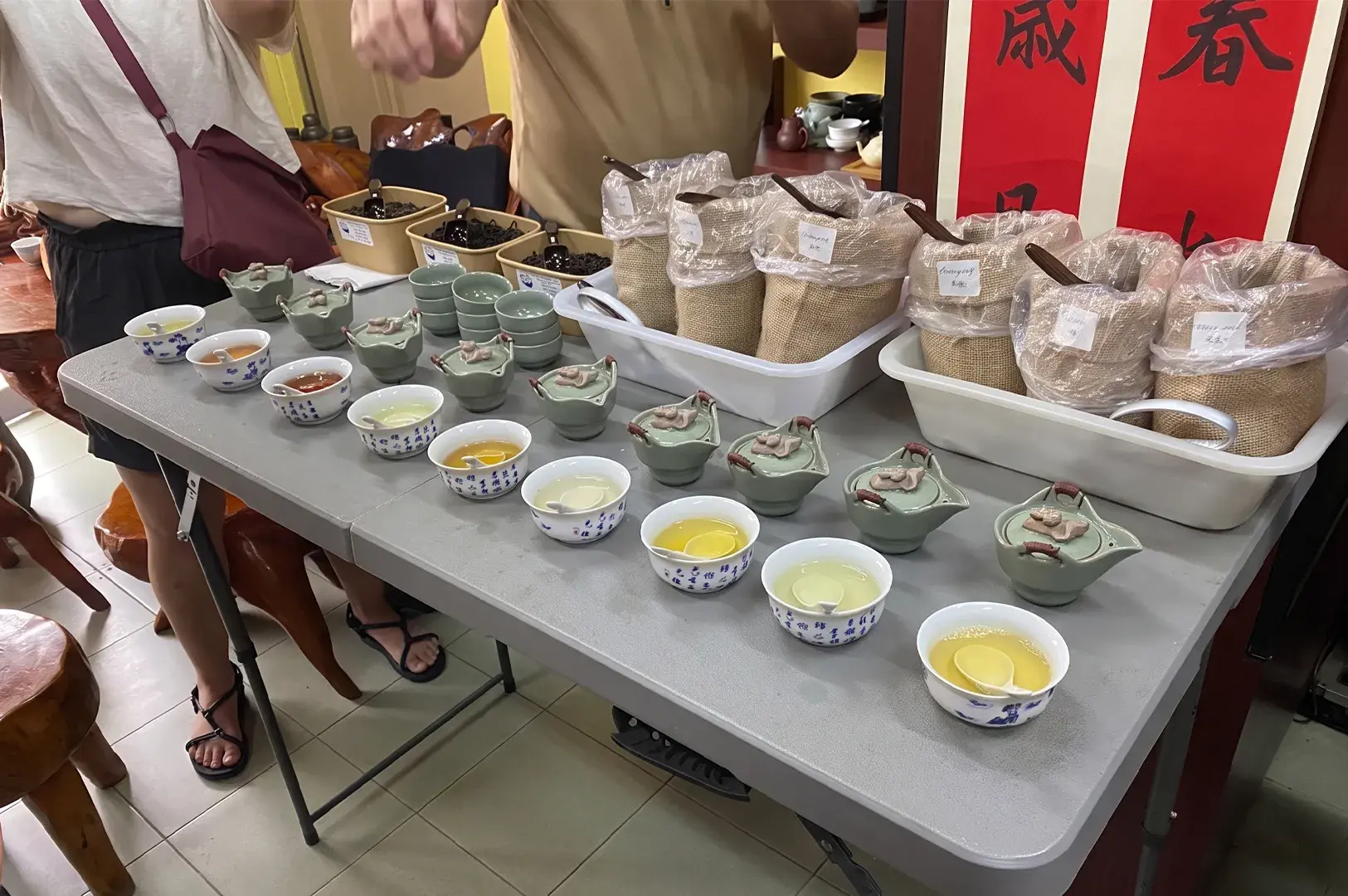
What stayed with me most wasn't a tea. It was the sense of someone who actually cares.
If you're lucky, Kenry Peh himself is around, and he's happy to talk. He'll tell you about local tea culture while you sip something freshly brewed, and you get the feeling he isn't performing. He's just sharing what he loves.
There's no hard sell here. No one hovering, no upselling. You're allowed to be a beginner. You're allowed to ask the plain questions. That kind of patience feels increasingly rare today.
Nanyang Tea: Traditional Blends for the Public
A few practical notes.
You'll find Pek Sin Choon at 36 Mosque Street, Singapore 059514, in the heart of Chinatown. It's open Monday to Saturday, 8:30am to 6:30pm, and closed on Sundays, so plan around that.
Payment is easy: SG QR, PayNow, or cash and cheque in-store. If you can't visit, they ship worldwide, and they also offer wholesale, blending, and customized packaging.
Quality Chinese: Enjoy Tea That’s Cheaper and Rich in Flavor
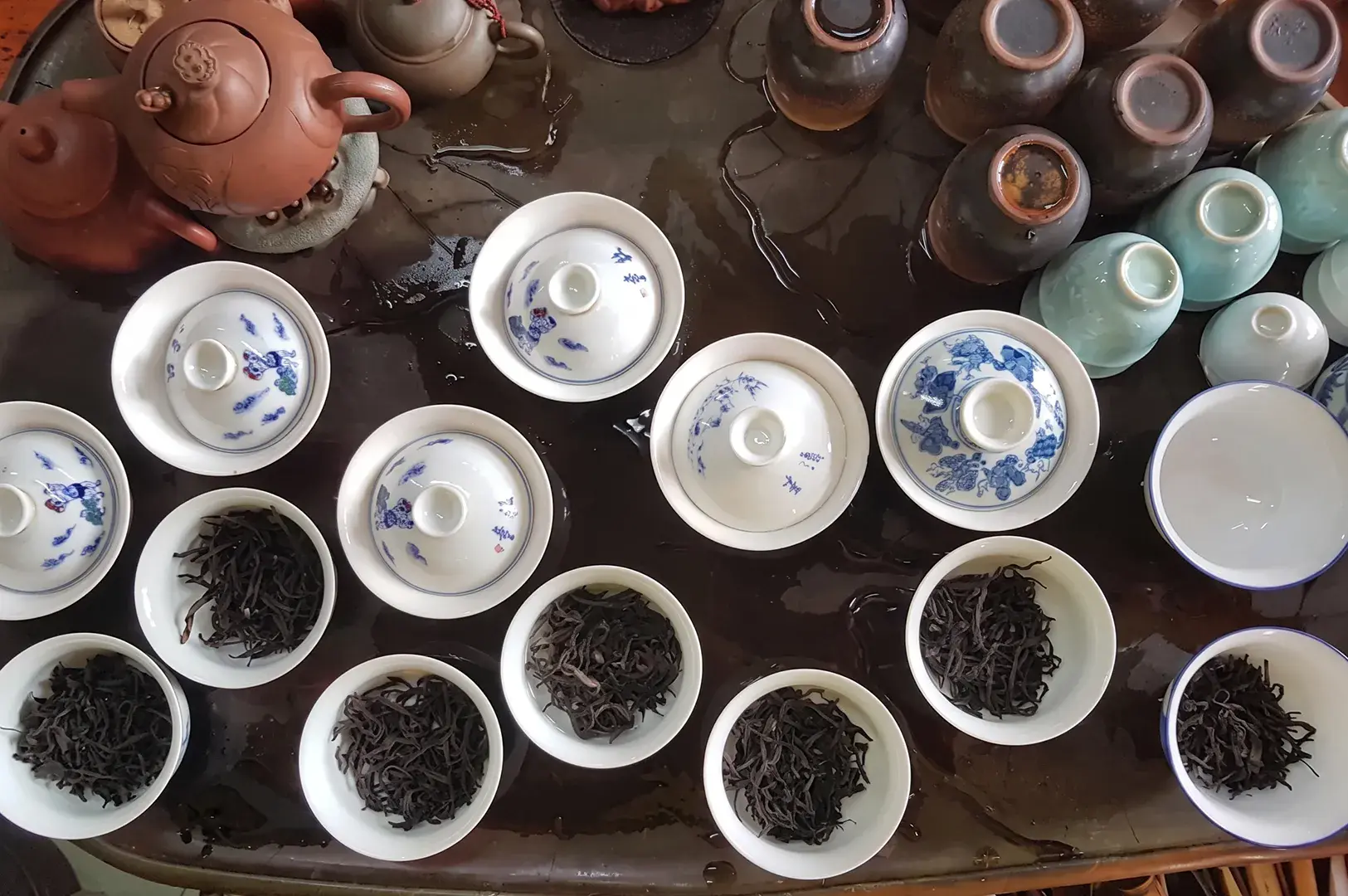
Quietly, yes.
This isn't a slick tasting bar, and it isn't trying to be. It's a merchant that has kept its craft alive through war, redevelopment, and every passing trend, without losing its calm.
I'd recommend it to anyone who wants their tea to come with a story, or who simply wants to buy premium tea from people who understand it deeply. Come with a little time and an open mind. Eat, drink, and enjoy something you'll actually brew, not just display.
Some places sell tea. This one keeps a tradition steeping.
FAQ
Where is Pek Sin Choon located?
At 36 Mosque Street, Singapore 059514, in Chinatown.
What are the opening hours?
Monday to Saturday, 8:30am to 6:30pm. It's closed on Sundays.
What should a first-timer buy?
The Renowned Unknown Fragrance ($10.50 to $52.50) is the signature blend and a good starting point. Grade 1 Tie Guanyin ($6 to $29) is a friendly, affordable option too.
Is Pek Sin Choon really that established?
Yes. Founded in 1925, it's one of Singapore's oldest tea merchants, now run by fourth-generation owner Kenry Peh.
Can I buy online?
You can. They ship worldwide and also offer wholesale, blending, and customized packaging.

The Quiet Patience That Tea Teaches
Tea does not rush. Water must be heated. Leaves must open. Flavour slowly reveals itself in the cup. None of these things happen instantly. Perhaps this is why tea has always felt slightly different from other drinks. It asks for patience. Not loudly, but quietly. The tea will be ready when it is ready. For…

A Guide to the Best Tea Singapore Has to Offer
Introduction In a city known for its vibrant food culture, tea quietly holds its own place among Singapore’s favourite indulgences. While coffee often dominates cafe conversations, many tea lovers know that the search for the best tea Singapore offers leads to a surprisingly diverse world of flavours, traditions, and carefully crafted blends. Across the city,…
-
A Tea Lover’s Guide to the Best Japanese Restaurant Singapore Dining Experiences
Searching for the best Japanese restaurant Singapore offers usually leads people toward sushi counters, omakase menus, or beautifully plated sashimi. Those elements certainly define much of the appeal of Japanese cuisine, but anyone who has spent time dining in Japan knows that the experience rarely ends with the food alone. Tea quietly accompanies the meal….

Why Tea Conversations Always Last Longer Than Expected
There is a small pattern I have started to notice about tea. Whenever tea is involved, conversations tend to last longer than planned. Someone says they will only stay for a short while. A kettle is placed on the stove. Tea is poured into a few cups, and suddenly the conversation begins to stretch in…
-
White Tea: The Most Delicate Expression of Chinese Tea
Introduction Among the many tea types that have emerged from centuries of tea cultivation, white tea often stands apart for its quiet character. It is light in colour, gentle in aroma, and remarkably simple in its making. Yet behind this softness lies a long tradition of craftsmanship that has shaped some of the most refined…
-
The Quiet Discipline of Brewing Tea
There is a quiet discipline that lives inside the act of brewing tea. It is not something that announces itself loudly. There are no strict rules written on the wall, no visible signs that something significant is taking place. From the outside, the process appears simple enough. Water is heated. Leaves are placed into a…
-
Understanding the Six Types of Chinese Tea and What Makes Each Unique
Introduction Across centuries of Chinese culture, tea has held a place of quiet importance. It appears in homes, markets, and tea houses across China, where the simple act of sharing a cup reflects patience, hospitality, and tradition. For many people, Chinese tea is not only a beverage. It is a moment of reflection and a…
-
Stepping Into a Tea Shop Singapore: A World of Leaves, Craft, and Calm
Introduction A good tea shop Singapore offers is not simply a place to buy tea. It is a place where flavour, craft, and tradition meet. In a city known for speed and convenience, a proper tea house offers something different. It invites people to slow down, pay attention, and actually taste what is in their…
-
When Tea Becomes Too Beautiful to Drink
I recently saw a photograph of a tea session online that looked almost too perfect. The teapot sat neatly on a polished tray. The cups were aligned in a way that suggested someone had carefully adjusted them, perhaps more than once. A small branch of flowers leaned gently toward the tea set as if it…

How Tea in Singapore Traveled From Colonial Tables to Modern Teahouses
Tea in Singapore moves quietly through the day, carrying within its steam the gentle convergence of traditions that have found their way to this island over generations. In the soft morning light of hawker centers, the rhythmic pour of teh tarik creates small moments of pause, while afternoon finds its way into tranquil tea rooms…