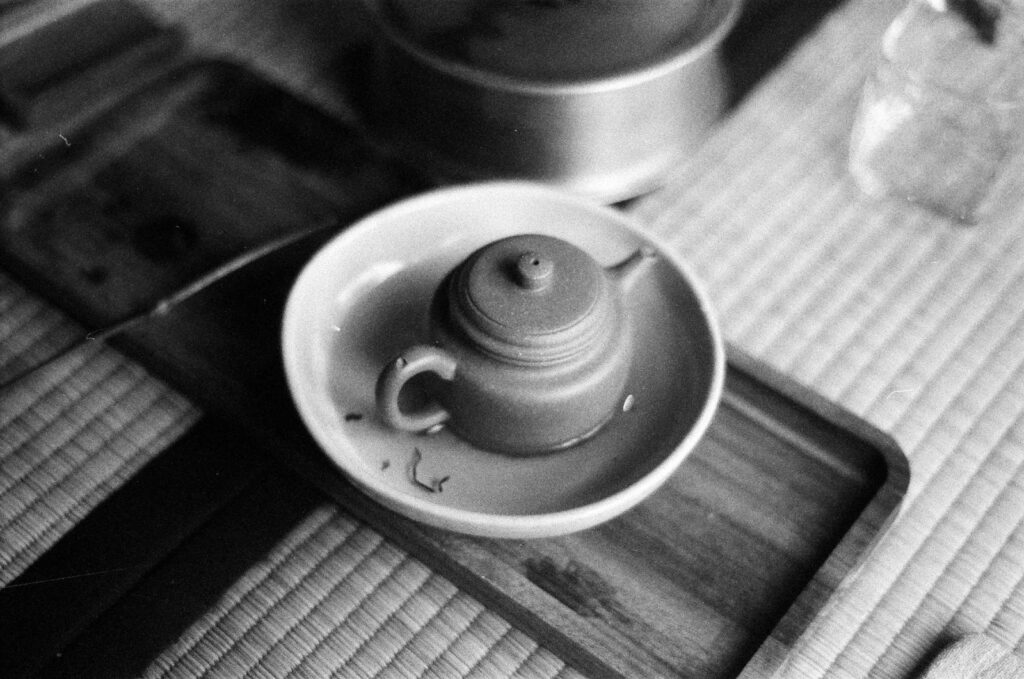
Tea does not rush.
Water must be heated. Leaves must open. Flavour slowly reveals itself in the cup. None of these things happen instantly.
Perhaps this is why tea has always felt slightly different from other drinks. It asks for patience. Not loudly, but quietly. The tea will be ready when it is ready.
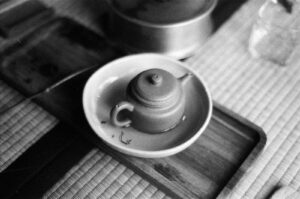
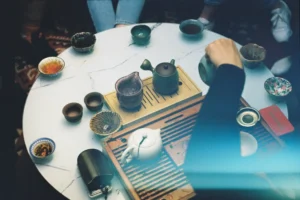
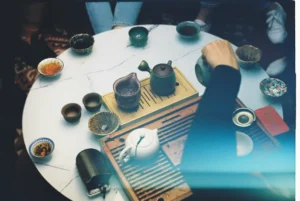
For centuries, tea traditions have reflected this slower rhythm. In gatherings such as the Chinese tea ceremony, the process of brewing tea is treated with calm attention rather than haste. Each step happens in its own time.
The tea itself rarely changes its pace.
Modern life, however, moves much faster. Messages arrive instantly. Food is prepared quickly. Even drinks are often designed for convenience.
Tea sits slightly outside that rhythm.
In traditions like Gongfu Cha, the brewing process itself becomes part of the experience rather than something rushed toward the first sip.
The tea asks us to wait.
Yet waiting with tea rarely feels frustrating. The kettle begins to hum. Steam rises gently. Leaves slowly release their colour into the water.
These quiet moments shape the entire experience.
Perhaps this is one reason tea has endured for centuries. Not simply because it tastes good, but because it gently encourages a different pace of living.
A pace where even a few minutes of waiting can feel meaningful.
With quiet regard,
N. P. Lim

The Quiet Patience That Tea Teaches
Tea does not rush. Water must be heated. Leaves must open. Flavour slowly reveals itself in the cup. None of these things happen instantly. Perhaps this is why tea has always felt slightly different from other drinks. It asks for patience. Not loudly, but quietly. The tea will be ready when it is ready. For…

A Guide to the Best Tea Singapore Has to Offer
Introduction In a city known for its vibrant food culture, tea quietly holds its own place among Singapore’s favourite indulgences. While coffee often dominates cafe conversations, many tea lovers know that the search for the best tea Singapore offers leads to a surprisingly diverse world of flavours, traditions, and carefully crafted blends. Across the city,…
-
A Tea Lover’s Guide to the Best Japanese Restaurant Singapore Dining Experiences
Searching for the best Japanese restaurant Singapore offers usually leads people toward sushi counters, omakase menus, or beautifully plated sashimi. Those elements certainly define much of the appeal of Japanese cuisine, but anyone who has spent time dining in Japan knows that the experience rarely ends with the food alone. Tea quietly accompanies the meal….

Why Tea Conversations Always Last Longer Than Expected
There is a small pattern I have started to notice about tea. Whenever tea is involved, conversations tend to last longer than planned. Someone says they will only stay for a short while. A kettle is placed on the stove. Tea is poured into a few cups, and suddenly the conversation begins to stretch in…
-
White Tea: The Most Delicate Expression of Chinese Tea
Introduction Among the many tea types that have emerged from centuries of tea cultivation, white tea often stands apart for its quiet character. It is light in colour, gentle in aroma, and remarkably simple in its making. Yet behind this softness lies a long tradition of craftsmanship that has shaped some of the most refined…
-
The Quiet Discipline of Brewing Tea
There is a quiet discipline that lives inside the act of brewing tea. It is not something that announces itself loudly. There are no strict rules written on the wall, no visible signs that something significant is taking place. From the outside, the process appears simple enough. Water is heated. Leaves are placed into a…
-
Understanding the Six Types of Chinese Tea and What Makes Each Unique
Introduction Across centuries of Chinese culture, tea has held a place of quiet importance. It appears in homes, markets, and tea houses across China, where the simple act of sharing a cup reflects patience, hospitality, and tradition. For many people, Chinese tea is not only a beverage. It is a moment of reflection and a…
-
Stepping Into a Tea Shop Singapore: A World of Leaves, Craft, and Calm
Introduction A good tea shop Singapore offers is not simply a place to buy tea. It is a place where flavour, craft, and tradition meet. In a city known for speed and convenience, a proper tea house offers something different. It invites people to slow down, pay attention, and actually taste what is in their…
-
When Tea Becomes Too Beautiful to Drink
I recently saw a photograph of a tea session online that looked almost too perfect. The teapot sat neatly on a polished tray. The cups were aligned in a way that suggested someone had carefully adjusted them, perhaps more than once. A small branch of flowers leaned gently toward the tea set as if it…

How Tea in Singapore Traveled From Colonial Tables to Modern Teahouses
Tea in Singapore moves quietly through the day, carrying within its steam the gentle convergence of traditions that have found their way to this island over generations. In the soft morning light of hawker centers, the rhythmic pour of teh tarik creates small moments of pause, while afternoon finds its way into tranquil tea rooms…