Picture a cozy room in the heart of a Russian winter, snow blanketing the world outside. Inside, at the center of a family table, stands a gleaming metal urn, steam gently puffing from its chimney. This is the samovar—the traditional self-boiler that has shaped Russian tea culture for centuries. More than a tool to heat water, it has become a symbol of Russian hospitality, social customs, and daily life.
While many cultures have their own tea rituals, none have a relationship with drinking tea quite like Russia. Russians have historically embraced tea as a central part of their hospitality, developing unique customs and etiquette that set their tea traditions apart. The samovar transformed tea in Russia from just a drink into a cherished social ritual. Russian tea drinking is a slow, communal experience, marked by long conversations, bonding, and the use of traditional equipment that embodies the ritualistic nature of tea consumption in Russia. It dictated how tea was served, how guests gathered, and how Russian homes expressed warmth and community.
Let’s explore how this iconic metal container became the centerpiece of Russian tea tradition and a reflection of Russian culture.
The Origins of a Russian Tea Tradition
The story of Russian tea begins in the 17th century, when tea arrived as a diplomatic gift from Mongolian rulers. At first, it was a rare luxury, consumed only by the elite of tsarist Russia. Traditionally, tea was drunk in elaborate ceremonies by the nobility, while over time it became commonly enjoyed by merchants and peasants in more modest settings. Over time, trade flourished along the Great Tea Road, a caravan route that linked China and Russia. These tea caravans brought not only Chinese tea but also different varieties that appealed to the Russian market—from fragrant green tea to robust black tea.
Just as Chinese teas such as Longjing or Taiwan’s Dong Ding Oolong carry terroir and processing stories— influencing aroma, oxidation, leaf shape, and cup character — the teas imported into Russia also came with their own characteristics and required adaptation. The Russian palate favored strong, robust black teas. Over time, Russian merchants and tea traders selected teas suited to long transport, storage, and dilution — quite unlike the delicate green or oolong teas that thrive in more local, immediate consumption traditions.
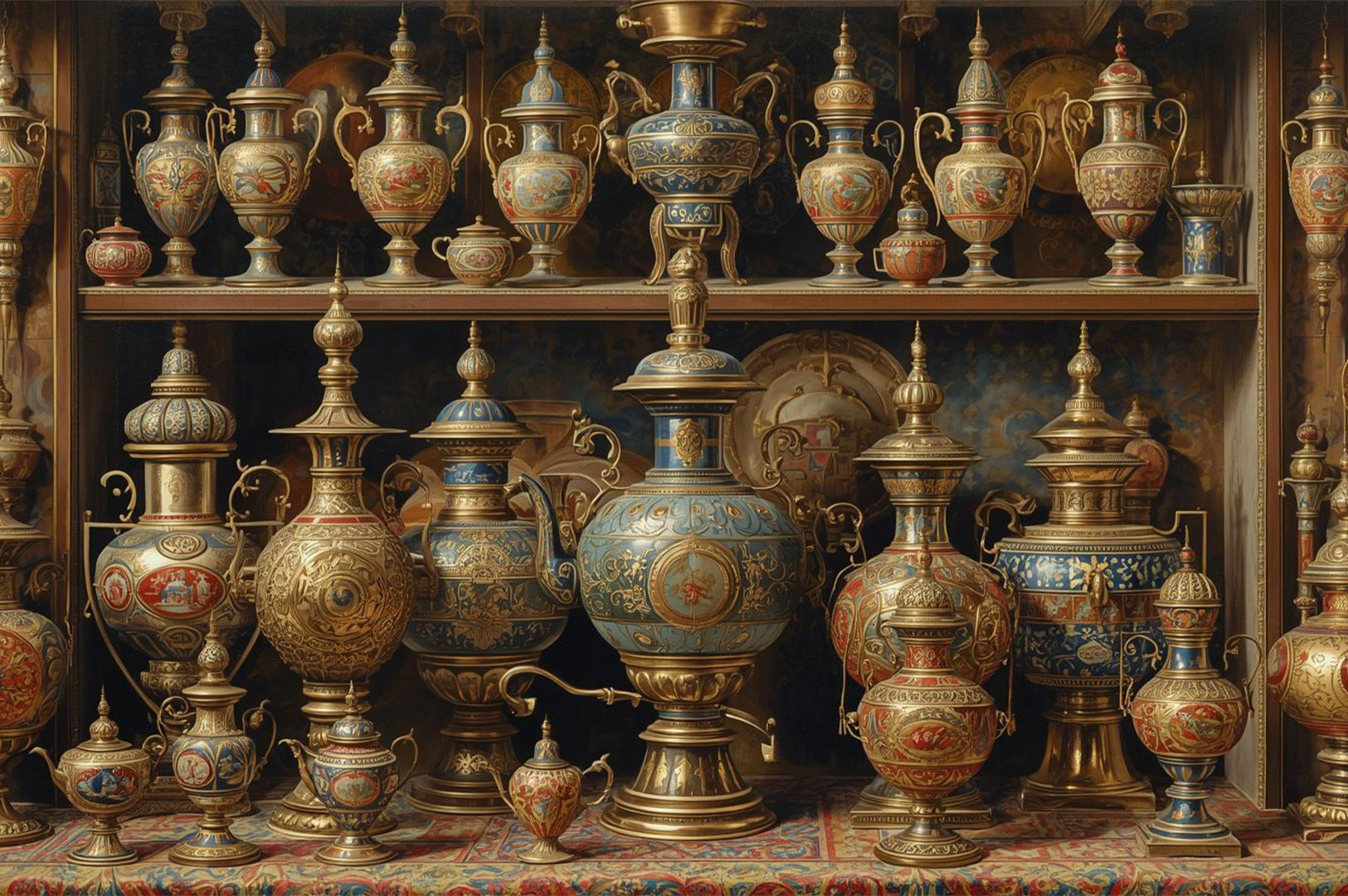
As tea drinking spread across Russian households, the need for a more efficient brewing method grew. The traditional samovar, whose name literally means “self-brewer,” emerged as the perfect solution. By the 18th century, the city of Tula became the heart of samovar production. Known for its expert metalworkers, Tula turned the large metal container into both a household essential and a work of art.
In pre-revolutionary Russia, owning a samovar symbolized not only comfort but also social standing. Whether in a merchant’s house in St. Petersburg, a peasant cottage, or a noble estate, the samovar represented the shared rhythm of Russian life—slow, warm, and centered around tea.
How the Traditional Samovar Works: Function and Form
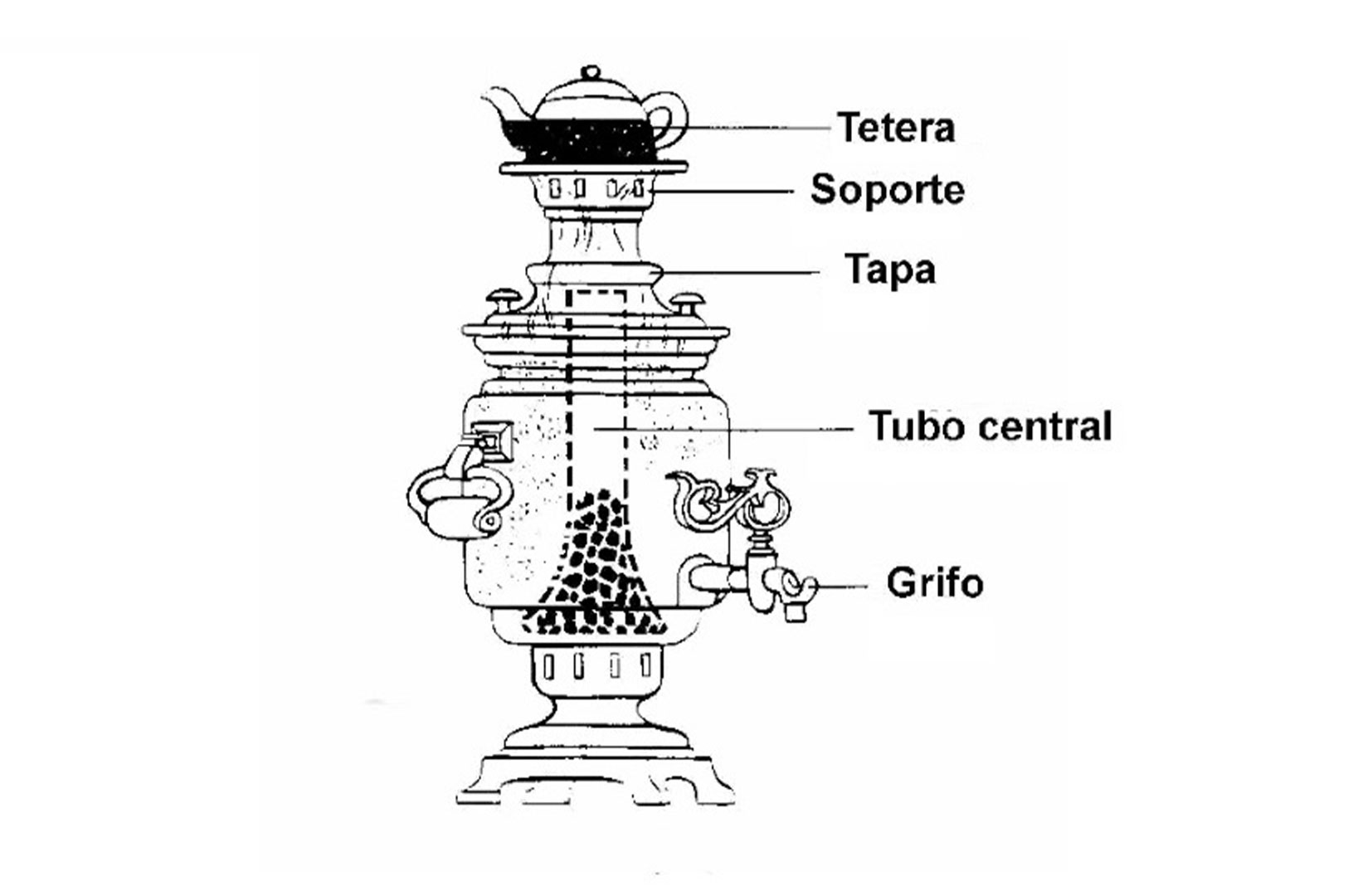
To appreciate Russian tea culture, one must understand how a traditional samovar consists of several ingenious parts:
- The Body (Korpus): A large metal container that holds hot water.
- The Central Pipe (Truba): A vertical tube in the middle where charcoal, pinecones, or wood burns to heat water.
- The Spigot (Kranik): A small tap at the base that dispenses boiling water.
- The Teapot Stand (Konforka): The top surface that supports a small teapot, known as the zavarnik.
This efficient design not only kept water at the right temperature for hours but also produced gentle warmth that filled the room. The traditional samovar became the soul of Russian homes, allowing tea to be served continuously throughout the day—a symbol of ever-present Russian hospitality.
The Russian Tea Ceremony: Zavarka and the Art of Drinking Tea
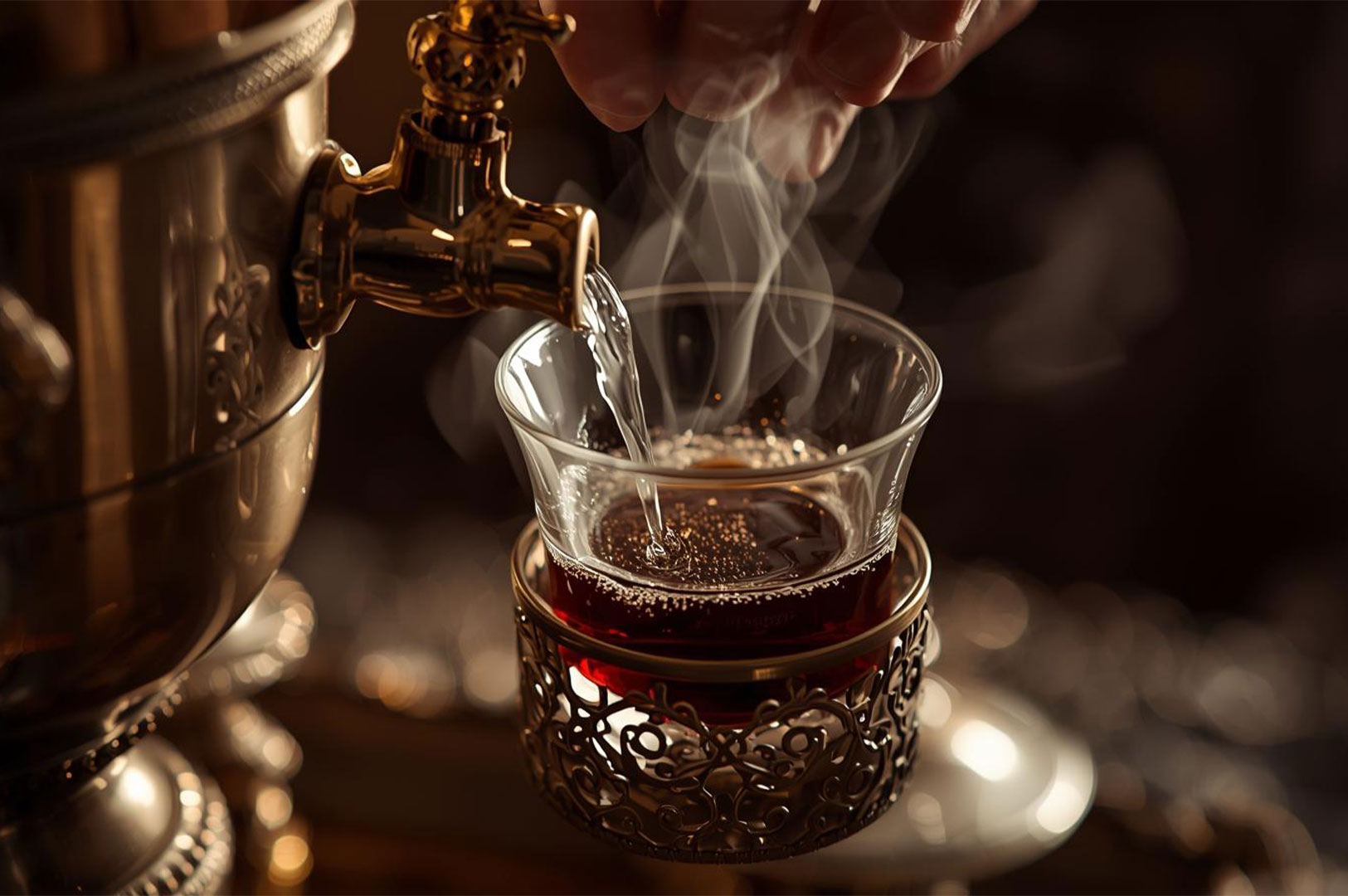
The Russian tea ceremony differs from the formalized practices of Chinese tea or Japanese matcha rituals. In Russia tea culture, drinking tea is informal yet deeply meaningful. It’s not just a drink—it’s an experience shared among family and friends.
The Art of Zavarka
The samovar made possible the creation of zavarka, a concentrated form of black tea brewed in the small teapot resting atop the samovar. A small quantity of loose leaf tea is steeped in boiling water, forming a strong, almost syrupy concentrated tea.
Each guest personalizes their cup:
- Pour a bit of zavarka into a glass or metal holder.
- Dilute it with hot water from the samovar’s spigot.
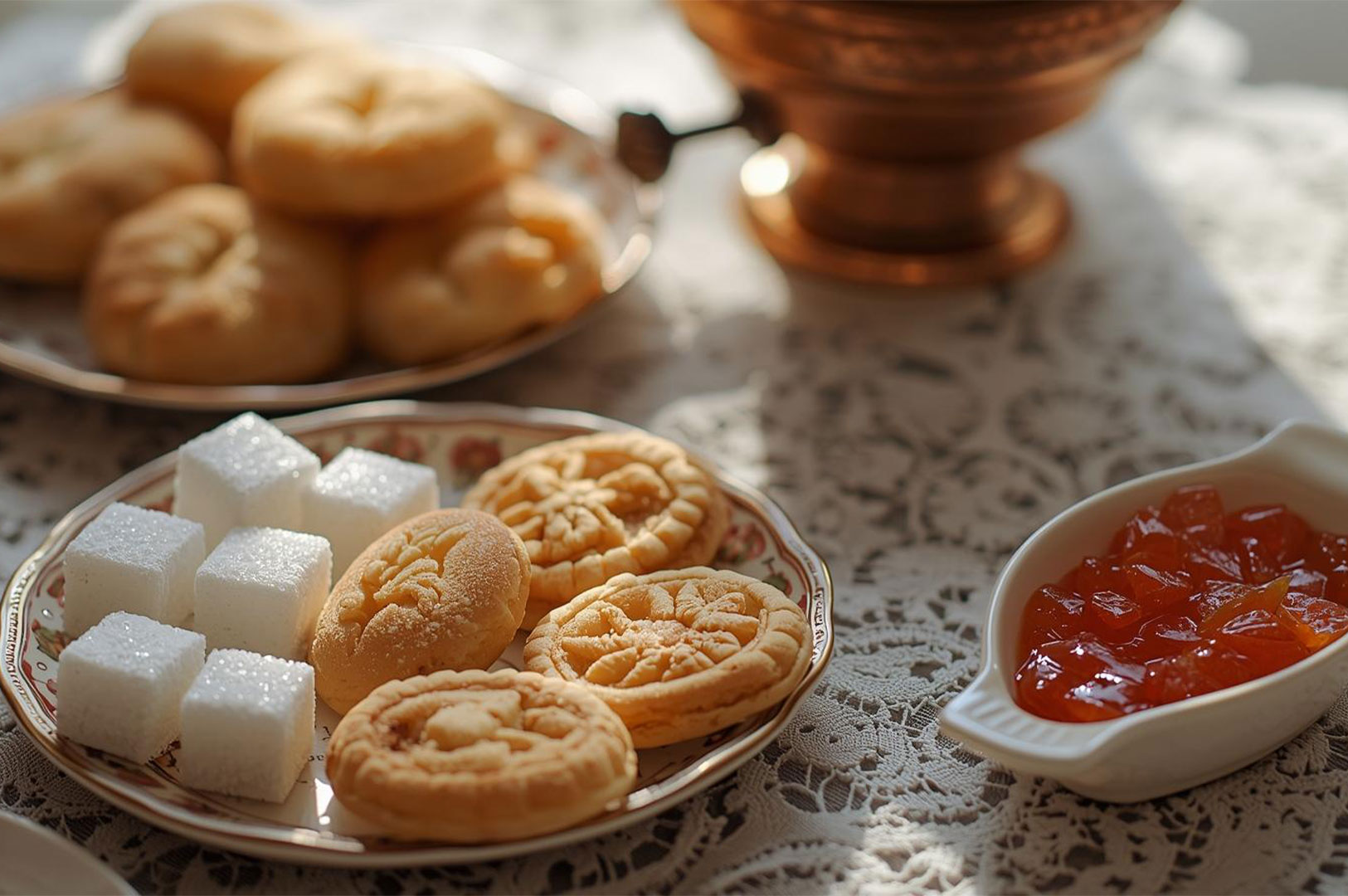
This ritual reflects the Russian tradition of individuality within community. Some prefer strong tea, others milder; some add herbs, dried fruits, or even fruit preserves. In Russian households, tea is typically served with sugar cubes, spiced cookies, or sweet pastries—often laid out on a lace tablecloth with matching saucers and ornate tea sets.
The Role of Food: Traditional Accompaniments to Russian Tea
The story of Russian tea begins in the 17th century, when tea arrived as a diplomatic gift from Mongolian rulers. At first, it was a rare luxury, consumed only by the elite of tsarist Russia. Traditionally, tea was drunk in elaborate ceremonies by the nobility, while over time it became commonly enjoyed by merchants and peasants in more modest settings. Over time, trade flourished along the Great Tea Road, a caravan route that linked China and Russia. These tea caravans brought not only Chinese tea but also different varieties that appealed to the Russian market—from fragrant green tea to robust black tea.
As tea drinking spread across Russian households, the need for a more efficient brewing method grew. The traditional samovar, whose name literally means “self-brewer,” emerged as the perfect solution. By the 18th century, the city of Tula became the heart of samovar production. Known for its expert metalworkers, Tula turned the large metal container into both a household essential and a work of art.
In pre-revolutionary Russia, owning a samovar symbolized not only comfort but also social standing. Whether in a merchant’s house in St. Petersburg, a peasant cottage, or a noble estate, the samovar represented the shared rhythm of Russian life—slow, warm, and centered around tea.
More Than Just a Drink: The Samovar as a Symbol of Russian Hospitality
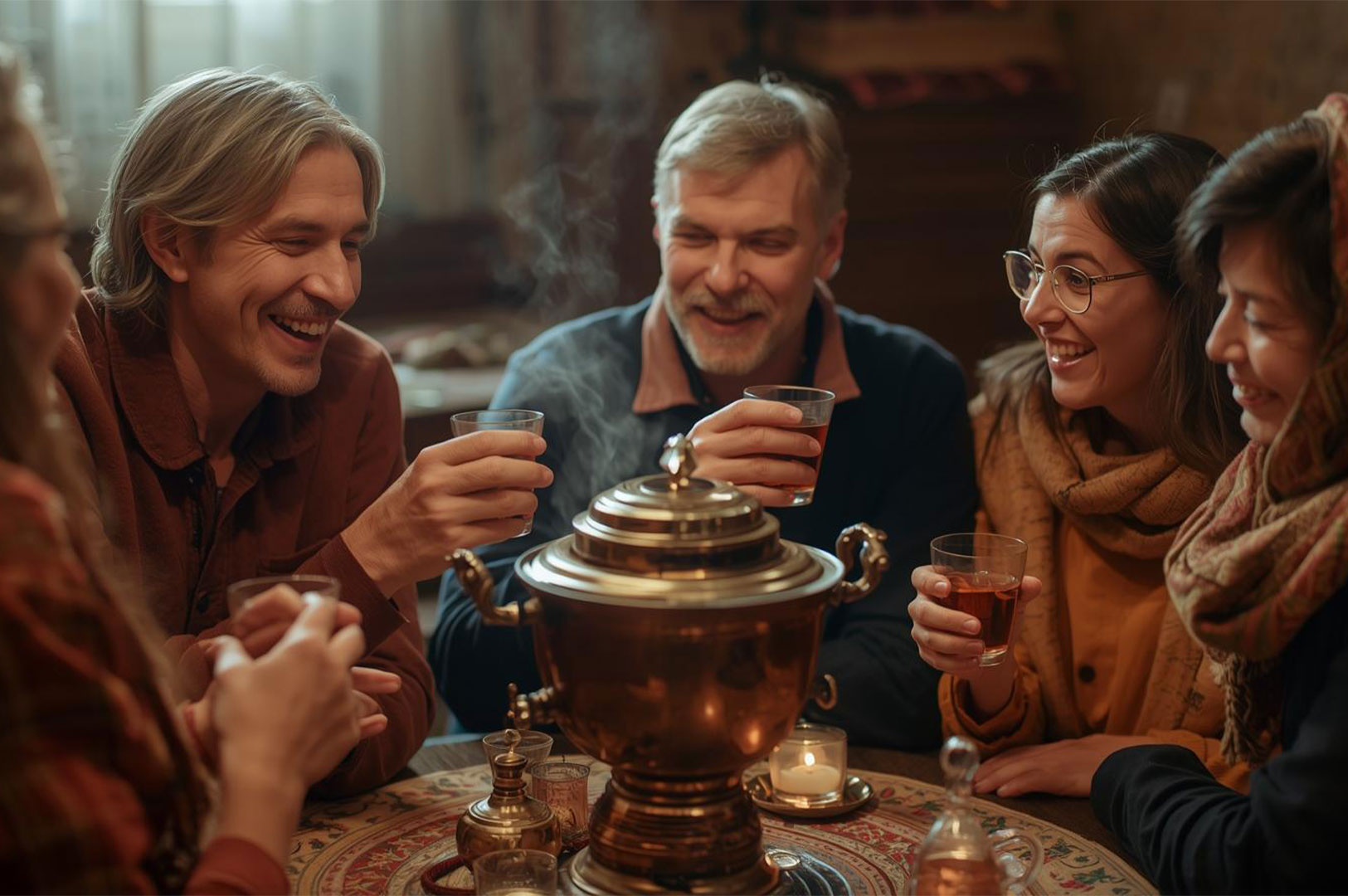
In Russian tea culture, drinking tea around a samovar was never only about the drink itself. It was about connection. To serve tea was to show care and respect.
- A Symbol of Welcome: Keeping a samovar constantly running was a hallmark of Russian hospitality. Guests were always offered more tea—a small gesture with great warmth.
- The Great Equalizer: Whether in pre-revolutionary Russia or during the soviet era, drinking tea around a samovar united people of all backgrounds.
- An Integral Part of Russian Life: The samovar provided not only hot water for tea but also for washing and cooking. It was an integral part of daily life and family routines.
The phrase “to sit by the samovar” became synonymous with comfort, conversation, and togetherness. It was during tea time that families shared stories, friends discussed politics, and generations bonded—often sipping tea late into the night.
The Samovar in Russian Art, Literature, and Culture
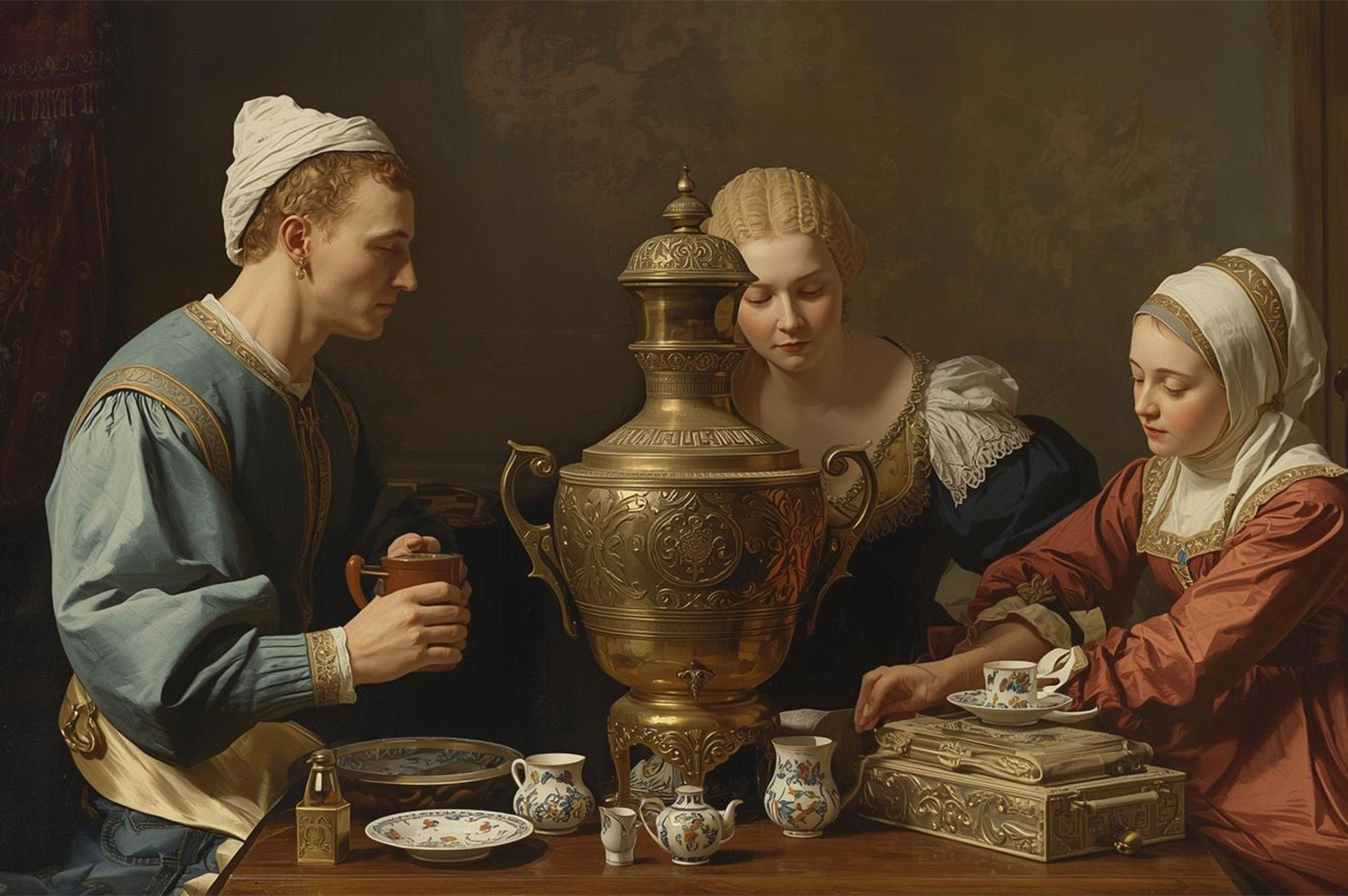
From Russian art to literature, the samovar became an enduring emblem of Russian culture. Writers such as Tolstoy, Chekhov, and Dostoevsky often used tea parties and samovar scenes to reflect domestic harmony or tension. Paintings from the Russian empire era often depict a merchant’s wife seated near a samovar, surrounded by family, tea served in ornate glasses, and fruit preserves glistening nearby.
In this way, the samovar transcended function—it became an artistic and cultural motif, representing warmth, tradition, and Russian life itself.
The Soviet Era and Beyond: The Evolution of Russia’s Self-Brewer
During the soviet era, the samovar adapted to modernity. The charcoal-based self brewer gave way to electric models, keeping the traditional samovar shape but simplifying its operation. Families across Russia could still enjoy tea time without tending to coals.
Even today, Russian homes often display a samovar—sometimes an heirloom from grandparents, sometimes a decorative centerpiece. At dachas (country houses), families still light traditional samovars, enjoying the nostalgic scent of smoke and the unique flavor of tea brewed over live fire.
The Enduring Legacy of Russian Tea Culture
Few national customs reflect warmth and unity like tea in Russia. While Chinese tea is rooted in ceremony and British tea emphasizes formality, Russian tea tradition centers on hospitality, flexibility, and community.
The samovar turned drinking tea into an act of belonging. It connected generations, welcomed strangers, and filled homes with the comforting aroma of tea leaves and burning pinecones. Whether it’s black tea, green tea, or blends enhanced with add herbs and dried fruits, tea production remains a thriving part of Russia's heritage.
To understand the samovar is to glimpse the Russian soul: resilient, warm, and deeply communal. Every cup poured from a samovar carries centuries of Russian tradition, hospitality, and heart.
So the next time you see this shining metal container with its graceful spout and small teapot perched on top, remember—it’s not just a drink. It’s the essence of Russian culture: a gathering, a story, and a shared warmth that endures through the ages.

Stop Calling It “Premium”: Why Most Luxury Tea Branding Is Empty
There is a word I have become increasingly cautious of in the tea world. Premium. It appears everywhere. Premium leaves. Premium harvests. Premium collections. Premium experiences. The word sounds reassuring. It suggests care, quality, and something worth paying attention to. But after seeing it attached to almost everything, I sometimes wonder whether it has started…
-
Pryce Tea: A Modern Pour with Old Tea-Room Ambitions
I visited on a weekday afternoon, around three, when the city had quieted into that particular lull between lunch and the evening rush. I’d been curious about Pryce Tea for a while, mostly because the brand keeps surfacing among people who talk about teas the way some people talk about wine. With a reputation built…
-
The Seasons in a Tin: How Weather Shapes What I Reach For
I have a small habit that I never really noticed until recently. The weather changes, and somehow, so does the tea I want. On a hot afternoon, I find myself reaching for something light and floral. When rain settles over the windows, I want something darker, warmer, perhaps a little more comforting. On those rare…
-
Ginger Lily Afternoon Tea on Orchard Road: A Floral Chapter in Singapore’s Culinary Story
I noticed the ginger lily flowers before I noticed anything else. Not real ones, exactly. A wall of them, suspended in resin, catching the light as I stepped off the lift on Level 5 at Hilton Singapore Orchard, home to Ginger Lily, a floral-themed afternoon tea lounge on Orchard Road. I stood there a second…
-
Minimalism, But Make It Warm: A Simpler Way to Drink Better Tea
There is a certain irony about tea. The more we learn about it, the easier it becomes to complicate it. A simple cup of leaves and water slowly becomes surrounded by equipment, measurements, techniques, and expectations. We begin collecting teapots, comparing brewing methods, and searching for the perfect setup. None of these things are wrong….
-
A Humble Cup in an Age of Overdesigned Drinks: iTea Review
The bubble tea I queued for last month came with a caramelized brûlée top I had to crack with the back of my spoon. It was fine. Pretty, even. But somewhere between the torched sugar and the cheese foam and the third topping I didn’t ask for, I lost the drink itself. So I went…
-
Matcha Hype Has Gone Too Far (But I Still Drink It)
I have a confession. I am slightly tired of seeing matcha everywhere. Not because I dislike matcha. In fact, I drink it quite often. But there is something amusing about watching a humble tea become the centre of every café menu, wellness conversation, and social media trend. Matcha has gone from a traditional Japanese tea…
-
Hortus Afternoon Tea Review: When the Garden Becomes the Occasion in the Flower Dome
I forgot, for a moment, that I was indoors at Hortus, the Mediterranean restaurant nestled within the Flower Dome at Gardens by the Bay. There were trees above me, real ones, and the air held that cool, green stillness you usually find early in the morning somewhere far from the city. A leaf drifted down…
-
The Real Reason Your Tea at Cafés Tastes Flat
There is a particular disappointment that comes with ordering tea at a café. You see the menu. You notice the carefully written descriptions. Perhaps there is a mention of fragrant jasmine, roasted oolong, or a carefully selected blend. The presentation arrives beautifully arranged, and for a moment, there is anticipation. Then you take the first…
-
Herbal Tea in Chinese: A Cup Shaped by Heat, Balance, and Belief
The first sip was bitter. I was maybe seven, and my grandmother had pressed a small ceramic cup into my hands, dark liquid inside, steam curling up between us. She didn’t explain. She just said, “Drink. You’ve been too heaty.“ I made a face. She didn’t smile. She just waited until I finished. Years later,…