Tea as Hospitality: The Small Gestures That Make a Home
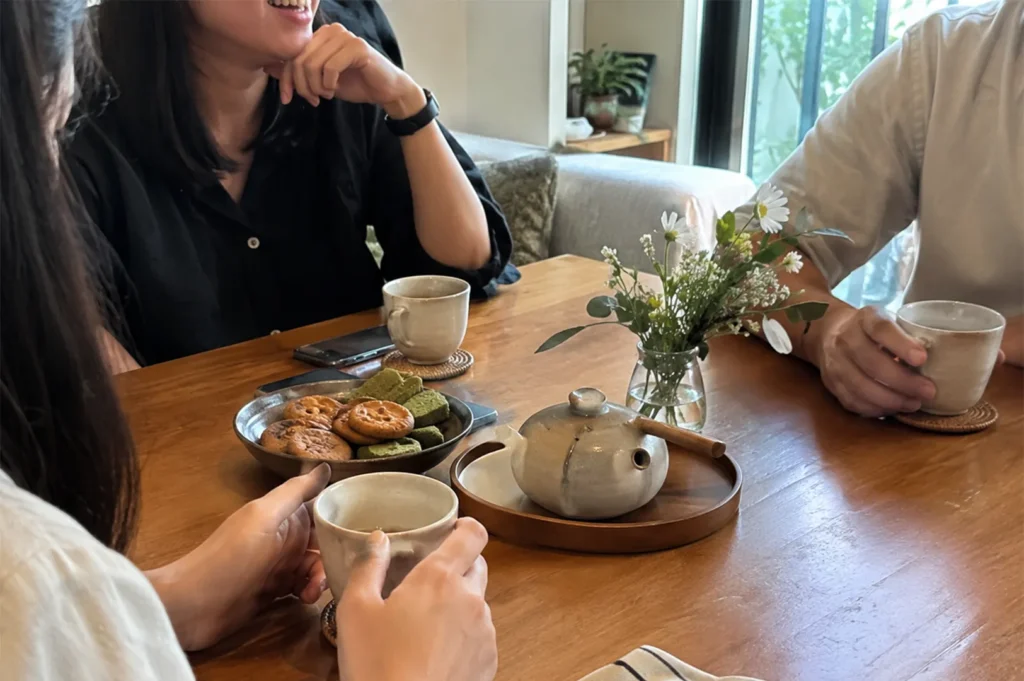
I think we sometimes make hospitality sound more complicated than it needs to be.
A beautifully arranged dining table. Matching plates. Fresh flowers. Something impressive coming out of the oven just as everyone arrives.
All lovely things, of course.
But when I think about the homes where I have felt most welcome, the details I remember are usually much smaller.
Someone offering me a seat before asking anything else. A glass of water appearing without me having to request it. Or, my personal favourite, being asked whether I would like some tea.
It’s such an ordinary question.
And yet, I think it says quite a lot.
Offering tea is one of those gestures that can make someone feel welcome without requiring a grand display of hospitality. You’re not necessarily promising an elaborate experience. You’re simply inviting someone to settle in.
And sometimes, that’s exactly what a guest needs.
I’ve always found it interesting how tea manages to fit into so many different versions of hospitality. In some Chinese households, serving tea is closely connected to respect and family relationships. In Japan, the traditions surrounding tea can involve careful attention to the guest, the setting, and the moment itself. Across many South Asian homes, chai is a familiar part of welcoming visitors and spending time together.
The customs aren’t identical, and I wouldn’t want to pretend they are.
But there is something worth appreciating in how a drink can become part of the way people express care.
Not through the tea alone, but through everything happening around it.
The person who remembers you prefer your tea without sugar. The host who brings out another cup because someone has arrived unexpectedly. The family member who starts preparing tea while everyone is still figuring out where to sit.
None of these gestures requires particularly expensive leaves or beautiful teaware.
They require attention.
And I wonder whether that’s the part of hospitality we sometimes overlook.
We spend so much time thinking about what we should serve guests that we forget to consider how we make them feel while they’re there.
Does everyone have somewhere comfortable to sit? Are we actually listening to the conversation? Does someone feel awkward about accepting a second cup?
I know I’m guilty of thinking too much about getting everything ready and not enough about simply being present.
Because here’s the thing about offering tea: the preparation doesn’t have to be perfect.
The cups don’t need to match. The tea doesn’t need an impressive origin story. You don’t even need to know the ideal brewing temperature to make someone feel at home.
Of course, good tea is always appreciated. I love the idea of choosing something thoughtfully, especially when you know what your guest enjoys.
But I don’t think hospitality should depend on how much we know about tea.
Someone might prefer a strong black tea with milk. Someone else might ask for something floral or caffeine-free. Another person might not want tea at all.
And that’s okay.
Maybe genuine hospitality is also knowing when not to insist.
There’s a difference between wanting to share something you enjoy and expecting everyone else to enjoy it in exactly the same way.
I’ve come to think that the best hosts understand this without making a big deal of it.
They offer, they listen, and they let people feel comfortable enough to be themselves.
What I especially like about tea is that it gives people something to do together without demanding constant conversation.
You can sit with a cup while catching up on months of news. You can talk about absolutely nothing important. You can even have a comfortable silence while everyone enjoys their drink.
Not every gathering needs to become an occasion.
Sometimes a visit is just a visit.
Someone drops by after a long day. A friend has an hour to spare. A relative comes over without much warning.
The kettle goes on, a few cups come out, and suddenly there’s a reason to sit together for a little longer.
I like that.
Perhaps we’ve become so used to seeing hospitality presented through beautiful interiors, carefully styled tables, and impressive food that the everyday version feels almost too ordinary to celebrate.
But what if the most welcoming homes aren’t necessarily the ones that have everything prepared?
What if they’re simply the places where nobody feels like an inconvenience?
Tea can’t create that feeling on its own, obviously. A beautifully brewed cup means very little if the person holding it feels unwelcome.
Still, I think offering tea can be a lovely place to begin.
It’s a small way of saying there’s room for you here.
And maybe that’s what makes a home feel like a home in the first place.
Not the things we put on display.
But the little ways we make space for one another.
— Maria Tan On tea, culture, and everyday rituals.

The Quiet Patience That Tea Teaches
Tea does not rush. Water must be heated. Leaves must open. Flavour slowly reveals itself in the cup. None of these things happen instantly. Perhaps this is why tea has always felt slightly different from other drinks. It asks for patience. Not loudly, but quietly. The tea will be ready when it is ready. For…

A Guide to the Best Tea Singapore Has to Offer
Introduction In a city known for its vibrant food culture, tea quietly holds its own place among Singapore’s favourite indulgences. While coffee often dominates cafe conversations, many tea lovers know that the search for the best tea Singapore offers leads to a surprisingly diverse world of flavours, traditions, and carefully crafted blends. Across the city,…
-
A Tea Lover’s Guide to the Best Japanese Restaurant Singapore Dining Experiences
Searching for the best Japanese restaurant Singapore offers usually leads people toward sushi counters, omakase menus, or beautifully plated sashimi. Those elements certainly define much of the appeal of Japanese cuisine, but anyone who has spent time dining in Japan knows that the experience rarely ends with the food alone. Tea quietly accompanies the meal….

Why Tea Conversations Always Last Longer Than Expected
There is a small pattern I have started to notice about tea. Whenever tea is involved, conversations tend to last longer than planned. Someone says they will only stay for a short while. A kettle is placed on the stove. Tea is poured into a few cups, and suddenly the conversation begins to stretch in…
-
White Tea: The Most Delicate Expression of Chinese Tea
Introduction Among the many tea types that have emerged from centuries of tea cultivation, white tea often stands apart for its quiet character. It is light in colour, gentle in aroma, and remarkably simple in its making. Yet behind this softness lies a long tradition of craftsmanship that has shaped some of the most refined…
-
The Quiet Discipline of Brewing Tea
There is a quiet discipline that lives inside the act of brewing tea. It is not something that announces itself loudly. There are no strict rules written on the wall, no visible signs that something significant is taking place. From the outside, the process appears simple enough. Water is heated. Leaves are placed into a…
-
Understanding the Six Types of Chinese Tea and What Makes Each Unique
Introduction Across centuries of Chinese culture, tea has held a place of quiet importance. It appears in homes, markets, and tea houses across China, where the simple act of sharing a cup reflects patience, hospitality, and tradition. For many people, Chinese tea is not only a beverage. It is a moment of reflection and a…
-
Stepping Into a Tea Shop Singapore: A World of Leaves, Craft, and Calm
Introduction A good tea shop Singapore offers is not simply a place to buy tea. It is a place where flavour, craft, and tradition meet. In a city known for speed and convenience, a proper tea house offers something different. It invites people to slow down, pay attention, and actually taste what is in their…
-
When Tea Becomes Too Beautiful to Drink
I recently saw a photograph of a tea session online that looked almost too perfect. The teapot sat neatly on a polished tray. The cups were aligned in a way that suggested someone had carefully adjusted them, perhaps more than once. A small branch of flowers leaned gently toward the tea set as if it…

How Tea in Singapore Traveled From Colonial Tables to Modern Teahouses
Tea in Singapore moves quietly through the day, carrying within its steam the gentle convergence of traditions that have found their way to this island over generations. In the soft morning light of hawker centers, the rhythmic pour of teh tarik creates small moments of pause, while afternoon finds its way into tranquil tea rooms…