It is easy to forget how many hands have touched a tea leaf before it reaches ours.
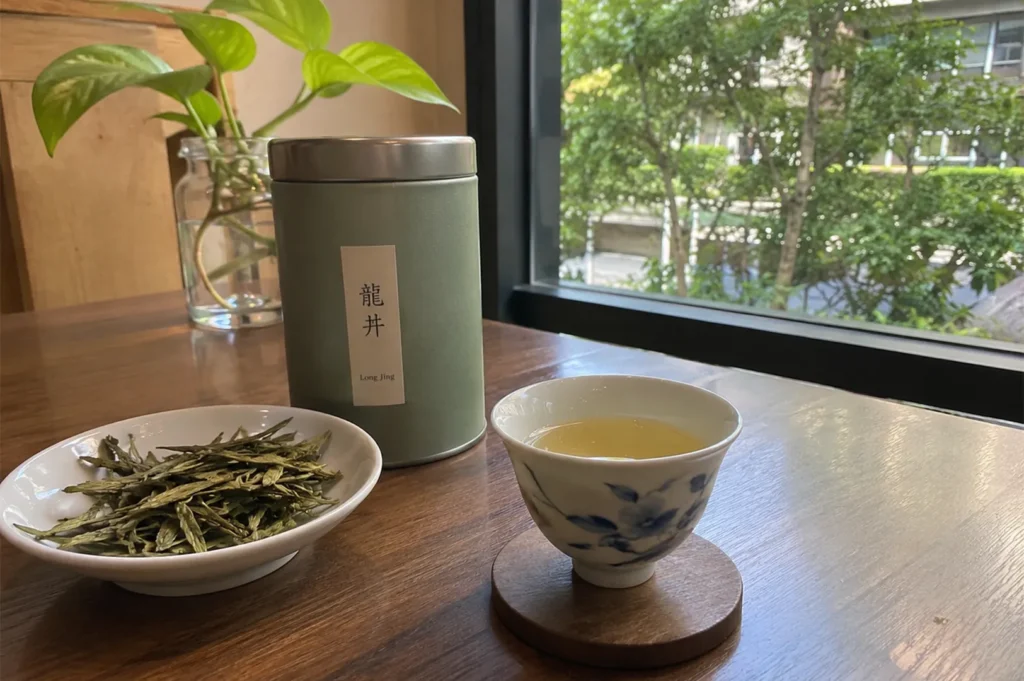
We speak of mountains, harvest seasons, famous gardens, and the qualities of particular cultivars. We admire the fragrance of a good Long Jing or the complexity of a carefully roasted Tie Guan Yin.
Yet the people responsible for those qualities often remain unnamed.
I find that increasingly difficult to overlook.
Consider Long Jing, for instance. Its distinctive flat leaves are shaped through a demanding process of pan-firing, where experience and careful judgment influence the finished tea.
Behind that familiar appearance is someone’s practiced skill.
And before the leaves reach the pan, someone must tend the plants, assess the growing conditions, and decide when the leaves are ready to be picked.
These are not romantic details added to make tea seem special.
They are work.
I think tea appreciation sometimes becomes too focused on the person drinking it. We discuss our brewing techniques, our preferred vessels, and how well we can recognise particular flavours.
There is value in developing that knowledge.
But I wonder whether we give enough attention to those who make such experiences possible.
A skilled tea maker may spend years learning to recognise changes that most of us would never notice. A farmer’s decisions may influence a harvest long before the leaves are processed.
Their contributions cannot always be understood from a tasting note.
Nor should they be reduced to a charming story printed on expensive packaging.
Gratitude, I believe, requires something more than admiration.
It asks us to become curious about provenance, working conditions, and whether the people producing our tea are treated fairly. These questions are not always easy to answer, but that does not make them less important.
I do not think every cup needs to become an exercise in ethical examination.
Sometimes tea should simply be enjoyed.
Still, I would like to remember that what feels effortless in my hands may represent considerable effort in someone else’s.
Perhaps appreciating tea more deeply begins not with learning another brewing technique, but with recognising the people whose knowledge and labour have already gone into the leaves.
The cup may belong to us.
The work behind it never did.
With quiet regard,
N. P. Lim

Matcha Hype Has Gone Too Far (But I Still Drink It)
I have a confession. I am slightly tired of seeing matcha everywhere. Not because I dislike matcha. In fact, I drink it quite often. But there is something amusing about watching a humble tea become the centre of every café menu, wellness conversation, and social media trend. Matcha has gone from a traditional Japanese tea…
-
Hortus Afternoon Tea Review: When the Garden Becomes the Occasion in the Flower Dome
I forgot, for a moment, that I was indoors at Hortus, the Mediterranean restaurant nestled within the Flower Dome at Gardens by the Bay. There were trees above me, real ones, and the air held that cool, green stillness you usually find early in the morning somewhere far from the city. A leaf drifted down…
-
The Real Reason Your Tea at Cafés Tastes Flat
There is a particular disappointment that comes with ordering tea at a café. You see the menu. You notice the carefully written descriptions. Perhaps there is a mention of fragrant jasmine, roasted oolong, or a carefully selected blend. The presentation arrives beautifully arranged, and for a moment, there is anticipation. Then you take the first…
-
Herbal Tea in Chinese: A Cup Shaped by Heat, Balance, and Belief
The first sip was bitter. I was maybe seven, and my grandmother had pressed a small ceramic cup into my hands, dark liquid inside, steam curling up between us. She didn’t explain. She just said, “Drink. You’ve been too heaty.“ I made a face. She didn’t smile. She just waited until I finished. Years later,…
-
Maybe Your Favourite Tea Is Not Your Best Tea
I have a tea sitting in my cupboard that I would never call my “best” tea. It is not the rarest. It is not the most expensive. It does not come with an impressive story about ancient tea trees, remote mountains, or a limited harvest. And yet, I drink it more often than almost anything…
-
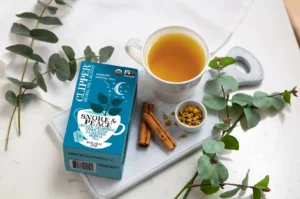
Clipper Tea Review: Does the Packaging Match the Pour?
There’s a box of Clipper Tea that’s lived in my cupboard longer than most of my mugs. I didn’t plan to buy it. I was standing in the tea aisle, tired, half-decided on something familiar, when the colour caught me. Bright, cheerful, a little hand-drawn looking. So I brought it home. And I’ve been drinking…
-
Hear Me Out, Tea Does Not Need to Be Serious All the Time
There is something I have noticed about tea culture. We take tea very seriously. Perhaps too seriously. We discuss origins, processing methods, brewing temperatures, and the history behind every leaf. We debate whether a tea should be enjoyed in a certain way. We carefully consider the correct vessel, the right water, and the ideal environment….
-
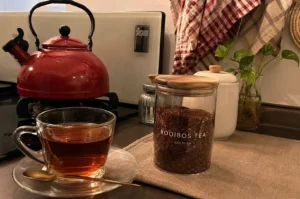
Red Bush Tea: The Tea That Does Not Need to Shout
There is a red pot in my mother’s kitchen that only comes out in the evening. By then the coffee has done its work and gone quiet. The day has loosened. She fills the kettle, drops in a spoonful of something the colour of dried autumn, and lets it sit while she tidies the last…
-
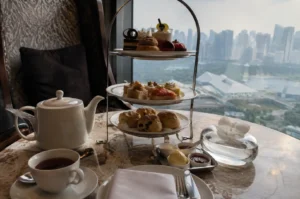
Hear Me Out: High Tea Is Overrated
Hear me out: high tea is one of the most convincing ways we have found to make snacking feel important. I understand the appeal. The room is polished, the cups are delicate, and everything arrives in miniature. There is something satisfying about sitting down in the middle of the afternoon and behaving as though time…
-
Where Tea Is Given Time to Speak: Anteasocial Review
I almost walked past it. Owen Road Singapore doesn’t announce much. A quiet stretch, low buildings, the kind of road you pass through on the way to somewhere louder. Then there it was, unassuming, just numbers on a wall: 117. Anteasocial is a contemporary Oriental specialty teahouse in Singapore, and if you’re looking for a…