There is a strange contradiction in the way we talk about tea today.
For centuries, tea was appreciated for its taste, its rituals, and the moments it created. Today, it is often sold as something else entirely.
A solution.
A promise.
A shortcut.
The language surrounding wellness tea has become increasingly familiar. Detox tea. Cleansing blends. Metabolism boosters. Teas that promise to transform the body with every sip.
I find this difficult to accept.
Not because tea has no value, but because we have started asking it to do things it was never meant to do.
Tea is not a miracle.
It will not erase poor habits. It will not fix exhaustion caused by ignoring rest. It will not replace proper care, balanced choices, or attention to our own wellbeing.
Yet many wellness teas are marketed as though they can.
This is where the conversation becomes misleading.
The problem is not tea itself.
Tea has been enjoyed for generations across cultures, and there are many reasons people continue returning to it. The process of preparing tea encourages patience. The act of sitting with a warm cup can create a moment of pause. Certain teas contain natural compounds that researchers continue to study for their potential health effects.
But these benefits exist alongside tea.
They should not become the entire reason we drink it.
I think we sometimes forget that tea’s greatest value has always been its simplicity.
A cup of green tea in the morning.
A soothing herbal infusion before rest.
A pot shared during conversation.
These moments may not sound revolutionary, but perhaps that is exactly why they matter.
Modern wellness culture often turns ordinary things into products that promise extraordinary results. A simple habit becomes a solution to every problem. A natural drink becomes a symbol of a better version of ourselves.
Tea does not need this burden.
The beauty of tea is not that it transforms us overnight.
It is that it gives us small opportunities to take better care of ourselves.
To pause.
To breathe.
To be present.
Perhaps the healthiest relationship we can have with tea is not expecting it to save us.
Perhaps it is simply appreciating what it has always offered.
A quiet moment in a demanding world.
With quiet regard,
N. P. Lim

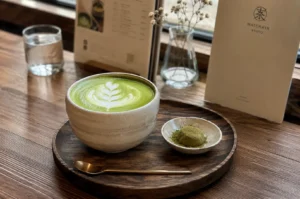
Matcha Hype Has Gone Too Far (But I Still Drink It)
I have a confession. I am slightly tired of seeing matcha everywhere. Not because I dislike matcha. In fact, I drink it quite often. But there is something amusing about watching a humble tea become the centre of every café menu, wellness conversation, and social media trend. Matcha has gone from a traditional Japanese tea…
-
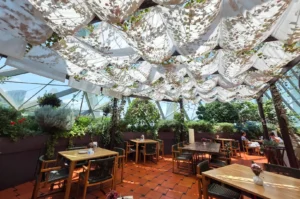
Hortus Afternoon Tea Review: When the Garden Becomes the Occasion in the Flower Dome
I forgot, for a moment, that I was indoors at Hortus, the Mediterranean restaurant nestled within the Flower Dome at Gardens by the Bay. There were trees above me, real ones, and the air held that cool, green stillness you usually find early in the morning somewhere far from the city. A leaf drifted down…
-
The Real Reason Your Tea at Cafés Tastes Flat
There is a particular disappointment that comes with ordering tea at a café. You see the menu. You notice the carefully written descriptions. Perhaps there is a mention of fragrant jasmine, roasted oolong, or a carefully selected blend. The presentation arrives beautifully arranged, and for a moment, there is anticipation. Then you take the first…
-
Herbal Tea in Chinese: A Cup Shaped by Heat, Balance, and Belief
The first sip was bitter. I was maybe seven, and my grandmother had pressed a small ceramic cup into my hands, dark liquid inside, steam curling up between us. She didn’t explain. She just said, “Drink. You’ve been too heaty.“ I made a face. She didn’t smile. She just waited until I finished. Years later,…
-
Maybe Your Favourite Tea Is Not Your Best Tea
I have a tea sitting in my cupboard that I would never call my “best” tea. It is not the rarest. It is not the most expensive. It does not come with an impressive story about ancient tea trees, remote mountains, or a limited harvest. And yet, I drink it more often than almost anything…
-
Clipper Tea Review: Does the Packaging Match the Pour?
There’s a box of Clipper Tea that’s lived in my cupboard longer than most of my mugs. I didn’t plan to buy it. I was standing in the tea aisle, tired, half-decided on something familiar, when the colour caught me. Bright, cheerful, a little hand-drawn looking. So I brought it home. And I’ve been drinking…
-
Hear Me Out, Tea Does Not Need to Be Serious All the Time
There is something I have noticed about tea culture. We take tea very seriously. Perhaps too seriously. We discuss origins, processing methods, brewing temperatures, and the history behind every leaf. We debate whether a tea should be enjoyed in a certain way. We carefully consider the correct vessel, the right water, and the ideal environment….
-
Red Bush Tea: The Tea That Does Not Need to Shout
There is a red pot in my mother’s kitchen that only comes out in the evening. By then the coffee has done its work and gone quiet. The day has loosened. She fills the kettle, drops in a spoonful of something the colour of dried autumn, and lets it sit while she tidies the last…
-
Hear Me Out: High Tea Is Overrated
Hear me out: high tea is one of the most convincing ways we have found to make snacking feel important. I understand the appeal. The room is polished, the cups are delicate, and everything arrives in miniature. There is something satisfying about sitting down in the middle of the afternoon and behaving as though time…
-
Where Tea Is Given Time to Speak: Anteasocial Review
I almost walked past it. Owen Road Singapore doesn’t announce much. A quiet stretch, low buildings, the kind of road you pass through on the way to somewhere louder. Then there it was, unassuming, just numbers on a wall: 117. Anteasocial is a contemporary Oriental specialty teahouse in Singapore, and if you’re looking for a…