The first time I held a Chinese Yixing teapot, I wasn't ready for how warm it would feel.
Small, reddish-brown, sitting in my palm like a river stone that had been kept somewhere warm. I'd just rinsed it with hot water, the way you're supposed to before the first brew, and the clay drank up that heat and gave it back to my hands. It wasn't smooth like a mug. It had a faint grain to it, almost like fine sandpaper worn soft.
I used to think a teapot was just a teapot. Then I met this one.
A Chinese Yixing teapot is a small, unglazed clay teapot traditionally made from zisha clay in Yixing, China, prized for its porous surface that gradually absorbs tea oils and can deepen the flavor of later brews.
What Is a Chinese Yixing Teapot?
Let's start simple.
A Yixing teapot is a small, unglazed clay teapot traditionally made in the town of Yixing, in Jiangsu province, China. People have been making them there since around the 15th and 16th centuries, and the practice never really stopped.
The clay is the whole point. It's called zisha clay, sometimes translated as purple clay, though the finished pots come in shades from deep brown to russet to a dusty violet. Because the clay is left unglazed, the surface stays slightly porous. That single detail shapes everything that follows.
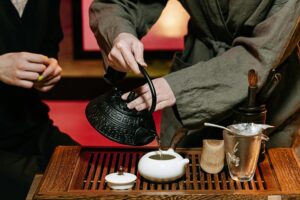
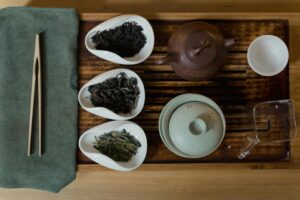
These pots are usually small, sometimes only holding enough for a few tiny cups. That's on purpose. A Yixing clay teapot is built for gongfu tea, a way of brewing that uses lots of leaves, a little water, and many short steeps rather than one long soak.
It suits certain teas especially well: oolong, pu'er, roasted black teas, and some aged teas. The kind of teas with depth, that reward attention.
Why Yixing Clay Matters: The Magic of Zhuang Zhu Ni 280ml and Other Sizes

Here's where it gets interesting, and where I'd ask you to be a little patient with the claims.
The magic, if we can call it that, is in the porousness. Unglazed zisha clay isn't sealed off from what passes through it. Over many brews, the pot slowly takes in faint traces of the tea's oils and aroma. The clay holds a memory of what it has brewed.
Yixing teapots come in various sizes, including popular models like zhao zhuang zhu ni 280ml, zhao zhuang zhu ni 240ml, zhao zhuang zhu ni 220ml, and zhao zhuang zhu ni 180ml, each crafted to suit different tea brewing needs.
A Teapot That Remembers: Bamboo Zhao Zhuang Zhu and More
This is the part I keep coming back to.
I like the idea that the pot remembers what it has brewed. Not in a mystical way. Just in the plain, physical sense that the clay has drunk in the character of one tea, again and again, until the two belong together.
Which is why so many tea drinkers do something that seems odd at first. They dedicate one pot to one type of tea, and only that.
The reasoning is practical. Since the clay absorbs traces of what you brew, mixing very different teas in the same pot can muddle them. A roasted oolong leaves a different mark than a young sheng pu'er. So people tend to pair a pot to a single tea family:
- One pot for oolong
- One pot for pu'er
- One pot for black tea
- One pot for heavily roasted teas
Among these, the bamboo zhao zhuang zhu is a favorite for its natural aesthetic and excellent brewing qualities.
There's something quietly moving about using the same teapot for the same tea over months, then years. You're not just brewing. You're building a small history together.
The Role of Yixing Teapots in Gongfu Tea: Zhuang Zhu Ni 300ml and More

To understand why the pot is shaped the way it is, you have to understand gongfu tea.
Gongfu simply means doing something with skill and care over time. In tea, it's a style of brewing built around attention rather than ceremony for its own sake.
Here's roughly how it works:
- A small teapot, so nothing gets wasted — like the ping zi ni 150ml or the zhong zhao zhuang zhu, perfect for precise brewing.
- A high ratio of leaves to water, packing in flavour.
- Many short infusions, sometimes ten or more from the same leaves.
- Close control over water temperature, steeping time, and how you pour.
Each steep tastes a little different from the last. The first might be bright and quick. The middle ones, full and settled. The later ones, gentler, like the tea winding down.
Specialized Yixing Teapots: Tradition, Artistry, and Signature Models

I won't pretend it's always a calm, meditative ritual. Sometimes it's just me, half-awake on a Sunday, watching the leaves unfurl. But even then, gongfu tea asks you to slow down and pay attention. And a small Yixing teapot like the zisha teapot breeze or the teapot bamboo breeze shui fits your hand perfectly for exactly that.
Many enthusiasts find joy in using specialized pots such as the zisha teapot xiao ying or the lotus xishi zhao zhuang, which enhance the brewing of specific teas. The peach xishi zhao zhuang and the hanwa zhao zhuang zhu are also popular for their unique clay properties and elegant designs.
For those seeking a blend of tradition and artistry, the teapot lotus xishi zhao and the zisha teapot lotus seed offer floral elegance, while the zisha teapot qiu shui and the zisha teapot shui ping are prized for their refined shapes and brewing qualities.
Many collectors turn to renowned models like the pao zun zhao zhuang or the zun zhao zhuang zhu for their historical significance and craftsmanship.
If you're new to Yixing teapots, consider exploring offerings from trusted sources such as house 一 沁 茶 and yiqin tea house 一, accessible online at tea house yiqinteahouse com and yiqin tea house yiqinteahouse. These sellers provide authentic pieces including the teapot de zhong zhao and the breeze de zhong zhao, ensuring quality and tradition.
Choosing a yixing zisha teapot bamboo or the zisha teapot breeze de can elevate your tea experience, combining the natural beauty of bamboo-inspired design with the subtle aroma-enhancing qualities of zisha clay.
Experience the tradition, craftsmanship, and quiet magic of Yixing teapots, and let each brew tell a story of place, person, and time.
Craft, Shape, and the Human Hand: Teapot Breeze De Zhong and Zisha Teapot De Zhong

Not every Yixing teapot is made the same way.
Some are fully handmade, shaped and joined by a maker over many hours. Others are semi-handmade, built with the help of moulds but finished by hand. Both can be lovely. Both can also be faked, but I'll get to that.
What I've learned to feel for is function, not just looks.
Pick up a good one and the lid sits snug, with barely any wobble. Tilt it to pour and the tea comes out in a clean, steady arc, no dribbling down the spout. The handle should feel balanced, so the pot doesn't tip forward when it's full.
There are classic shapes with names and long histories, some round and low, some tall and upright. But the shape isn't only about beauty. A rounder pot like the teapot breeze de zhong gives rolled oolong room to open. A taller one like the zisha teapot de zhong suits long, strappy leaves.
Why Beginners Should Approach Yixing Slowly: The Zisha Teapot Mini Rong and Lotus Xishi
Now, the honest part.
Yixing teapots can be genuinely confusing when you're starting out, and I'd rather you knew that going in.
- Prices swing wildly. You'll see pots for twenty euros and pots for thousands, sometimes looking almost identical to a beginner's eye.
- Authenticity is hard to judge. Plenty of mass-produced pots are sold as real Yixing when they're not, and telling the difference takes experience.
- The clay names get overwhelming. There are many types and sub-types, each with its own reputation, and it's easy to feel lost.
- Some pots are decorative, not functional. A pretty pot that pours badly is still a bad pot for actually making tea.
So here's what I'd gently suggest.
You don't need an expensive pot to begin. You need one that pours well and a tea you love. That's genuinely enough.
More Than a Teapot, a Living Tea Tradition: Zisha Teapot Harmony Si and Teapot Harmony Si Ting

So why does any of this matter?
It sits at the meeting point of place and person, tradition and Tuesday afternoon.
I don't think it needs to be dressed up as something exotic or mysterious. It's simpler and warmer than that. It's a good tool, made with care, that grows more meaningful the more you use it.
If you want to explore authentic Yixing teapots, check out 一 沁 茶 舍 yiqinteahouse.com and their exquisite collections including the yixing zisha teapot lotus, the zisha teapot lotus xishi, and the teapot bamboo zhao zhuang zhu. Prices range from 110,95 EUR to 151,95 EUR at regular price, reflecting the quality and craftsmanship.
Browse their offerings at tea house 一 沁 or yiqinteahouse.com to find your perfect match, whether it's a zhao zhuang zhu ni 240ml, a zhao zhuang zhu ni 220ml, or a zhao zhuang zhu ni 180ml model.
Embrace the tradition with a ceramic teapot with floral relief or a brown ceramic teapot, or perhaps a matte black ceramic teapot paired with a white ceramic tea tray for an elegant tea setup. Many tea lovers share user pictures and pictures user to showcase their prized teapots, often set against a blurred gray background or a blurred rustic wood background.
The world of Yixing teapots is vast, from the yixing zisha teapot xiao to the zisha teapot taihu stone, from the zisha teapot song gu to the bamboo breeze shui ping. Whether you prefer the qiu shui zhao zhuang or the breeze shui ping zi, or the zisha teapot pao zun, each pot brings its own character.
Conclusion

For those who appreciate nature-inspired designs, the teapot lotus seed zhao, the zisha teapot lotus hanwa zhao, and the teapot duo zhi zhao offer floral elegance. The lotus hanwa zhao zhuang and the lotus seed zhao zhuang zhu are also exquisite choices.
Explore the craftsmanship of the gu han jiang bensan lu ni 140ml and the bensan lu ni 640ml, or the delicate ping huangjin zhu ni 150ml yiqin tea house and ni 150ml yiqin tea. Each piece tells a story of tradition and artistry.
Whether you seek the zisha teapot elegant wu or the teapot elegant wu jinsha, or the yixing zisha teapot de zhong and the de zhong zhao zhuang, your journey into the world of Yixing teapots will be richly rewarding.
Discover more Chinese Tea house list at this article: The Best Tea Houses In Singapore For Chinese Tea

Green Tea in Japan: Exploring the Cultural and Social Dimensions of Green Tea in Japan
In Japan, green tea is more than just a beverage; it is a cultural cornerstone, deeply woven into the fabric of daily life, social customs, and national identity. It’s the welcoming drink offered to a guest, the quiet moment of reflection in a busy day, and the centerpiece of a centuries-old ceremony. While many are…

Singapore Ginger Tea: A Complete Guide to Traditional Wellness in the Lion City
In Singapore’s multicultural landscape, ginger tea is a beloved staple that transcends cultural boundaries. Known locally as teh halia, this warming brew embodies centuries of traditional wisdom adapted to modern Singapore life. Whether you seek relief from air-conditioned chill, digestive support after a big meal, or a refreshing sip on a rainy day, Singapore ginger…
-
Loose Tea Leaves: Elevate Your Singapore Tea Experience
In a city that moves as fast as Singapore, the simple act of brewing a cup of tea can feel like a small rebellion—a moment of intentional calm. More and more tea lovers are discovering that this moment is profoundly elevated when they make the switch from conventional tea bags to loose tea leaves. This…
-
Tea Leaf Singapore: An Exquisite Journey of Flavours, Traditions, and Moments
Singapore’s strategic position as a maritime trading hub has nurtured a rich tea culture where ancient traditions blend with modern innovation. The local love for tea runs deep, shaping Singapore’s unique tea culture and fostering a strong appreciation for every cup. Singapore continues to honor its tea traditions while embracing new innovations, ensuring that the…
-
Korean Barley Tea: A Journey into Boricha and Its Rich Traditions
Walk into any Korean restaurant, and before you glance at the menu, a glass of amber-colored boricha (보리차) arrives. This Korean barley tea is as fundamental as water in Korean culture—served hot or cold, a staple in everyday life and a gesture of hospitality. While roasted barley tea is popular across many East Asian countries,…
-
Mugicha Barley Tea: Japan’s Beloved Caffeine-Free Summer Drink Unveiled
Long before green tea became Japan’s iconic beverage, mugicha barley tea—a golden, nutty roasted barley tea—has refreshed Japanese families for centuries. Unlike traditional tea from Camellia sinensis leaves, mugicha is a naturally caffeine free herbal tea made by steeping roasted barley grains in hot water. This traditional barley tea has evolved from an imperial luxury…
-
Buckwheat Tea Unveiled: Singapore’s Rising Caffeine-Free Wellness Beverage
Singapore’s health-conscious community is embracing buckwheat tea, a caffeine free tea known for its rich cultural heritage, unique nutty flavor, and impressive health benefits. This traditional Asian beverage, also called soba cha in Japan, offers a soothing alternative to green tea or coffee, perfect for Singapore’s tropical climate and wellness goals. Its growing popularity reflects…
-
Japanese Green Tea from Japan: Unlocking the Secrets of Authentic Varieties and Brewing
Experience the rich tradition of authentic japanese green tea from japan, a beverage refined over centuries with unique steaming methods that preserve its vibrant color, rich aroma, and delicate taste. This comprehensive guide introduces you to Japan’s most treasured green tea varieties, their extensive health benefits, and how to enjoy japanese tea perfectly brewed, whether…
-
How to Make Matcha Latte: A Step-by-Step Recipe Quest
There’s a special kind of satisfaction that comes from mastering your favorite café drink at home. When it comes to the vibrant and creamy matcha latte, the rewards are particularly sweet. Learning how to make matcha latte in your own kitchen not only saves you money but also gives you complete control over the quality,…
-
Mastering the Art of Matcha Green Tea Latte Recipe: Your Path to Perfection
There’s a unique kind of magic in crafting your own café-quality matcha green tea latte at home. It’s the satisfaction of watching vibrant green matcha swirl into creamy, frothed milk, the joy of customizing it to your exact taste, and the simple pleasure of sipping a wholesome, delicious beverage you made yourself. Beyond the significant…