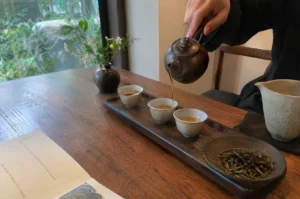
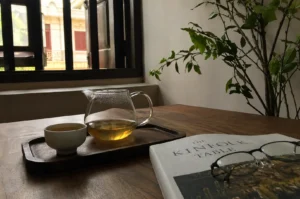
There was a time when buying tea meant something simple. You chose a tea you liked, brought it home, and brewed it.
The leaves were meant for hot water, not long-term storage.
Yet something has quietly changed.
Today it is not unusual to meet tea drinkers with shelves filled with sealed cakes, tins, and packets of leaf tea that have never been opened. Some are waiting for the tea to age. Others are saving it for a special occasion. Some simply hesitate to break the seal on something rare.
The collection grows.
The tea remains untouched.
It raises a quiet question. Are we still drinking tea, or are we slowly becoming collectors of it?
Of course, collecting tea is not a new idea. In parts of Chinese tea culture, certain teas are intentionally stored for years. Properly aged tea can develop complexity and depth that fresh tea cannot offer. Many serious tea practitioners keep small reserves from respected tea plantations, carefully stored and patiently watched.
There is beauty in that kind of patience.
But sometimes the situation feels different today.
Modern tea culture often celebrates rarity. A famous mountain. Ancient tea trees. A limited harvest. A batch produced in small quantities. The conversation quickly turns to exclusivity and prestige.
The tea becomes something to protect.
But tea was never meant to stay protected forever.
For centuries people simply brewed Chinese tea in modest homes, served Japanese tea in quiet tea rooms, and shared cups during informal conversations. Tea moved through daily life without ceremony or hesitation.
It was meant to be consumed.
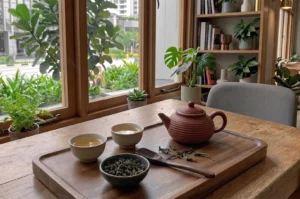
Some traditions still preserve this slower way of appreciating tea, such as the mindful approach found in the Gongfu Cha tea ceremony.
There is something strangely ironic about owning tea that feels too precious to drink. Perhaps the hesitation comes from respect. Perhaps from curiosity about how the tea might evolve.
But tea, like time, does not wait forever.
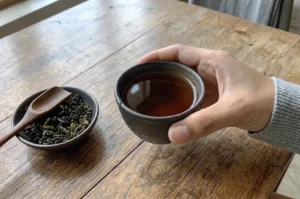
A tea that is brewed can be shared. It can be discussed, remembered, and passed between friends in small tea cups during a quiet tea gathering.
A tea that stays sealed cannot do any of those things.
So the next time we find ourselves looking at a tea that feels too special to open, perhaps we should ask a different question.
What if the best way to respect the tea is simply to drink it?
After all, tea is not meant to be admired from a shelf.
It is meant to meet hot water, fill a room with aroma, and disappear slowly, one sip at a time.
With quiet regard,
N. P. Lim

Not All Comfort Is Sweet: The Bitterness I Now Appreciate
I used to think comfort was supposed to be easy. A familiar drink. A familiar taste. Something that immediately made me feel better. For a long time, I gravitated towards teas that were gentle. Soft flavours. Natural sweetness. Anything that felt welcoming from the first sip. Then I started appreciating bitter teas. Not because I…
-
Understanding the Herb Behind the Refreshing Cup: Peppermint Tea
There is a moment, just after the hot water meets the fresh peppermint leaves, when the whole room seems to change. A sharp, green coolness lifts from the cup and settles somewhere behind your eyes. Drinking peppermint tea does this quietly, without fuss. It asks for nothing and offers a great deal. Most of us…
-
Why Most People Hate Oolong: Overcomplicated Advice Ruined It
I have always found it interesting that oolong tea is one of the most misunderstood teas. People often describe it as complicated. Too many varieties. Too many brewing methods. Too many rules. The leaves should be prepared this way. The water should be at this temperature. The teapot should be a certain material. The first…
-
Kempinski Singapore High Tea Review: When Afternoon Tea Feels Like an Occasion
The rain had come and gone by the time I arrived, leaving the street outside slick and quiet. I stepped in without knowing quite what I wanted from the afternoon. Only that I wanted it to be slow. The Lobby Lounge at The Capitol Kempinski Hotel Singapore does not rush you. It waits. And there…
-
Scent, Memory, and a Kettle: How Tea Anchors My Days
There are certain smells that bring us somewhere else before we even realise it. The scent of rain on warm pavement. A familiar perfume. The food someone used to make when we were younger. For me, tea belongs in that category. Sometimes, before I even take a sip, the aroma is enough to bring back…
-
The Chinese Yixing Teapot: More Than a Teapot, a Living Tea Tradition
The first time I held a Chinese Yixing teapot, I wasn’t ready for how warm it would feel. Small, reddish-brown, sitting in my palm like a river stone that had been kept somewhere warm. I’d just rinsed it with hot water, the way you’re supposed to before the first brew, and the clay drank up…
-
Your “Tea Sommelier” Might Be Selling You a Vibe, Not a Better Cup
There is a particular moment that has become increasingly familiar in modern tea culture. A tea is presented. Before the first sip, we are introduced to its story. The region. The altitude. The history. The carefully chosen words that describe its character. Perhaps there are notes of wildflowers, distant forests, roasted grains, or forgotten memories….
-
Does Tea Contain Caffeine? Understanding What’s Really in Your Tea
There’s a quiet moment many of us know well. The kettle clicks off. Steam curls up. You wrap your hands around a warm cup and feel your shoulders drop, just a little. Tea has always carried this sense of calm, of slowing down. So it can feel almost contradictory to ask: does tea contain caffeine?…
-
“Detox Tea” Is Mostly Marketing: Here’s What Tea Actually Does
I have always found the phrase “detox tea” a little strange. Not because I dislike tea. Quite the opposite. Tea has been part of my daily life for years. I love the quiet ritual of choosing leaves, waiting for the water, and taking a moment to slow down. But somewhere along the way, tea became…
-
The Tea House That Time Did Not Forget: Tea Chapter Trading Pte Ltd
I almost walked past it. Located at Nine Neil Road, Tea Chapter Trading Pte Ltd sits quietly, a three-storey shophouse just across from Maxwell MRT in Singapore, its restored facade catching afternoon light. Around it, Chinatown moves at its usual pace. Inside, something slower has been happening since October 1989. I stepped in on a…