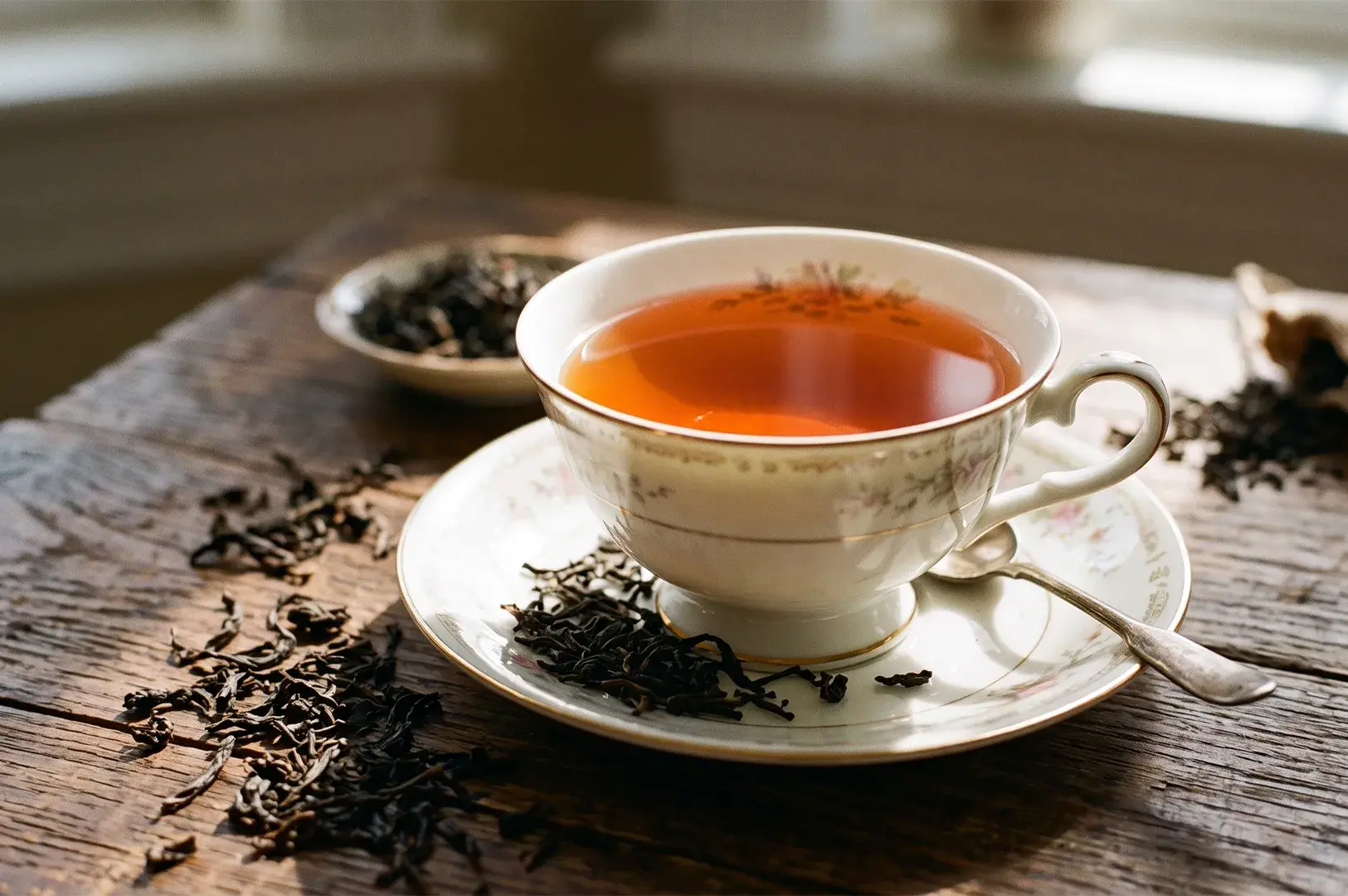
The colour arrives first. A deep amber that darkens towards red as the tea leaves give up their strength.
Then comes the aroma. It is warm and rounded, often compared to malt or the crust of fresh bread. The first sip has weight. It fills the mouth with a rich body and leaves a slight, drying grip at the edges. Many people add milk without thinking twice, and the tea holds its ground with a brisk finish.
That character is not accidental. Assam black tea carries the marks of the Assam region in northeast India, a river valley, a long monsoon with heavy rainfall, a particular plant variety, and the people who grow and make it. Each one leaves something in the cup. Understanding them changes how the tea tastes, or at least how closely we pay attention.
The Landscape Behind Assam Tea Production
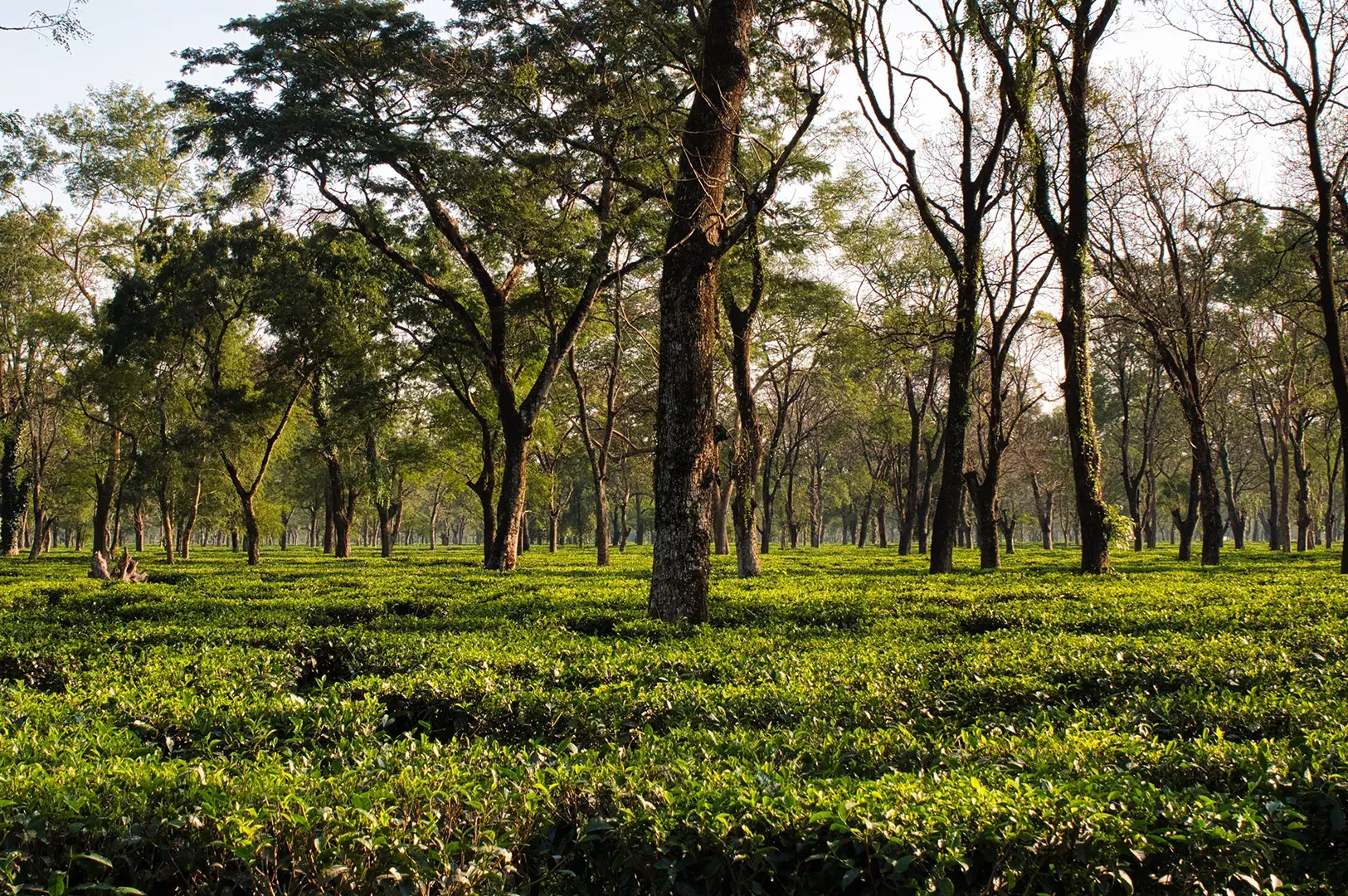
Assam lies in northeast India, and its tea story is closely tied to the Brahmaputra valley. The river runs broad through the state, and much of the tea is cultivated on the low, wide plains along its course near sea level.
This is not high mountain country like West Bengal's Darjeeling, which sits near the northern Himalayas. Many of Assam's tea gardens and tea estates sit at low elevations, where the air is warm and heavy for much of the year. The monsoon brings substantial heavy rainfall, and humidity stays high through the growing season. Tea plants respond to these conditions with steady, vigorous growth.
he Brahmaputra Valley is bordered by hills and highlands, including the Shillong Plateau system to the south and the Himalayan foothills to the north. Together with the river's broad alluvial plains, these features help shape the region's climate, drainage and soils. It would be too simple, though, to say that heat or rain alone creates Assam's flavour. Character in tea comes from many things working together: climate, soil, the plant itself, the timing of the harvest, and the choices made in the factory. The landscape sets the stage. It does not write the whole play.
It is also worth remembering that Assam is not one uniform place. The Brahmaputra valley dominates the tea conversation, but the state also includes the Barak valley in the south, and conditions differ from one district and garden to the next. Two teas from Assam can taste noticeably different, and that variety is part of what makes the region rewarding to explore.
A Plant Suited to the Heat and Cultivation
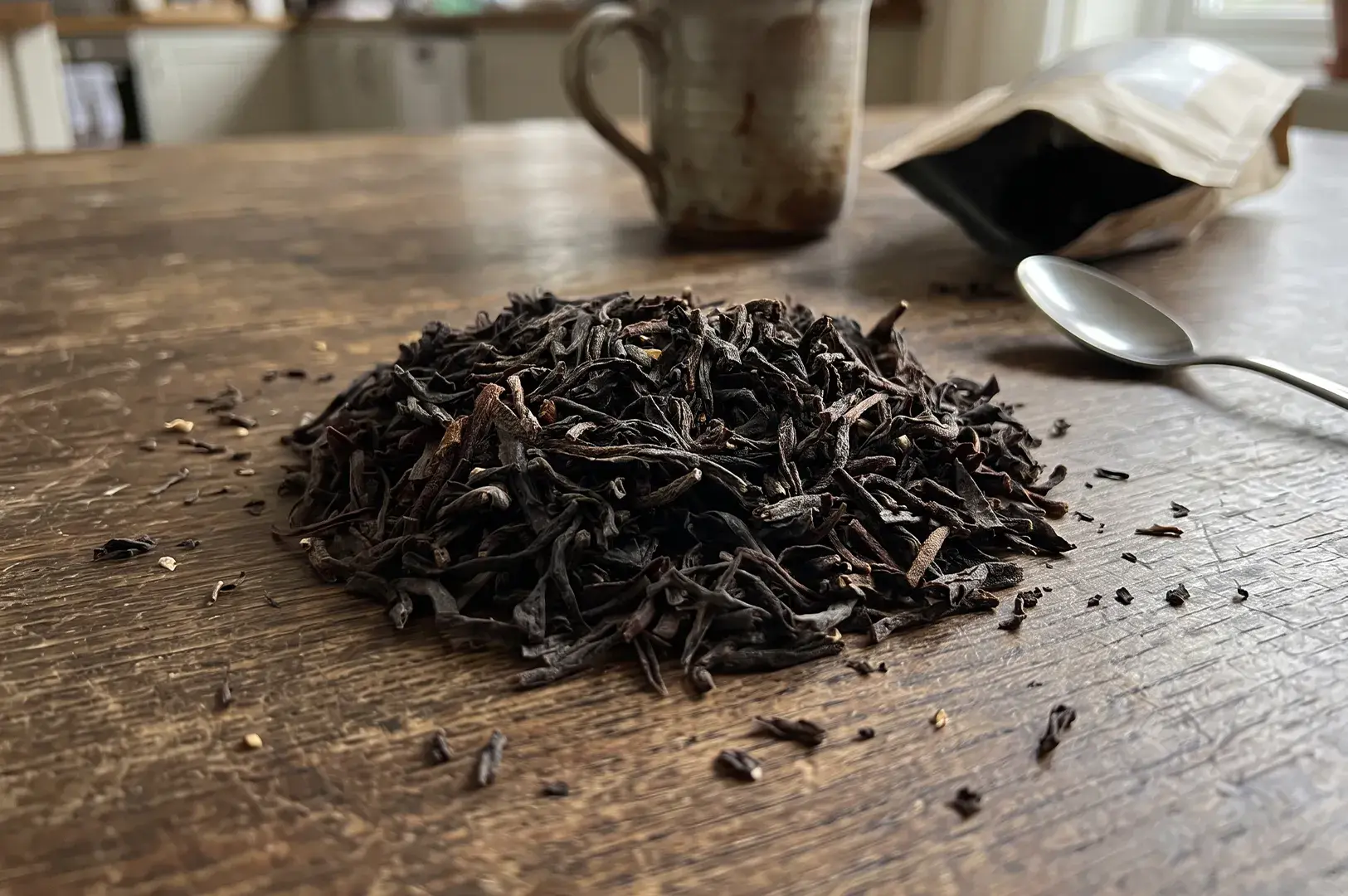
All true tea comes from one species, Camellia sinensis. Within it, there are two main varieties. The smaller-leaved Chinese Camellia sinensis var. sinensis variety is associated with cooler, higher regions like Darjeeling in West Bengal and the northern Himalayas. The larger-leaved Camellia sinensis var. assamica is closely associated with Assam and the warmer tea-growing regions of South and Southeast Asia.
In plain terms, assamica is a robust plant with broad leaves, at home in exactly the kind of conditions the Brahmaputra valley provides. It tends to produce teas with strength, a full bodied richness, and natural sweetness.
Here a small distinction matters. Assamica names a plant variety, not a place. It is cultivated in other tea-producing countries too, including China. So a tea made from assamica plants is not automatically Assam tea. Assam tea refers to where the leaf was grown.
Health Benefits of Assam Tea
Like other black teas made from Camellia sinensis, Assam tea contains polyphenols, including flavonoids. Researchers have studied black tea consumption in relation to cardiovascular markers such as cholesterol and blood pressure, but findings are mixed and the effects observed in clinical studies are generally modest.
Assam tea is therefore better enjoyed as part of an overall balanced diet than treated as a remedy for cardiovascular. Assam tea contains caffeine, although the amount in a cup varies considerably with the tea, serving size and brewing method, improves alertness and focus, making it a preferred morning tea and a popular alternative to coffee. Its caffeine can contribute to increased alertness, which is one reason strong Assam tea is often associated with breakfast.
Caffeine in teas varies by type and brew, providing a natural boost that enhances alertness and focus.
Tea Production in the Assam Region
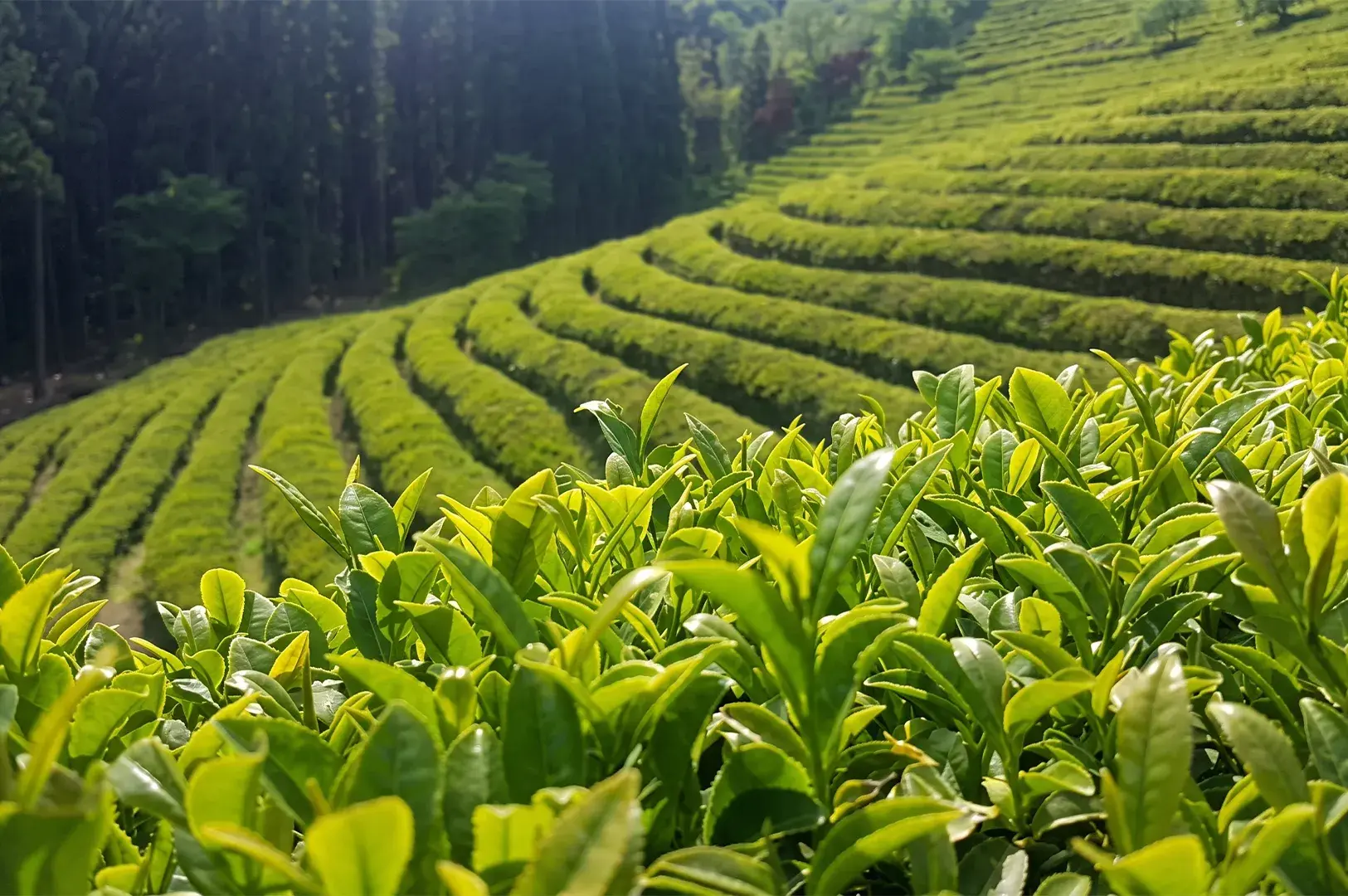
Assam tea production is a story of both tradition and adaptation. The tea industry in Assam is one of the most enterprising tea-producing regions in the world. Assam is India's dominant tea-producing state, accounting for a substantial share of the country's tea output.
Tea production here relies on two main processing methods: the orthodox method and the mechanized crush-tear-curl (CTC) method. Assam produces tea using both orthodox and crush-tear-curl (CTC) methods. Orthodox processing generally preserves larger leaf particles and can produce more layered flavour and aroma, while CTC processing turns the leaf into smaller, more uniform particles that brew quickly and strongly. Fine second-flush orthodox Assam teas can contain visible golden tips and are particularly prized for their rich, full character.
The first flush begins with the spring growth, while the celebrated second flush follows later in the season, typically beginning around May and continuing into early summer.
CTC production breaks tea leaves into granules, creating a strong, dark brew that infuses quickly. This style suits tea bags and milk teas like masala chai, where a bold, consistent base is essential.
The history of Assam tea production includes the story of Robert Bruce, a Scottish adventurer who in 1823 discovered wild tea plants in the region. This discovery helped the British East India Company establish commercial tea plantations, transforming acres of forest into tea gardens and tea estates.
Tea cultivation in Assam benefits from the region's tropical climate, rich loamy soil, and heavy rainfall, all contributing to the unique flavour profile of Assam tea.
Assam Tea in the World of Breakfast Teas
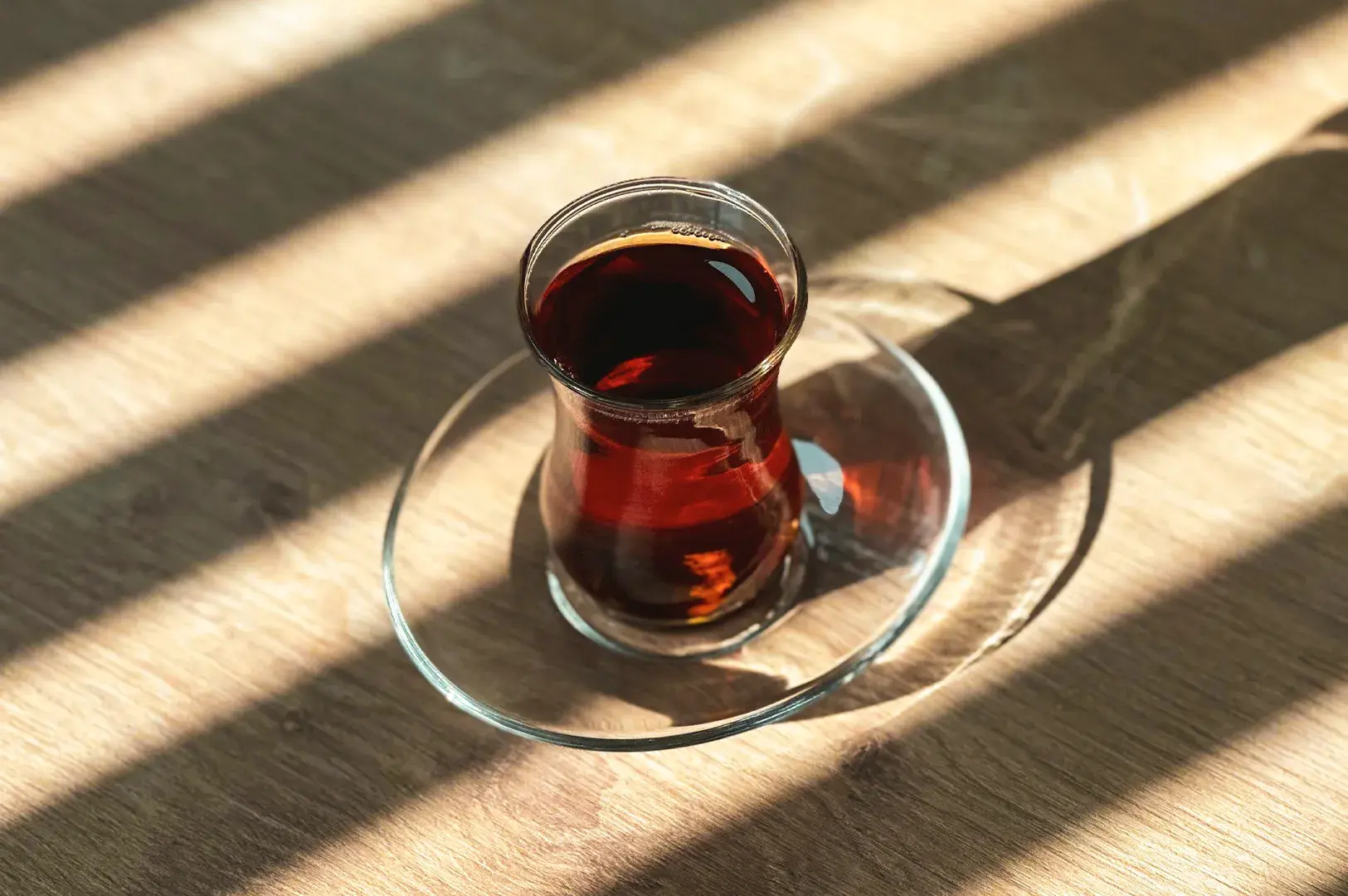
Assam tea is a cornerstone of classic breakfast teas, including Irish breakfast tea and English breakfast tea blends. Its malty flavour, rich body, and brisk finish make it ideal for a morning tea that can stand up to milk and sugar.
Unlike lighter teas such as Darjeeling or Ceylon teas, Assam tea is packed with character and strength. It is also widely used as the base for masala chai, a spiced milk tea enjoyed across India and beyond.
Whether consumed hot or iced, Assam tea offers a smooth, rich experience that reflects its heritage and the skill of those who cultivate and produce it. Assam black tea is widely sold and spread across global markets, cherished by tea lovers for its bold and full bodied flavor.

Green Tea in Japan: Exploring the Cultural and Social Dimensions of Green Tea in Japan
In Japan, green tea is more than just a beverage; it is a cultural cornerstone, deeply woven into the fabric of daily life, social customs, and national identity. It’s the welcoming drink offered to a guest, the quiet moment of reflection in a busy day, and the centerpiece of a centuries-old ceremony. While many are…

Singapore Ginger Tea: A Complete Guide to Traditional Wellness in the Lion City
In Singapore’s multicultural landscape, ginger tea is a beloved staple that transcends cultural boundaries. Known locally as teh halia, this warming brew embodies centuries of traditional wisdom adapted to modern Singapore life. Whether you seek relief from air-conditioned chill, digestive support after a big meal, or a refreshing sip on a rainy day, Singapore ginger…
-
Loose Tea Leaves: Elevate Your Singapore Tea Experience
In a city that moves as fast as Singapore, the simple act of brewing a cup of tea can feel like a small rebellion—a moment of intentional calm. More and more tea lovers are discovering that this moment is profoundly elevated when they make the switch from conventional tea bags to loose tea leaves. This…
-
Tea Leaf Singapore: An Exquisite Journey of Flavours, Traditions, and Moments
Singapore’s strategic position as a maritime trading hub has nurtured a rich tea culture where ancient traditions blend with modern innovation. The local love for tea runs deep, shaping Singapore’s unique tea culture and fostering a strong appreciation for every cup. Singapore continues to honor its tea traditions while embracing new innovations, ensuring that the…
-
Korean Barley Tea: A Journey into Boricha and Its Rich Traditions
Walk into any Korean restaurant, and before you glance at the menu, a glass of amber-colored boricha (보리차) arrives. This Korean barley tea is as fundamental as water in Korean culture—served hot or cold, a staple in everyday life and a gesture of hospitality. While roasted barley tea is popular across many East Asian countries,…
-
Mugicha Barley Tea: Japan’s Beloved Caffeine-Free Summer Drink Unveiled
Long before green tea became Japan’s iconic beverage, mugicha barley tea—a golden, nutty roasted barley tea—has refreshed Japanese families for centuries. Unlike traditional tea from Camellia sinensis leaves, mugicha is a naturally caffeine free herbal tea made by steeping roasted barley grains in hot water. This traditional barley tea has evolved from an imperial luxury…
-
Buckwheat Tea Unveiled: Singapore’s Rising Caffeine-Free Wellness Beverage
Singapore’s health-conscious community is embracing buckwheat tea, a caffeine free tea known for its rich cultural heritage, unique nutty flavor, and impressive health benefits. This traditional Asian beverage, also called soba cha in Japan, offers a soothing alternative to green tea or coffee, perfect for Singapore’s tropical climate and wellness goals. Its growing popularity reflects…
-
Japanese Green Tea from Japan: Unlocking the Secrets of Authentic Varieties and Brewing
Experience the rich tradition of authentic japanese green tea from japan, a beverage refined over centuries with unique steaming methods that preserve its vibrant color, rich aroma, and delicate taste. This comprehensive guide introduces you to Japan’s most treasured green tea varieties, their extensive health benefits, and how to enjoy japanese tea perfectly brewed, whether…
-
How to Make Matcha Latte: A Step-by-Step Recipe Quest
There’s a special kind of satisfaction that comes from mastering your favorite café drink at home. When it comes to the vibrant and creamy matcha latte, the rewards are particularly sweet. Learning how to make matcha latte in your own kitchen not only saves you money but also gives you complete control over the quality,…
-
Mastering the Art of Matcha Green Tea Latte Recipe: Your Path to Perfection
There’s a unique kind of magic in crafting your own café-quality matcha green tea latte at home. It’s the satisfaction of watching vibrant green matcha swirl into creamy, frothed milk, the joy of customizing it to your exact taste, and the simple pleasure of sipping a wholesome, delicious beverage you made yourself. Beyond the significant…