I almost walked past it.
Located at Nine Neil Road, Tea Chapter Trading Pte Ltd sits quietly, a three-storey shophouse just across from Maxwell MRT in Singapore, its restored facade catching afternoon light. Around it, Chinatown moves at its usual pace. Inside, something slower has been happening since October 1989.
I stepped in on a weekday, mid-afternoon, mostly out of curiosity. What I found wasn't a cafe pretending to be old. It was something that had simply kept its own time while the city sped up around it.
This is a feature more than a review, but I'll tell you honestly how it felt to visit Tea Chapter. Because the experience is the subject here, a place where the art of Chinese tea culture is preserved unlike anywhere else.
The Legacy Behind Tea Chapter Trading Pte Ltd

Tea Chapter began on 1 October 1989, started by thirteen tea enthusiasts who had been captivated by a proper Chinese tea ceremony shown to them by a Taiwanese friend.
That's a small, human origin story. Not a business plan, not a franchise dream. Just people who tasted something and couldn't let it go.
The Chinese name, 茶渊, carries the idea that tea knowledge runs deep and its culture flows far. That belief has held the place together across more than three decades. Today it stands as Singapore's oldest and largest Chinese teahouse, which is no small thing in a country that tears down and rebuilds so readily.
The building itself has history layered into it. It was the first pre-war shophouse restored under the Urban Redevelopment Authority's conservation project in 1988, its facade bearing decorative mouldings in the Second Transitional Shophouse style.
Queen Elizabeth II once visited, and the light oolong served to her, the Imperial Golden Cassia from Fujian, became the tea offered to distinguished guests after that. In 2025, the National Heritage Board recognised Tea Chapter under its SG Heritage Business Scheme. The honours are real. But sitting there, I noticed the place doesn't lean on them.
First Impressions: A Slower Kind of Tea Experience on Neil Road

You leave your shoes at certain seating areas, and that small act tells you what you've walked into.
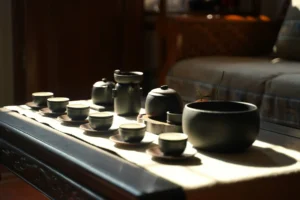
The interior borrows from older Eastern furnishings, wood and warm tones, the faint smell of tea leaves threading through the rooms. It felt intimate rather than grand, despite the size. Three floors, but each corner seemed built for a small table and a low conversation.
What stood out was the quiet. Not silence exactly. There was the soft clink of teaware, the low murmur of other guests, the sound of water being poured. But the noise of Chinatown outside had thinned to almost nothing.
I felt my pace drop within minutes. There's no menu urgency here, no queue pressing behind you. The tea is meant to unfold over an hour or more, and the room seems to know that. If you come in a hurry, you'll feel the friction immediately.
Understanding the Art of Brewing Chinese Tea

If you've only ever had tea from a bag, gongfu-style brewing will surprise you.
Gongfu means brewing with skill and care, using a small pot or gaiwan, a higher ratio of tea leaves to water, and short, repeated steeps. Instead of one large mug, you get many small cups, each drawn from the same leaves across several infusions.
That repetition is the heart of it. The first steep might be light, almost shy. The second opens up. By the third or fourth, the tea has found its full voice, and then it slowly softens again over later pours.
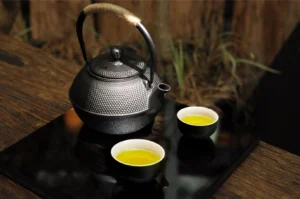
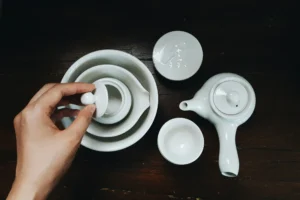
The utensils matter too. A little clay pot, tiny cups, a fairness pitcher to even out the strength. It looks elaborate, but the logic is simple: control the water, control the time, and let the leaves speak clearly. Someone on staff can guide you through it, which helps if this is your first time. This is worlds away from ordering a cup at a counter and walking off with it.
The Tea Selection and Why the Menu Means Something at Tea Chapter

The teas here span the traditional Chinese tea families, and each carries its own character.
- Oolong, partially oxidised, sits between green and black. It can be floral and light, like that Imperial Golden Cassia, or roasted and deep.
- Pu-erh, aged and often earthy, tastes of soil and wood and time. Some of it has been maturing for years.
- Green tea, fresh and grassy, brewed gently so it never turns harsh.
- Black tea, fuller and warmer, the kind that holds its own.
- Older, aged offerings too, like the Aged Narcissus ($18 retail), a roasted oolong with real depth.
For those wanting to take something home, the retail side runs from small gift boxes (from $12) up to premium tins ($63) and single teas. Prices and availability shift, though, so it's worth checking the website or their Facebook page before you visit.
What I appreciated was that the menu isn't trying to impress you with volume. It's a considered selection, weighted toward rare teas that reward slow attention.
What Stands Out in the Cup at Tea Chapter
I sat with an aged oolong, and I'll try to describe it honestly.
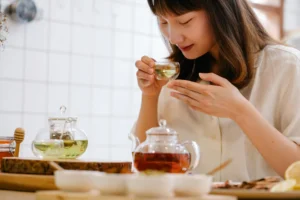
The dry tea leaves smelled of roast and something faintly sweet, like dark fruit. The first pour came out a deep amber, warmer in colour than I expected. That first sip was gentle, more aroma than flavour, a soft roasted note that lingered at the back of the throat.
The second steep changed everything. Fuller now, rounder in the mouth, with a smoothness that coated rather than bit. There was no sharpness, no bitterness, just a slow warmth that stayed after I swallowed.
By the fourth cup, the tea had mellowed into something quiet and comforting. It's a strange, lovely thing, watching a single handful of leaves shift its personality across an afternoon. You don't taste tea like this quickly. You sit with it, and it tells you a little more each time.
That, I think, is what the place is really offering. Not just a drink, but a duration and a culture to share.
Why Tea Chapter Still Matters in Singapore's Chinatown

We don't lack places to buy tea. We lack places that treat it as something worth slowing down for.
Tea Chapter keeps knowledge alive that could easily disappear. The brewing methods, the tea families, the etiquette, the patience. Its workshops introduce younger Singaporeans to a heritage many of us are only distantly connected to now, and its retail store lets that connection continue at home.
In a dining landscape built around speed and novelty, a teahouse committed to the opposite feels almost quietly radical. It bridges the old and the everyday, holding a door open to Chinese tea culture for anyone willing to step through.
That endurance is its own quiet argument. Thirty-plus years of steeping, still going.
Who Will Appreciate This Place on Neil Road
This won't suit everyone, and that's fine.
- Tea beginners who want a real, guided introduction rather than a casual cup.
- Experienced drinkers who value traditional gongfu brewing done properly.
- Anyone curious about Chinese culture and heritage, especially in a conserved shophouse setting.
- People wanting a calm afternoon, away from screens and noise.
If you're after a quick caffeine fix or a lively cafe buzz, you'll likely find the pace here too slow.
A Balanced Look Before You Go to Tea Chapter Trading Pte Ltd

I want to be fair, so here's the honest side.
The experience is unhurried by design, which means it asks for your time. If you arrive impatient, that's on you, not the tea, but it's worth knowing. The traditional format can also feel unfamiliar at first. You may not know how many tea leaves, how long to steep, when to pour. Asking staff solves this, but shy first-timers might feel briefly out of their depth.
Prices and session formats vary, so I'd check the latest details on the website or Facebook before making the trip. And to be clear, this is a cultural experience more than a food destination. Come for the tea and the calm, not a meal.
None of these are real faults. They're simply the shape of the place. It is what it is, unapologetically.
A Legacy Worth Sitting With at Tea Chapter
I left slower than I arrived, which feels like the truest thing I can say.
The aged oolong stayed with me longer than the bill did. So did the quiet, the wood, the small ceremony of pouring cup after cup from the same patient tea leaves. There was nothing to photograph, really. Just an afternoon that asked me to be present, and a tea that kept revealing itself the longer I stayed.
Tea Chapter isn't performing its heritage. It's simply living it, one steep at a time, the way it has since 1989.
If you go, go with time in your pocket and curiosity in your chest. Sit down. Let someone pour for you with care. Wait for the second cup, then the third. Some places you visit for the flavour. This one, you visit for the pause, and for a legacy still steeping quietly behind every cup.

Brew, Sip, Heal: The Powerful Chamomile Tea Benefits Explained
Singapore is a city that rarely stops moving. Between the hum of the MRT, the endless glow of screens, and the heavy humidity that clings to the air, finding a moment to genuinely wind down can feel like a luxury. For the longest time, my evening routine consisted of scrolling through my phone while finishing…

Why Tea Feels Different at Night
Tea changes after dark. The same leaves, brewed in the same pot, somehow feel quieter in the evening. The aroma lingers longer. The warmth of the cup feels more noticeable in the hands. Even conversation seems to soften slightly around tea at night. Perhaps it is because the world itself becomes quieter. During the day,…

Tea Health Benefits: Best Teas for Relaxation, Focus, and Sleep
Tea is one of the world’s most beloved drinks, enjoyed every day across countless cultures. When we talk about tea health benefits, it’s helpful to know the difference between true tea and herbal infusions. True tea comes from the Camellia sinensis plant, giving us popular varieties like green, black, white, and oolong tea. On the…

The Secret Joy of a Simple Cup of Tea
There’s something so deeply satisfying about a cup of tea-especially when it’s the simplest cup. No complicated brewing methods. No fancy leaves. Just tea, water, and a moment of quiet. I’ve had tea in many places, from grand tea houses to humble kitchen counters. But the most memorable tea moments often happen in the least…
-
A Quiet Tea Café in Somerset: Inside the Experience at Hvala
Amid Singapore’s bustling shopping hubs like Orchard, Club Street, and Tanjong Pagar, finding a peaceful spot to unwind can be a challenge. Hvala, a minimalist tea cafe Singapore locals and visitors adore, offers a serene teahouse experience brimming with natural light and calm vibes. Located on the ground floor of 111 Somerset, this bright, inviting…
-
The Tea We Return To Again and Again
Most tea drinkers have one. A tea they continue returning to, even after trying countless others. It is rarely the rarest tea they own. Often, it is not even the most impressive. It may lack the complexity of aged teas or the elegance of carefully crafted harvests. And yet, somehow, it becomes the tea they…
-
Pek Sin Choon vs Modern Teaware Shops: Two Tea Traditions in Singapore
Walking through Chinatown’s Mosque Street, you encounter two distinct tea traditions that embody Singapore’s rich heritage and evolving culture. Pek Sin Choon, one of the oldest tea merchants in Singapore, stands as a living root of Chinese tea culture, while modern teaware shops offer a fresh perspective on tea appreciation through design and brewing systems….
-
Why I Stopped Saving My “Good Tea” for Special Occasions
For the longest time, I treated my favorite teas like they needed a reason. I would buy something beautiful, maybe a delicate oolong or a tea that smelled faintly floral the moment I opened the tin, then immediately start rationing it in my head. I’ll save this for guests. For weekends. For days that feel…
-
Teapot Set: How It Shapes the Tea Experience
On certain afternoons in Singapore, when rain softens the edges of the day, I find myself lingering before the water reaches its boil. The teapot rests nearby, waiting. There is always a moment like this before tea (quiet, unhurried) when the world seems willing to pause with you. A teapot set belongs to these moments….
-
The Quiet Difference Between Drinking Tea Alone and With Someone
There are days when I reach for tea just to sit with myself for a while. No distractions, no need to fill the silence. Just the slow rhythm of pouring, waiting, sipping. When I’m alone, tea feels almost like a pause button. The kind that lets the day settle a little before continuing. But tea…