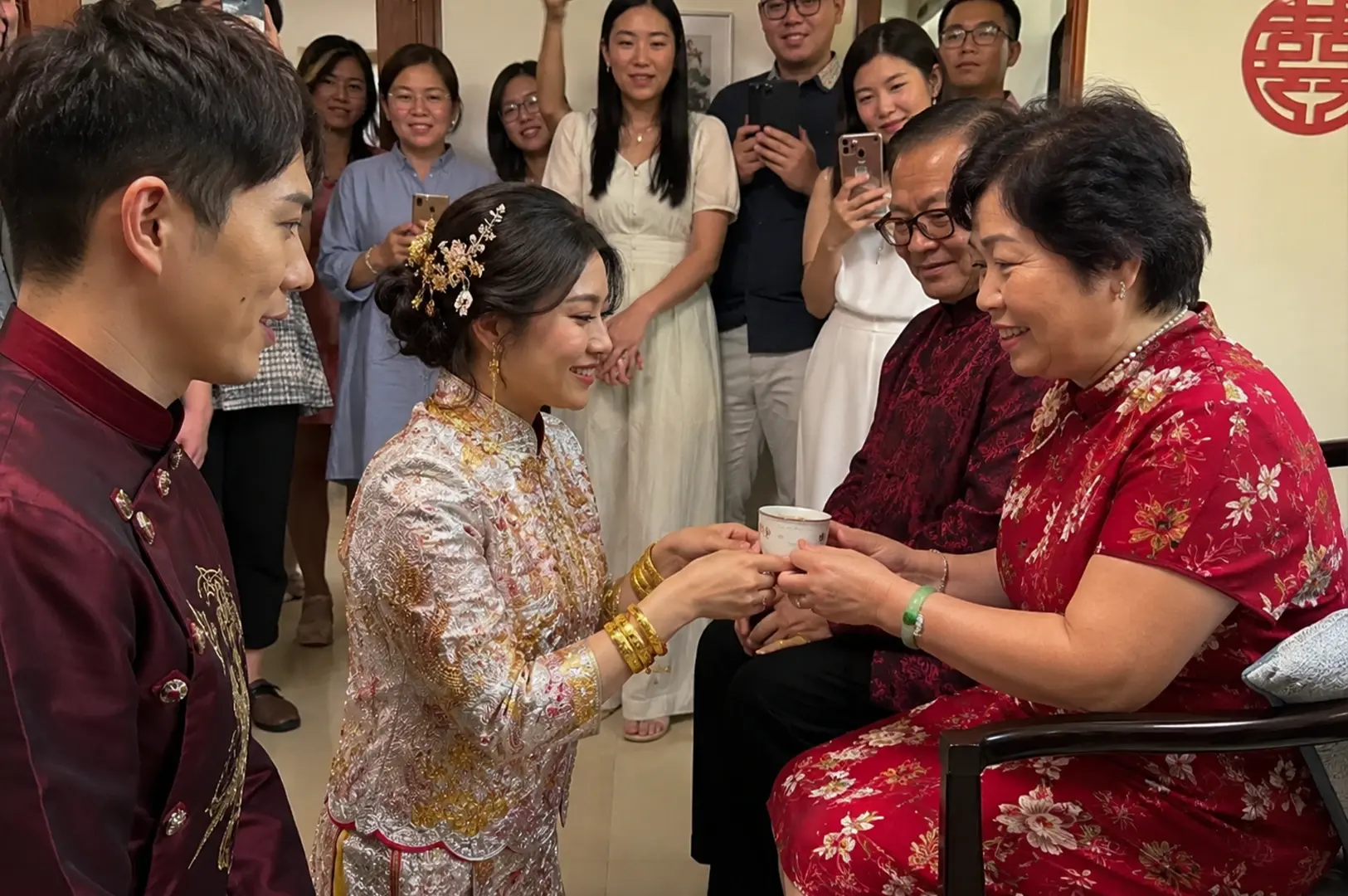
I still remember the morning of my older sister’s wedding day. We were packed into my parents' flat, and the sticky humidity in the air was intense, even with the air conditioning running on full blast. Amidst the loud laughter and the fun of the morning gatecrash, everything suddenly slowed down.
I watched her kneel in her heavy, traditional dress, her hands trembling slightly as she prepared to offer tea to our grandmother. The room fell completely silent. Our grandmother took the cup, smiled warmly at her granddaughter, and slipped a red packet containing family gifts into her hands with a quiet blessing.
That was the exact moment I realized this ritual is not just an obligatory photo opportunity. It is a profound emotional anchor. In our fast-paced world, where marriages often feel like massive, heavily produced events, this quiet break forces everyone to stop and acknowledge the joining of two families. If you are preparing for your own journey and feeling overwhelmed, take a breath. In my experience, it is entirely possible to honor this beautiful tradition without losing your mind.
Wedding Tea Ceremony Singapore
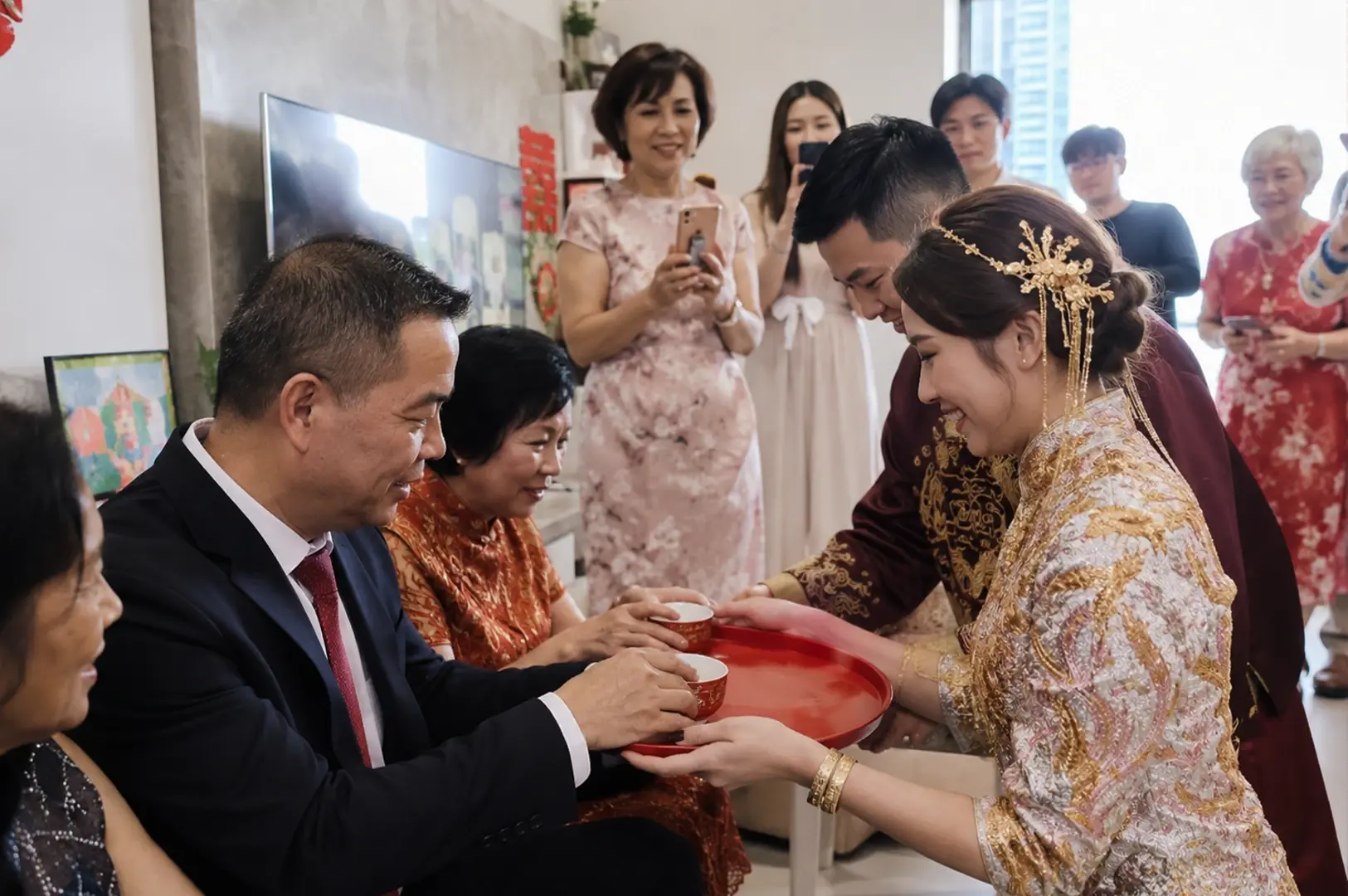
At its core, the Chinese wedding tea ceremony is a symbolic act of deep respect and family unity. It marks the formal introduction of the bride and groom to their new extended families. Historically, it was the specific moment a bride was officially accepted into the groom's household, often tied to the giving of the bride price and other ancestral customs.
Today, in modern Singapore, the tradition has evolved beautifully. We now use it to show gratitude to both sets of parents for raising us. While your evening banquet might celebrate the newlyweds with hundreds of guests, colleagues, and friends, this morning ritual remains fiercely intimate.
It acts as a quiet, profound bridge between generations. Whether your family has lived here for generations or you are blending many cultures into one celebration, the act of serving tea transcends language. It is a universal sign of respect and the true beginning of your life as a happily married couple.
What may look like a simple ritual is actually guided by traditions rooted in the tea ceremony and its long-established practices of etiquette and presence.
Tea Leaves and Symbolic Ingredients
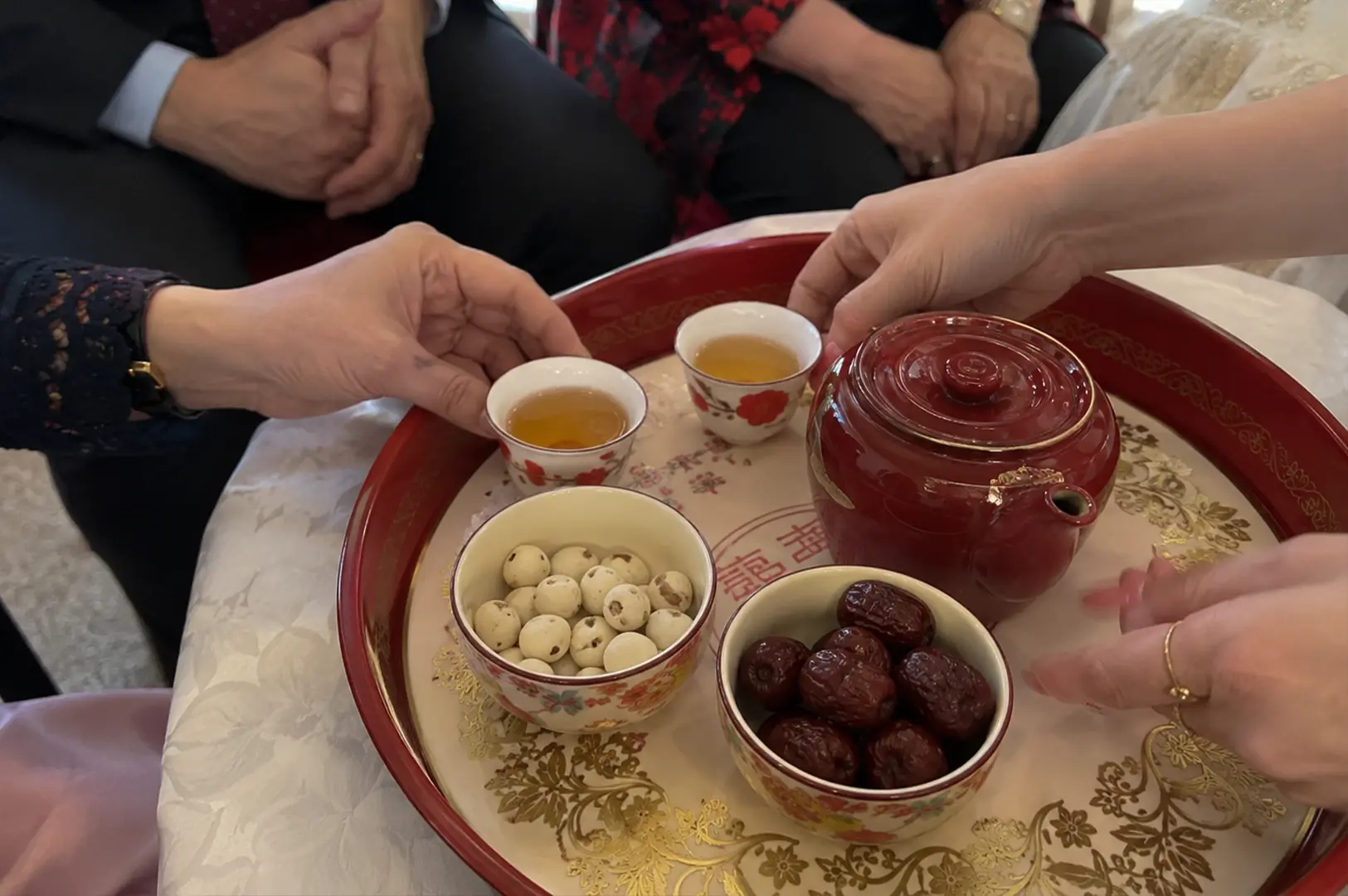
The ceremony revolves around a few specific items, and none of them are chosen simply for their beauty. The style and freshness of your ingredients matter deeply.
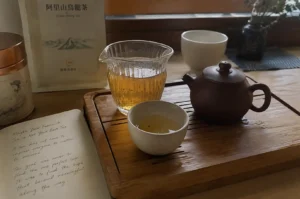
You will need a proper tea set, which is usually gifted by the bride's family and proudly displayed on a serving tray. When it comes to the brew itself, we almost never use plain oolong, green tea, or bitter infusions. Instead, we serve a sweet combination brewed with red dates, dried longan, and lotus seeds. Sometimes, subtle herbs or light florals are added to the infusion to enhance the aroma.
When you take a sip, the taste is distinctly sweet and rich. These specific fruits and ingredients carry heavy symbolism, representing fertility, harmony, and the promise of a sweet marriage. The tea is carefully prepared in quality teapots and served in tiny, handle-less teacups.
The serving order is another crucial element you must get right. Traditionally, you serve the groom’s family first, starting with the grandparents, then the father and mother, followed by older uncles and aunts. You always serve strictly by seniority.
The Wedding Ceremony: Answering Your Biggest Fears
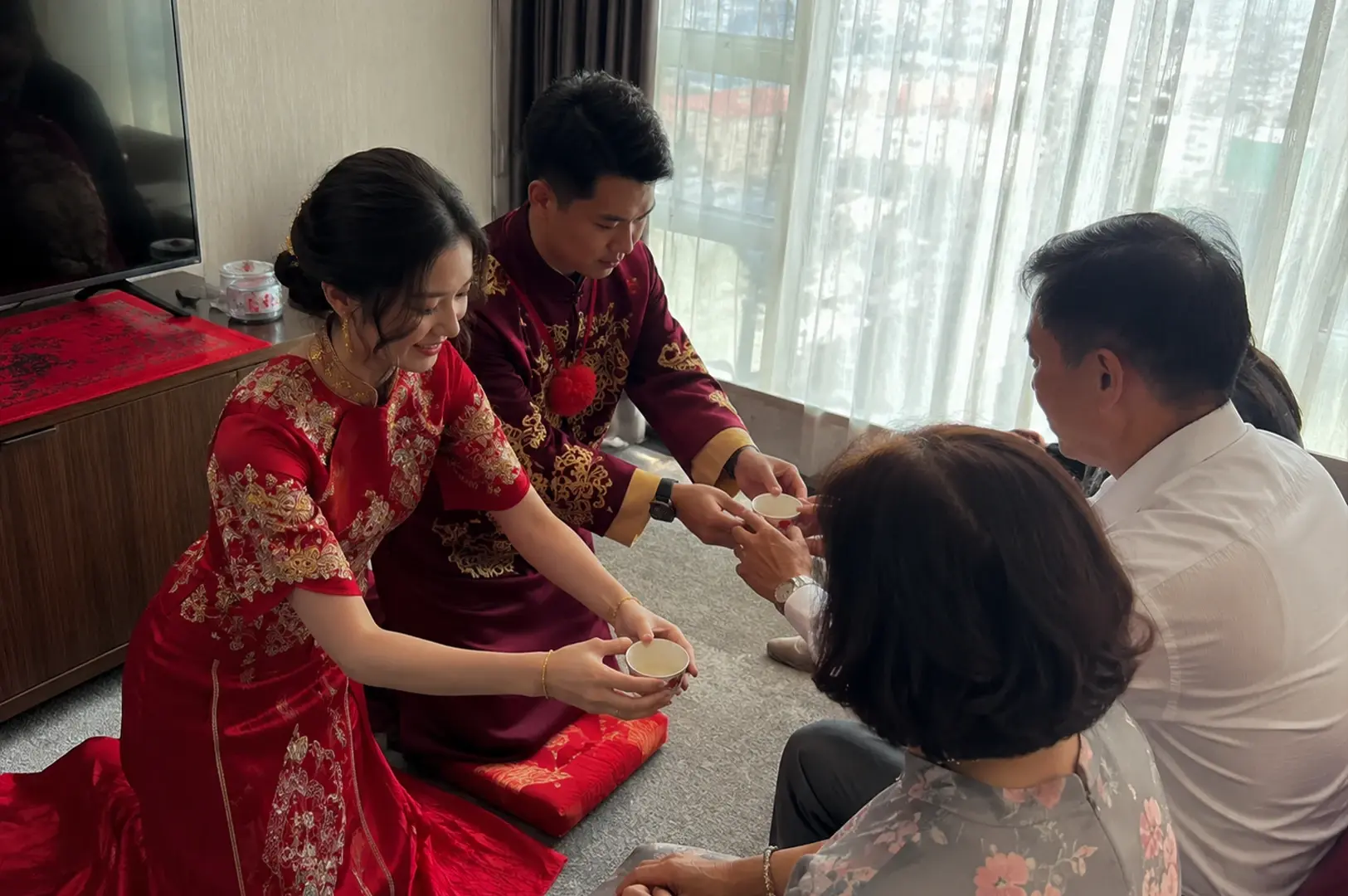
When couples ask me for advice, the same few fears always pop up. Here is the honest truth about making the wedding ceremony work smoothly.
Do we really need to kneel?
Not necessarily. Traditionally, couples kneel on red cushions to show maximum respect to their parents. However, I have found that many modern families are incredibly flexible. If your grandparents have mobility issues, or if the bride is wearing a restrictive dress, sitting on chairs or offering a deep bow is perfectly acceptable. Talk to your family beforehand to set realistic expectations.
What if my partner is not Chinese?
Intercultural weddings are incredibly common in Singapore, and this occasion is a wonderful way to share your heritage. I suggest keeping the ritual brief and perhaps printing small cards with English explanations of what the tea represents. In my experience, non-Chinese in-laws absolutely love the gesture of being served tea, provided someone gently guides them through the steps.
Serving the tea boiling hot
This sounds trivial, but it happens constantly. You pour fresh boiling water from a thermos, hand the tiny ceramic cup to an elderly aunt, and she burns her fingers. Always let the brewed tea cool slightly so it is just pleasantly warm by the time you pour it.
Practical Tips for Your Wedding Venue
Organization is the secret to a stress-free morning. Moving between multiple locations can exhaust you before the night even begins. Here is what I highly suggest to keep things running smoothly.
Host it at a central location
The classic schedule involves the groom fetching the bride, holding a ceremony at her home, rushing across the island to his home, and then scrambling to the hotel for a banquet. Many couples now choose to host a combined tea ceremony at their primary wedding venue. Renting a day-use room or using a hotel suite makes logistics infinitely easier and provides a comfortable, air-conditioned escape for your elderly guests.
Assign a Tea Ceremony Captain
You cannot pour tea, manage your dress, and coordinate your uncles all at once. Assign a vocal, organized person—usually one of your bridesmaids—to be your captain. Their sole job is to call out names, usher the right elders to the chairs, and handle the tea refills. This dramatically reduces the chaos in the room.
Prepare your tools the night before
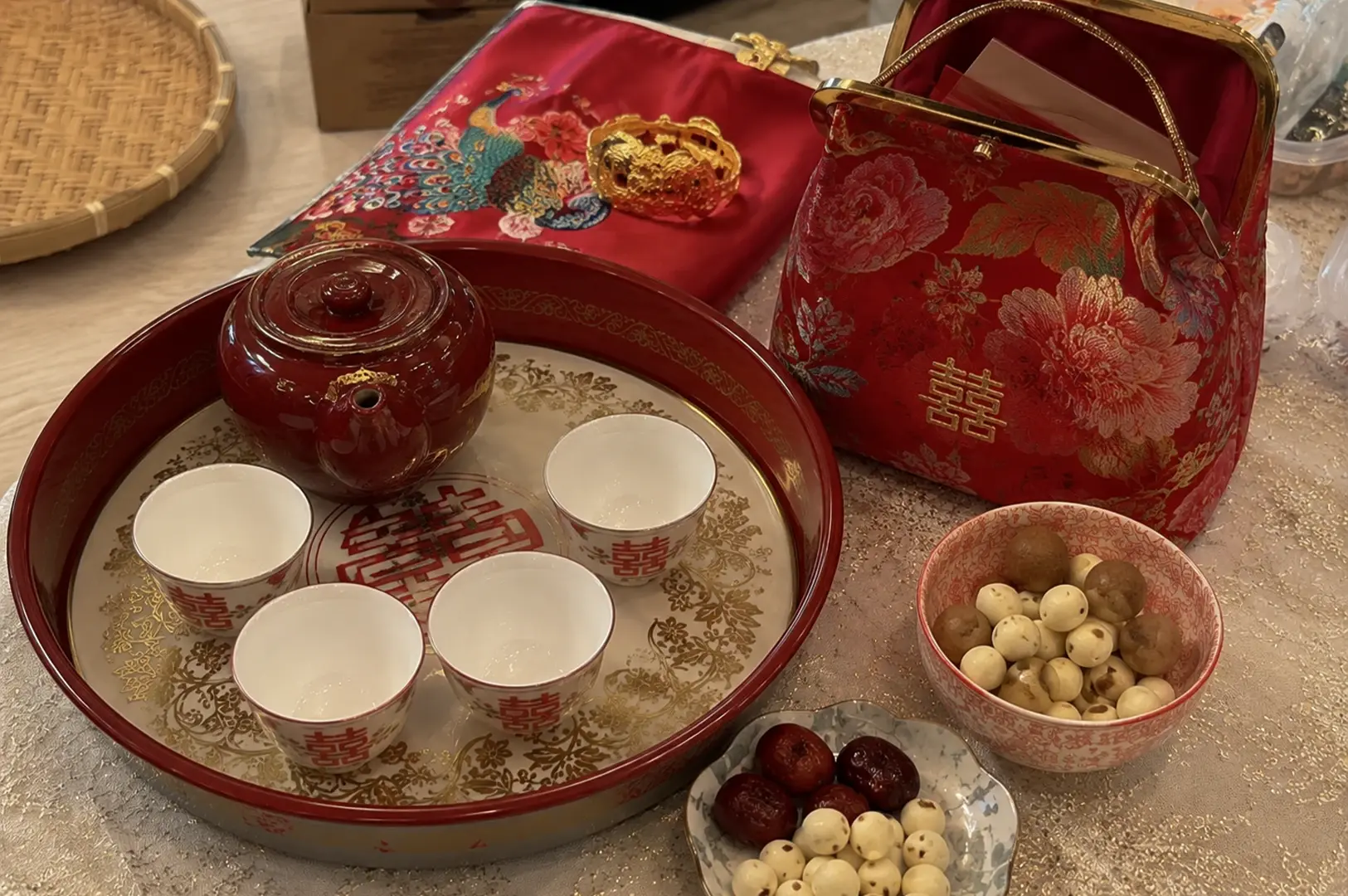
Create a designated bag for your essential items. It should include your teapots, extra teacups, a thermos for warm water, and paper towels for inevitable spills. You should also bring a beautifully designed bag or pouch to safely hold the red packets and gold jewelry you receive.
A Simple Cup of Tea: Why This Tradition Matters
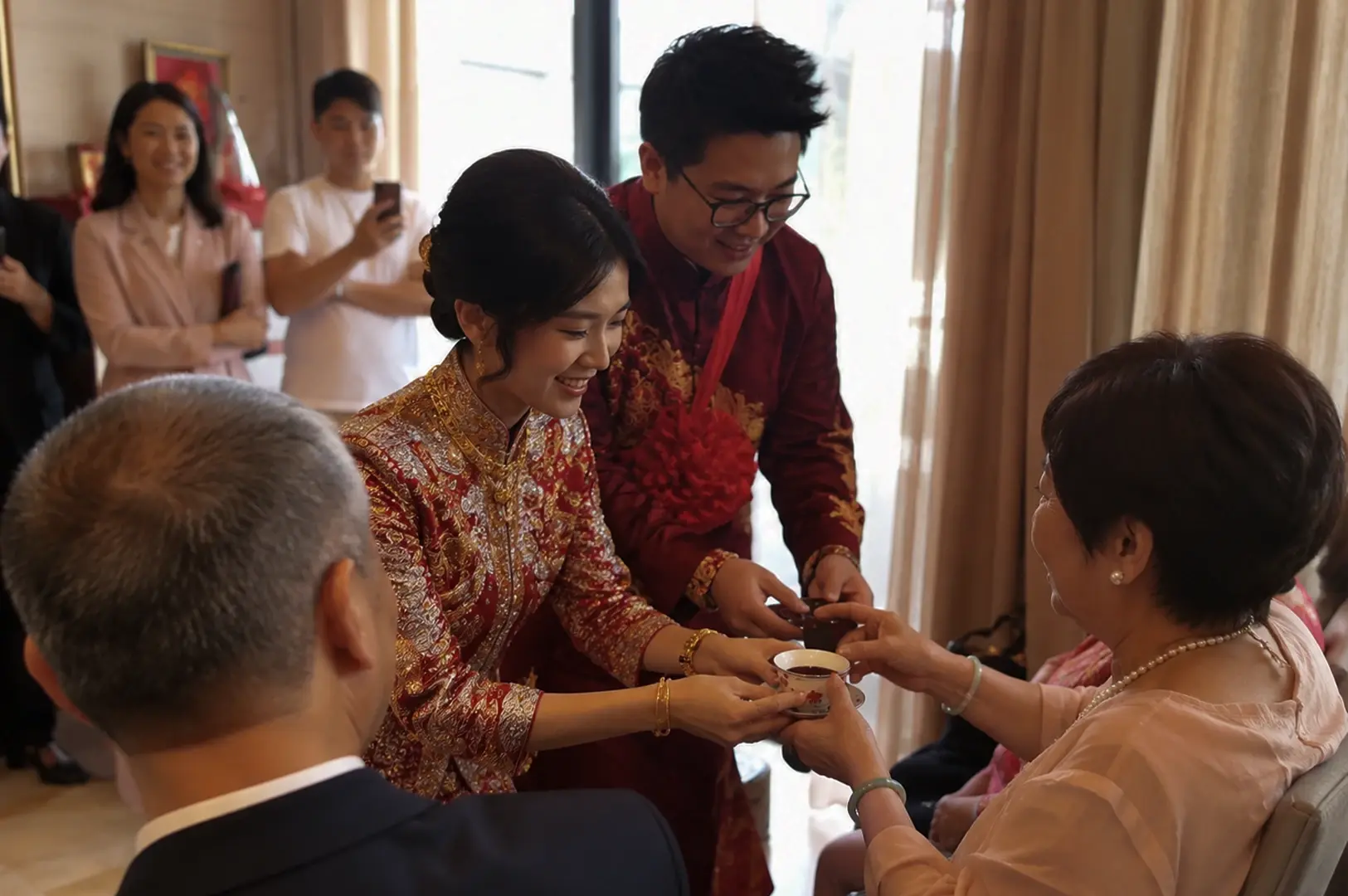
It is incredibly easy to view the tea ceremony as an outdated chore that disrupts your schedule. I completely understand the temptation to rush through it so you can get to the rest of the celebrations. But I encourage you to see it differently.
This ceremony is often the only time your entire extended family will be gathered in one room solely to wish you well. When you hand that cup of tea to your parents, you are acknowledging decades of their sacrifice and care. When they hand you a gift in return, they are formally acknowledging your transition into adulthood.
The most successful ceremonies I have witnessed are never the flawless, highly rigid ones. They are the ones where someone mispronounces a title, where a bit of tea spills on the tray, and where everyone simply laughs it off. Do not get hung up on creating a perfect, cinematic moment. Prepare your tools, rely on your bridesmaids, and let go of the stress. Hold the cup with both hands, look your family in the eye, and simply enjoy the warmth of the tradition.

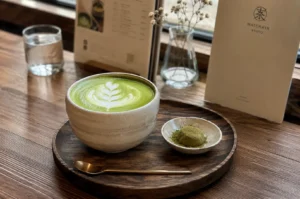
Matcha Hype Has Gone Too Far (But I Still Drink It)
I have a confession. I am slightly tired of seeing matcha everywhere. Not because I dislike matcha. In fact, I drink it quite often. But there is something amusing about watching a humble tea become the centre of every café menu, wellness conversation, and social media trend. Matcha has gone from a traditional Japanese tea…
-
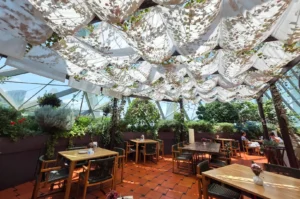
Hortus Afternoon Tea Review: When the Garden Becomes the Occasion in the Flower Dome
I forgot, for a moment, that I was indoors at Hortus, the Mediterranean restaurant nestled within the Flower Dome at Gardens by the Bay. There were trees above me, real ones, and the air held that cool, green stillness you usually find early in the morning somewhere far from the city. A leaf drifted down…
-
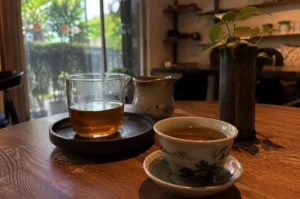
The Real Reason Your Tea at Cafés Tastes Flat
There is a particular disappointment that comes with ordering tea at a café. You see the menu. You notice the carefully written descriptions. Perhaps there is a mention of fragrant jasmine, roasted oolong, or a carefully selected blend. The presentation arrives beautifully arranged, and for a moment, there is anticipation. Then you take the first…
-
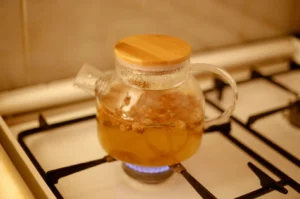
Herbal Tea in Chinese: A Cup Shaped by Heat, Balance, and Belief
The first sip was bitter. I was maybe seven, and my grandmother had pressed a small ceramic cup into my hands, dark liquid inside, steam curling up between us. She didn’t explain. She just said, “Drink. You’ve been too heaty.“ I made a face. She didn’t smile. She just waited until I finished. Years later,…
-
Maybe Your Favourite Tea Is Not Your Best Tea
I have a tea sitting in my cupboard that I would never call my “best” tea. It is not the rarest. It is not the most expensive. It does not come with an impressive story about ancient tea trees, remote mountains, or a limited harvest. And yet, I drink it more often than almost anything…
-
Clipper Tea Review: Does the Packaging Match the Pour?
There’s a box of Clipper Tea that’s lived in my cupboard longer than most of my mugs. I didn’t plan to buy it. I was standing in the tea aisle, tired, half-decided on something familiar, when the colour caught me. Bright, cheerful, a little hand-drawn looking. So I brought it home. And I’ve been drinking…
-
Hear Me Out, Tea Does Not Need to Be Serious All the Time
There is something I have noticed about tea culture. We take tea very seriously. Perhaps too seriously. We discuss origins, processing methods, brewing temperatures, and the history behind every leaf. We debate whether a tea should be enjoyed in a certain way. We carefully consider the correct vessel, the right water, and the ideal environment….
-
Red Bush Tea: The Tea That Does Not Need to Shout
There is a red pot in my mother’s kitchen that only comes out in the evening. By then the coffee has done its work and gone quiet. The day has loosened. She fills the kettle, drops in a spoonful of something the colour of dried autumn, and lets it sit while she tidies the last…
-
Hear Me Out: High Tea Is Overrated
Hear me out: high tea is one of the most convincing ways we have found to make snacking feel important. I understand the appeal. The room is polished, the cups are delicate, and everything arrives in miniature. There is something satisfying about sitting down in the middle of the afternoon and behaving as though time…
-
Where Tea Is Given Time to Speak: Anteasocial Review
I almost walked past it. Owen Road Singapore doesn’t announce much. A quiet stretch, low buildings, the kind of road you pass through on the way to somewhere louder. Then there it was, unassuming, just numbers on a wall: 117. Anteasocial is a contemporary Oriental specialty teahouse in Singapore, and if you’re looking for a…