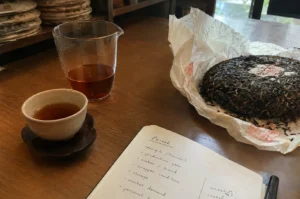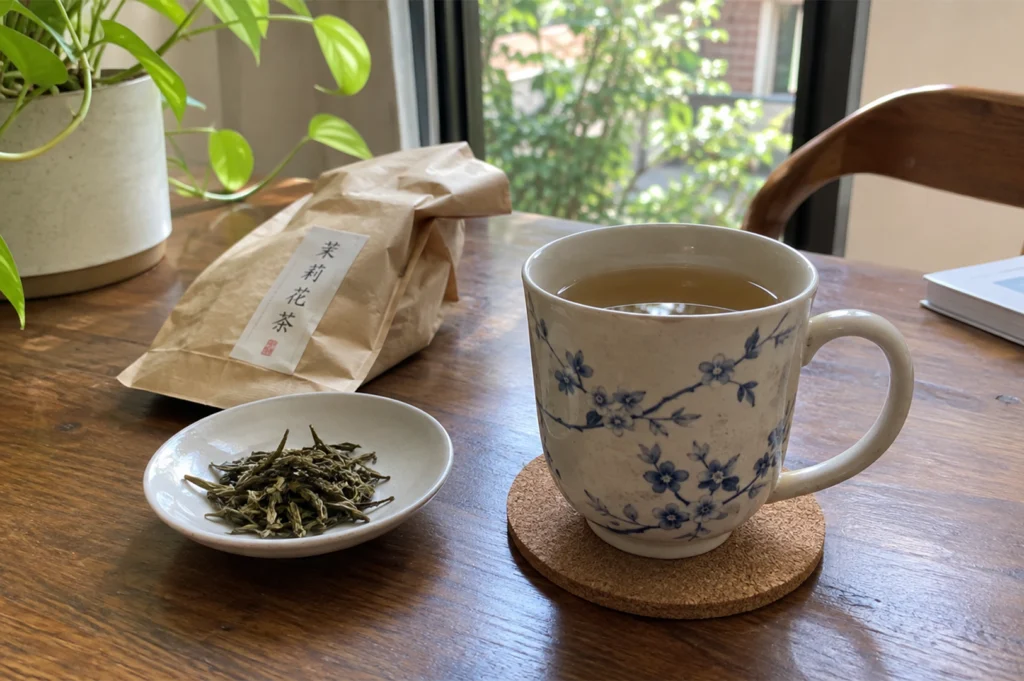
There is something reassuring about making tea in an ordinary mug.
No carefully arranged tray. No matching cups. No elaborate preparation.
Just leaves, hot water, and a few quiet minutes.
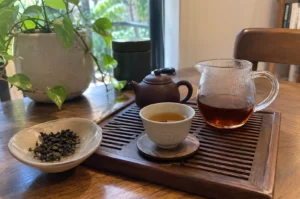
I have always appreciated beautiful teaware. A well-made gaiwan, a traditional clay teapot, or a thoughtfully arranged tea table can bring a certain pleasure to brewing. These objects carry knowledge, craftsmanship, and sometimes generations of tradition.
But I wonder when we began treating them as requirements.
Tea culture has accumulated an impressive collection of equipment. We speak of vessels, materials, temperatures, and techniques with considerable seriousness.
Much of this knowledge is valuable.
Yet I sometimes worry that we have made the appearance of tea preparation more important than the experience itself.
A cup of jasmine green tea does not become less fragrant because it was brewed in a kitchen mug. A good Assam does not lose its character simply because the person preparing it owns no specialised equipment.
The leaves respond to water and time.
Not to the beauty of the table.
Of course, different vessels can influence how tea brews. A gaiwan allows greater control over successive infusions, while certain teapots offer their own practical advantages.
There is satisfaction in learning these distinctions.
But knowledge should expand our enjoyment, not establish conditions for it.
I think about how easily we postpone simple pleasures while waiting for the right circumstances. The better teapot. The proper cups. A quiet afternoon when everything can be arranged perfectly.
Meanwhile, the tea remains untouched.
Perhaps we have misunderstood what makes a tea ritual meaningful.
It is not necessarily the equipment, nor the precision of our movements. Sometimes it is simply the decision to pay attention to something ordinary.
To notice the fragrance.
To taste without distraction.
To allow a familiar cup a little space in the day.
I would never discourage someone from collecting beautiful teaware. There is genuine pleasure in craftsmanship, and much to learn from traditional methods.
But I would rather see someone enjoy tea imperfectly than hesitate because their kitchen lacks the proper arrangement.
A tea setup can deepen an experience.
It should never become the price of admission.
The mug you already own is enough to begin.
With quiet regard,
N. P. Lim

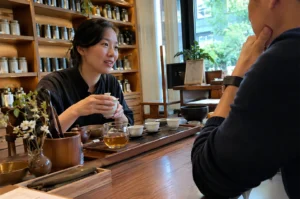
A Tea Break with a Twist: Inside Teahee Singapore
Most tea breaks are small things. A kettle clicks off. Someone brings over a cup. For ten minutes, the work waits, and nobody asks very much of the tea except that it be warm. There is another kind of tea break, though. One where you are the one brewing, measuring, pouring. Where the cup in…
-
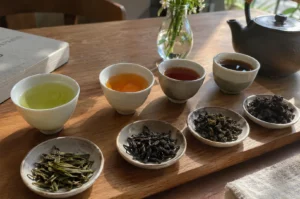
The Teas I Keep Coming Back To—and the Ones I’ve Outgrown
I used to believe that discovering better tea meant gradually leaving ordinary preferences behind. The more I learned, the more refined my tastes were supposed to become. I would move towards rarer leaves, more complicated flavours, and teas that demanded greater attention. But taste does not always develop in a straight line. Some teas remain…
-
Best Milk Tea in Singapore: The Search for the Perfect Tea-to-Milk Ratio
A cup of milk tea is a small negotiation. Too much milk, and the leaf disappears. Too little, and the tea turns sharp and thin. Somewhere between the two is the balance people keep looking for, one plastic cup at a time. This list looks back at Singapore’s milk foam and cheese tea scene in…
-
Milk Tea Can Be Elegant—Most Shops Just Don’t Try
I think milk tea deserves a little more respect. Not because it needs to become expensive or sophisticated, but because we’ve somehow accepted that milk tea is supposed to be sweet, colourful, and filled with enough toppings to qualify as dessert. And honestly, I enjoy a good bubble tea. There’s something fun about choosing your…
-
A Look at the Cup That Started the Brown Sugar Boba Wave: R&B Tea Singapore
Some drinks arrive in a city quietly. Others change the way a whole country queues. R&B Tea’s story began before Singapore’s brown sugar boba boom. According to its official history, the Taiwan-origin brand opened its first outlet in Suzhou, China, in 2006. The February 2018 date marks the Singapore brown sugar boba milestone claimed by…
-
What I Want a Tea Shop to Feel Like
I have never believed that a good tea shop needs to impress me. Beautiful shelves are pleasant. Carefully arranged teaware can be lovely. And there is something reassuring about a shopkeeper who knows the difference between a young sheng Pu-erh and one that has spent twenty years ageing. But none of these things tells me…
-
Between Pearls and Tea: Inside Bober Tea at Compassvale Link
Some drinks belong to a particular hour. Late afternoon in an HDB estate. School bags on shoulders, a void deck still warm, someone holding a plastic cup with condensation running down the side. Bubble tea has become part of that rhythm in Singapore, sitting easily between errands, after dinner, on the walk home. I came…
-
Green Tea Obsession Is Overrated: The Case for Deeper, Darker Teas
I have a feeling green tea has become the tea we’re all supposed to love. It’s everywhere. Wellness conversations, morning routines, skincare trends, and those beautiful matcha drinks that somehow make an ordinary afternoon look more interesting. And honestly, I get it. Green tea can be wonderful. Fresh, grassy, sometimes sweet. But I’ve started wondering…
-
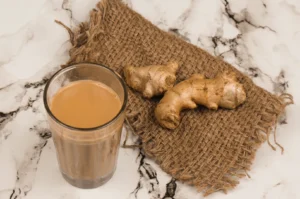
The Ginger-Laced Tea Worth Knowing: Teh Halia
Some drinks reach you before the cup does. At a drinks stall or coffee shops across Southeast Asia, the scent of brewed loose leaf tea or tea bags and sweetened condensed milk is usually in the air. But every so often, something sharper cuts through it, warm and a little peppery, freshly grated young fresh…
-
Stop Treating Pu-erh Like Crypto: Collecting Isn’t the Same as Enjoying
Stop Treating Pu-erh Like Crypto: Collecting Isn’t the Same as Enjoying There is something peculiar about buying tea that we have no intention of drinking. We examine its origin. We study the production year. We consider the reputation of the maker, the condition of the wrapper, and whether the tea might become more valuable in…