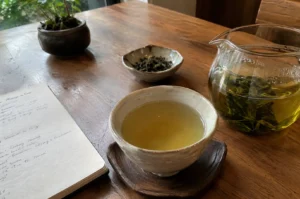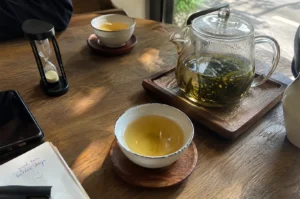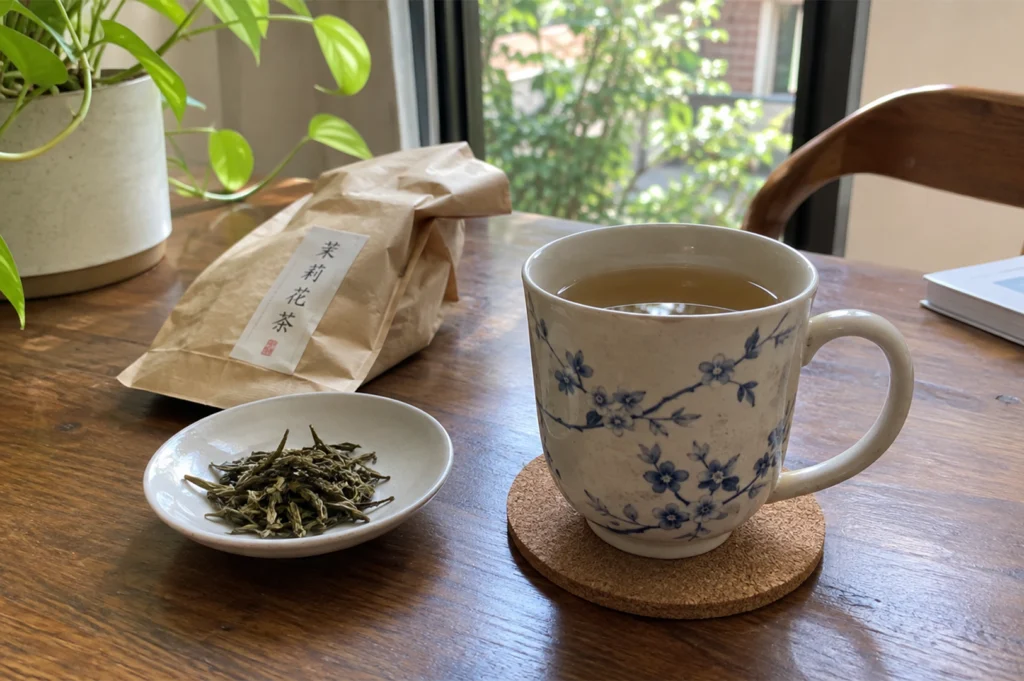
There is something reassuring about making tea in an ordinary mug.
No carefully arranged tray. No matching cups. No elaborate preparation.
Just leaves, hot water, and a few quiet minutes.
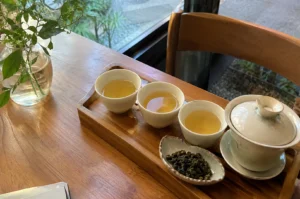
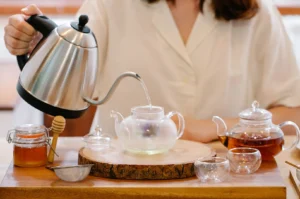
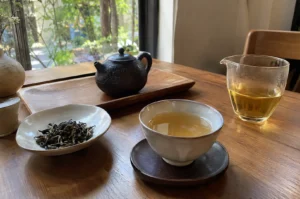
I have always appreciated beautiful teaware. A well-made gaiwan, a traditional clay teapot, or a thoughtfully arranged tea table can bring a certain pleasure to brewing. These objects carry knowledge, craftsmanship, and sometimes generations of tradition.
But I wonder when we began treating them as requirements.
Tea culture has accumulated an impressive collection of equipment. We speak of vessels, materials, temperatures, and techniques with considerable seriousness.
Much of this knowledge is valuable.
Yet I sometimes worry that we have made the appearance of tea preparation more important than the experience itself.
A cup of jasmine green tea does not become less fragrant because it was brewed in a kitchen mug. A good Assam does not lose its character simply because the person preparing it owns no specialised equipment.
The leaves respond to water and time.
Not to the beauty of the table.
Of course, different vessels can influence how tea brews. A gaiwan allows greater control over successive infusions, while certain teapots offer their own practical advantages.
There is satisfaction in learning these distinctions.
But knowledge should expand our enjoyment, not establish conditions for it.
I think about how easily we postpone simple pleasures while waiting for the right circumstances. The better teapot. The proper cups. A quiet afternoon when everything can be arranged perfectly.
Meanwhile, the tea remains untouched.
Perhaps we have misunderstood what makes a tea ritual meaningful.
It is not necessarily the equipment, nor the precision of our movements. Sometimes it is simply the decision to pay attention to something ordinary.
To notice the fragrance.
To taste without distraction.
To allow a familiar cup a little space in the day.
I would never discourage someone from collecting beautiful teaware. There is genuine pleasure in craftsmanship, and much to learn from traditional methods.
But I would rather see someone enjoy tea imperfectly than hesitate because their kitchen lacks the proper arrangement.
A tea setup can deepen an experience.
It should never become the price of admission.
The mug you already own is enough to begin.
With quiet regard,
N. P. Lim

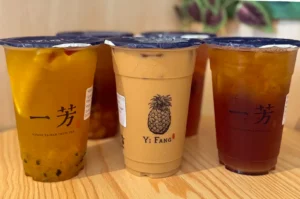
A Taste of Taiwan in Every Pour: Yi Fang Taiwan Fruit Tea
There are drinks that catch your eye before you even take a sip. A tall cup, fruit pressed gently against the plastic, tea glowing amber underneath. Something about it feels right for a warm afternoon. Light. A little cheerful. Easy to carry. But if you slow down for a moment, some of those cups have…
-
Your Tea Isn’t Bitter—You’re Overbrewing It (And It’s Not Your Fault)
There is a particular disappointment that comes from making a cup of tea that tastes bitter. You choose the leaves carefully. You heat the water. You wait. Then the first sip arrives, and something feels wrong. For a long time, I assumed bitterness meant the tea itself was not very good. Perhaps the leaves were…
-
When Tea Meets Tropical: 5 Fruit Teas in Singapore to Try
There’s a specific kind of Singapore afternoon. The air feels thick, your shirt clings a little, and every mall entrance feels like a reward. On days like that, I don’t want anything heavy. I want something cold, bright, and full of fruit, but still recognizably tea. That’s where fruit teas come in. In Singapore, they’ve…
-
Temperature Rules Are Overblown: The Real Brewing Variable Nobody Mentions
I used to think making tea required a thermometer. Not literally, perhaps, but almost. Every tea seemed to have a number attached to it. Green tea at this temperature. Oolong at another. Black tea a little hotter. Too hot and you had apparently ruined everything. For a while, I took these rules quite seriously. Then…
-
Afternoon Tea at Prada Caffè ION Orchard: A Green Room, a Pale-Blue Cup
Afternoon tea has always been about the pause for me. Not the tiers or the silverware. Just the moment when the cup is set down, the steam rises, and everything outside seems to slow a little. So I wondered what a pause would feel like inside a fashion house. One floor above Orchard Road, past…
-
A Love Letter to Oolong: The In-Between That Changed My Mind
I did not understand oolong when I first encountered it. It seemed unnecessarily complicated. Green tea was green tea. Black tea was black tea. I understood where they stood. Oolong seemed determined to remain somewhere in between. Perhaps that was what initially kept me from appreciating it. Over time, however, I began to realise that…
-
Tea from Assam: The Geography, Craft, and Character Behind the Brew
The colour arrives first. A deep amber that darkens towards red as the tea leaves give up their strength. Then comes the aroma. It is warm and rounded, often compared to malt or the crust of fresh bread. The first sip has weight. It fills the mouth with a rich body and leaves a slight,…
-
Why “No Bitterness” Is a Terrible Goal (And Makes Tea Boring)
I used to think a good tea was supposed to be smooth. No bitterness. No sharp edges. Nothing that made me pause and wonder whether I was doing something wrong. It seemed logical. We naturally gravitate toward things that are easy to enjoy. A tea that is sweet, gentle, and immediately comforting feels like a…
-
Best Tea Brands Singapore: 10 Names Worth Knowing
There’s a small sound I’ve always liked. It’s the soft knock of a teapot lid settling back into place, just before the first pour. It happens at home. It happens in old shophouses and in bright mall boutiques like those in Suntec City. The setting changes, but the pause stays the same. This list is…
-
“Rare” Tea Is Often Manufactured Scarcity: Here’s How to Tell
There is a word in tea that carries unusual power. Rare. It immediately creates curiosity. A rare harvest. A rare batch. A rare tree. A tea that may never return. The suggestion is simple: if something is difficult to obtain, it must be more valuable. Sometimes, this is true. Some teas are genuinely limited because…