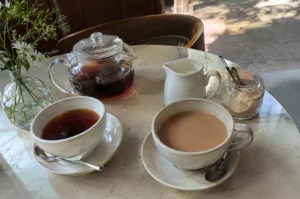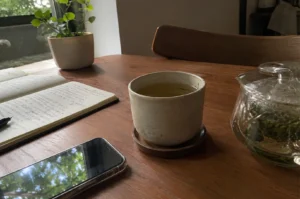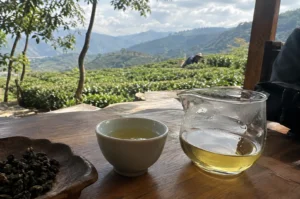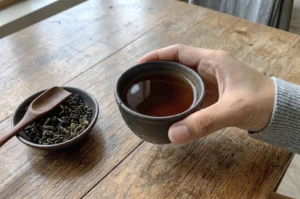
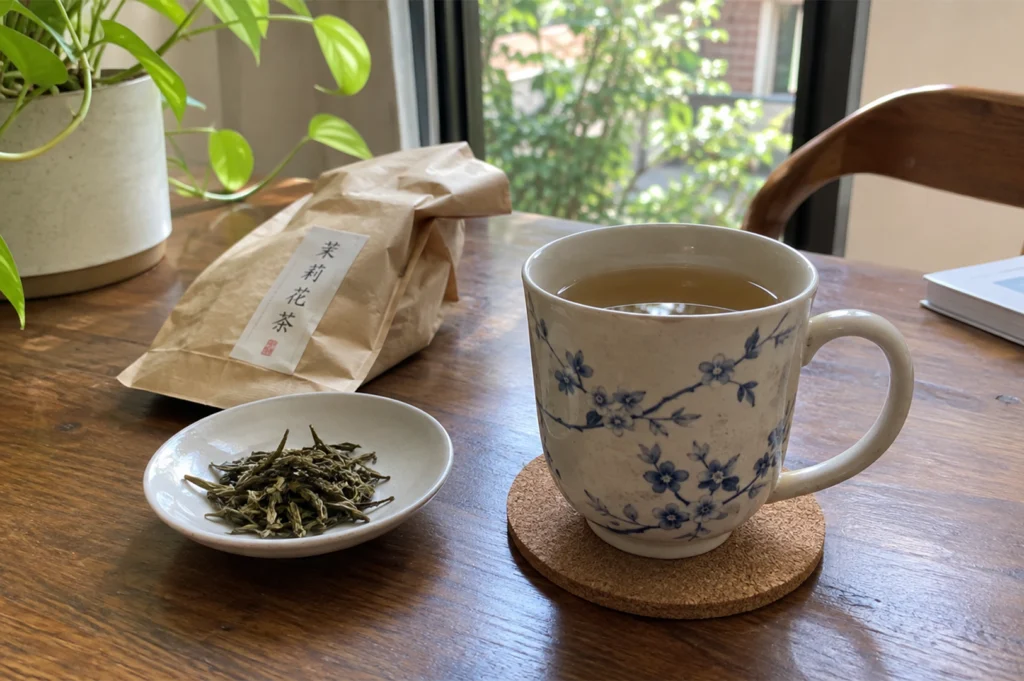
There is something reassuring about making tea in an ordinary mug.
No carefully arranged tray. No matching cups. No elaborate preparation.
Just leaves, hot water, and a few quiet minutes.
I have always appreciated beautiful teaware. A well-made gaiwan, a traditional clay teapot, or a thoughtfully arranged tea table can bring a certain pleasure to brewing. These objects carry knowledge, craftsmanship, and sometimes generations of tradition.
But I wonder when we began treating them as requirements.
Tea culture has accumulated an impressive collection of equipment. We speak of vessels, materials, temperatures, and techniques with considerable seriousness.
Much of this knowledge is valuable.
Yet I sometimes worry that we have made the appearance of tea preparation more important than the experience itself.
A cup of jasmine green tea does not become less fragrant because it was brewed in a kitchen mug. A good Assam does not lose its character simply because the person preparing it owns no specialised equipment.
The leaves respond to water and time.
Not to the beauty of the table.
Of course, different vessels can influence how tea brews. A gaiwan allows greater control over successive infusions, while certain teapots offer their own practical advantages.
There is satisfaction in learning these distinctions.
But knowledge should expand our enjoyment, not establish conditions for it.
I think about how easily we postpone simple pleasures while waiting for the right circumstances. The better teapot. The proper cups. A quiet afternoon when everything can be arranged perfectly.
Meanwhile, the tea remains untouched.
Perhaps we have misunderstood what makes a tea ritual meaningful.
It is not necessarily the equipment, nor the precision of our movements. Sometimes it is simply the decision to pay attention to something ordinary.
To notice the fragrance.
To taste without distraction.
To allow a familiar cup a little space in the day.
I would never discourage someone from collecting beautiful teaware. There is genuine pleasure in craftsmanship, and much to learn from traditional methods.
But I would rather see someone enjoy tea imperfectly than hesitate because their kitchen lacks the proper arrangement.
A tea setup can deepen an experience.
It should never become the price of admission.
The mug you already own is enough to begin.
With quiet regard,
N. P. Lim

How to Make Cold Brew Tea: The Slow Method for a Smoother Cup
There is a jar on the top shelf of my refrigerator that I did not need this morning. I filled it last night, before the kitchen went dark. Loose tea leaves, cool water, a lid resting loosely on top. Then I closed the door and left it alone, the way you leave bread to rise…
-
Milk Tea Isn’t “Ruining” Tea—But Some Milk Tea Is Ruining Milk Tea
I have noticed that few things can start an argument among tea drinkers quite as quickly as milk. Mention adding milk to a good tea and suddenly everyone has an opinion. Some insist that milk covers the flavour of the leaves. Others will tell you that certain teas were practically made for it. I have…
-
There Are Always Good Things to Eat at The Marmalade Pantry
The afternoon rain had just eased when I climbed up to Level 4 of ION Orchard, home to the Marmalade Pantry Ion. Outside, Orchard Road was doing its usual thing: too many people, too much noise, everyone somewhere to be in the bustle of the city. Inside, at a corner table, someone was pouring tea…
-
The Teacup as a Compass: What My Daily Brew Taught Me About Pace
I never intended for tea to become a way of keeping track of my days. It just happened. There are mornings when I drink the first cup quickly, barely noticing the taste because my mind is already somewhere else. Then there are afternoons when I make tea and somehow manage to sit with it for…
-
Silk Tea Bar Review: A Quiet Climb Worth Making on Sago Street
I almost walked past it. Sago Street was loud that afternoon, the way Chinatown often is. Voices, footsteps, the clatter of a hundred small transactions. I was looking for a door and nearly missed the narrow one that led upstairs. Then I climbed. And somewhere between the ground floor and the second, the noise fell…
-
“Artisan” Doesn’t Mean Ethical: The Supply Chain Questions We Avoid
I have always been drawn to the word “artisan.” Maybe because it creates a certain image in my mind. Someone carefully working with their hands. Someone who knows their craft deeply. Someone preserving a tradition that has existed long before the rest of us discovered it. When I see “artisan tea” on a label, I…
-
A Quiet Afternoon at A Beautiful Day Café
The rain had just started when I stepped in off Paya Lebar Road. Not heavy. Just enough to soften the light and slow everyone down. Inside, someone was pouring tea, and the sound of it carried further than it should have. A small room can do that. It can make a pour feel like a…
-
The Problem With “Single-Origin” Tea Obsession
There was a time when knowing where a tea came from was enough. Now, it sometimes feels as though we need to know everything. The mountain. The village. The garden. The harvest date. The particular plot where the leaves were grown. Single-origin tea has become a mark of quality in modern tea culture. The idea…
-
Where Singapore’s Tea Traditions Still Steep: Pek Sin Choon
The first thing I noticed was the smell. Not perfume, not incense. Something warmer and older than both. Roasted tea leaves, drifting out onto Mosque Street before I even reached the door. It’s the kind of smell that makes you slow your steps without knowing why. Pek Sin Choon has been on this corner of…
-
Not All Comfort Is Sweet: The Bitterness I Now Appreciate
I used to think comfort was supposed to be easy. A familiar drink. A familiar taste. Something that immediately made me feel better. For a long time, I gravitated towards teas that were gentle. Soft flavours. Natural sweetness. Anything that felt welcoming from the first sip. Then I started appreciating bitter teas. Not because I…