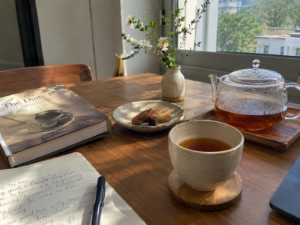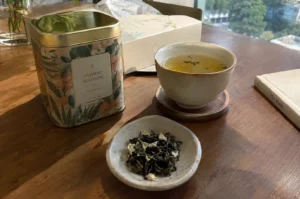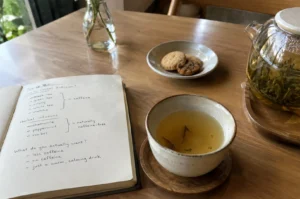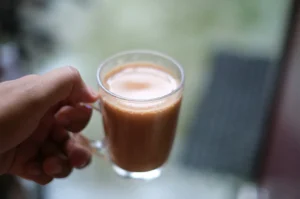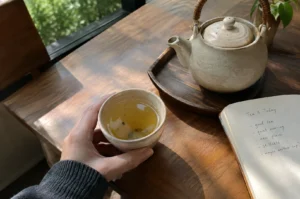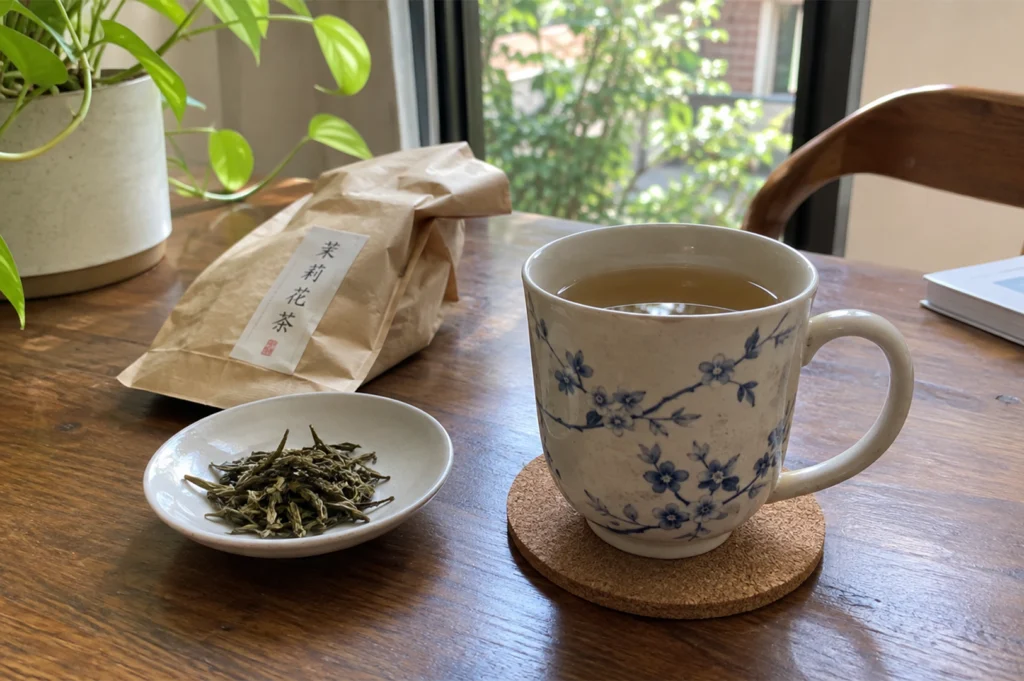
There is something reassuring about making tea in an ordinary mug.
No carefully arranged tray. No matching cups. No elaborate preparation.
Just leaves, hot water, and a few quiet minutes.
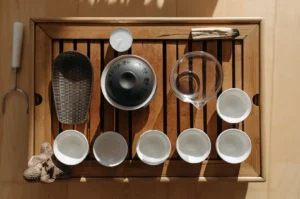
I have always appreciated beautiful teaware. A well-made gaiwan, a traditional clay teapot, or a thoughtfully arranged tea table can bring a certain pleasure to brewing. These objects carry knowledge, craftsmanship, and sometimes generations of tradition.
But I wonder when we began treating them as requirements.
Tea culture has accumulated an impressive collection of equipment. We speak of vessels, materials, temperatures, and techniques with considerable seriousness.
Much of this knowledge is valuable.
Yet I sometimes worry that we have made the appearance of tea preparation more important than the experience itself.
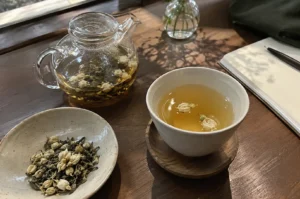
A cup of jasmine green tea does not become less fragrant because it was brewed in a kitchen mug. A good Assam does not lose its character simply because the person preparing it owns no specialised equipment.
The leaves respond to water and time.
Not to the beauty of the table.
Of course, different vessels can influence how tea brews. A gaiwan allows greater control over successive infusions, while certain teapots offer their own practical advantages.
There is satisfaction in learning these distinctions.
But knowledge should expand our enjoyment, not establish conditions for it.
I think about how easily we postpone simple pleasures while waiting for the right circumstances. The better teapot. The proper cups. A quiet afternoon when everything can be arranged perfectly.
Meanwhile, the tea remains untouched.
Perhaps we have misunderstood what makes a tea ritual meaningful.
It is not necessarily the equipment, nor the precision of our movements. Sometimes it is simply the decision to pay attention to something ordinary.
To notice the fragrance.
To taste without distraction.
To allow a familiar cup a little space in the day.
I would never discourage someone from collecting beautiful teaware. There is genuine pleasure in craftsmanship, and much to learn from traditional methods.
But I would rather see someone enjoy tea imperfectly than hesitate because their kitchen lacks the proper arrangement.
A tea setup can deepen an experience.
It should never become the price of admission.
The mug you already own is enough to begin.
With quiet regard,
N. P. Lim

LiHO Tea Singapore: A Greeting You Can Drink
Some words carry a whole childhood inside them. Li ho. I heard it at kopitiam tables, across corridors, from uncles who never waited for a real answer. It meant “how are you,” but it also meant I see you. So when I saw that name on a tea shop sign, somewhere in the middle of…

The Myth of “Perfect” Tea: What I Stopped Chasing
For a long time, I thought I was looking for the perfect tea. I imagined there would be a moment when I found the one. The tea that made every other tea feel unnecessary. The tea I would recommend to everyone. The tea that would finally make me understand what true appreciation was supposed to…
-
Teh O: Understanding the Tea Order Behind the Name
There is a stall near where I grew up that has changed hands twice, but the tea has stayed the same. I still remember the first time I ordered teh o on my own, sometime in my early teens, mumbling the words at the counter and half-expecting to get them wrong. The uncle didn’t blink….
-
Stop Buying Tea for the Aesthetic: How Packaging Hijacks Taste
There is something fascinating about the way we buy tea today. Before we taste the leaves, we have already formed an opinion. The box is elegant. The label is beautifully designed. The colours suggest calm, luxury, or tradition. The story feels carefully written. And before the first sip, we have already decided that the tea…
-
A Tea Table in the Clouds: The Westin Singapore High Tea Review
It was one of those afternoons when the city felt too loud and too fast, and I wanted to sit somewhere quiet without really explaining why. So I went up. All the way up, to Level 32 of The Westin Singapore, where the Lobby Lounge sits above the noise like it knows something the rest…
-
“Caffeine-Free Tea” Confuses Everyone—Let’s Fix the Language
I have noticed that tea conversations can become surprisingly confusing. Not because tea itself is complicated, but because we sometimes use the same words to mean completely different things. One phrase that always catches my attention is “caffeine-free tea.” It sounds simple enough. A tea without caffeine. But is that really what we mean? Because…
-
The Pull, Pour, and Ritual Behind Singapore’s Favourite Milk Tea: Teh Tarik
It starts with a sound. A long ribbon of tea, arcing from one metal mug held high to another held low. The stream catches the light. Then the froth rises, pale and soft, and the whole thing gets poured back and lifted again. Nobody at the stall looks up. This happens a hundred times a…
-
Stop Chasing Tasting Notes: Tea Isn’t Wine and That’s a Relief
I have a small confession to make. Sometimes I have absolutely no idea what I am supposed to be tasting. A tea description might promise orchid, honey, toasted nuts, stone fruit, and something wonderfully mysterious called a “long mineral finish.” I take a sip. I taste tea. And then I start wondering if everyone else…
-
Chinese Tea Sets: Beautiful on the Table, But How Do They Brew?
There is a small arrangement on the table this evening, and I have not touched it yet. A pale bowl with a lid resting slightly askew. A round pitcher beside it, waiting to be filled. Cups no larger than a thumb and two fingers, lined up like a quiet sentence. The surfaces catch the last…
-
Floral Teas Are Not “For Beginners”—They’re For People With Taste
There is a curious assumption in tea culture that I have never quite understood. If you are new to tea, you begin with something floral. Jasmine. Rose. Osmanthus. Lightly scented blends. Then, supposedly, you move on. You discover roasted oolongs. Aged teas. More complex leaves. Stronger flavours. Eventually, you become a “serious” tea drinker. I…