I have nothing against drinking dessert through a straw.
Actually, I think it’s one of the more enjoyable things about modern bubble tea culture.
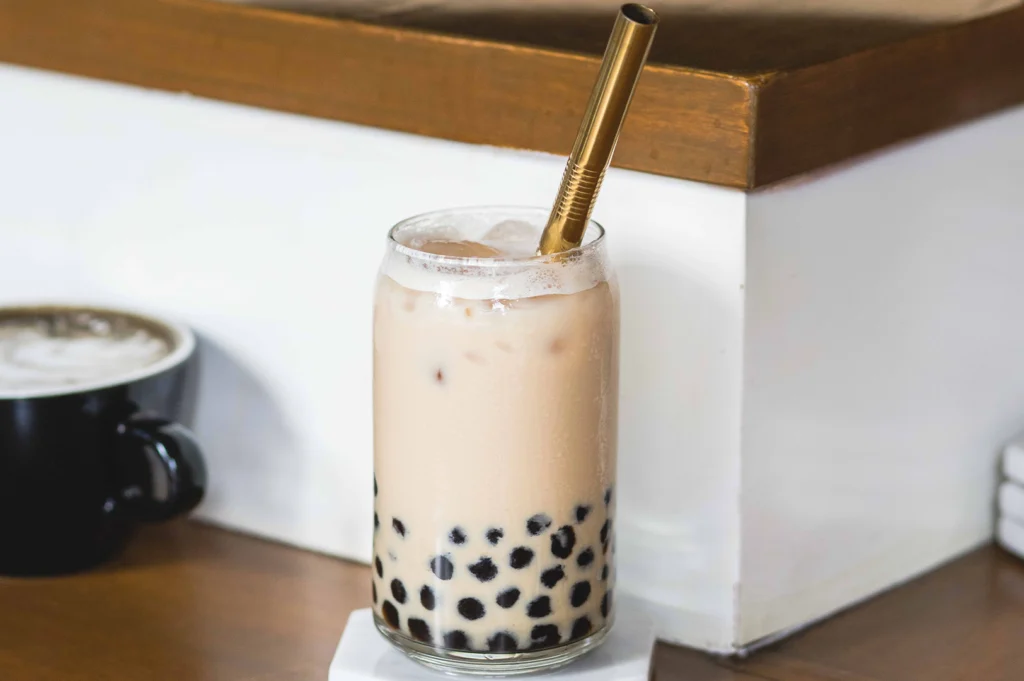
Brown sugar pearls. Creamy toppings. Flavoured jellies. Drinks that look more like something you’d order after dinner than a traditional cup of tea.
They’re fun, and I understand the appeal.
But I’ve been wondering why we still insist on calling some of these creations tea when the tea itself has practically disappeared.
Because shouldn’t we be able to taste it?
I don’t expect every bubble tea to have the delicate character of a carefully brewed oolong. Milk, sugar, and toppings naturally change the experience, and that’s part of what makes these drinks popular.
But there’s a difference between complementing tea and completely covering it up.
A good jasmine milk tea should still have some of that lovely floral character. A roasted oolong milk tea can offer a gentle toasted depth beneath the creaminess. Even a strong Assam can hold its own against milk and sweetness.
Those flavours deserve a little space.
Instead, I sometimes feel we’re more interested in how many things we can add to a drink before it becomes something entirely different.
And maybe that’s okay.
What if we simply admitted that some bubble teas are desserts?
There’s no shame in enjoying something sweet. I don’t think every drink needs to justify itself through antioxidants, tradition, or the promise of being a healthier choice.
Sometimes you want tea.
Sometimes you want brown sugar pearls swimming in something creamy and delicious.
Both are perfectly reasonable.
What I’d love to see is more honesty in how bubble tea shops present their drinks. Celebrate the dessert-inspired creations, but give the actual tea blends some attention too.
Tell us what leaves you’re using. Let their flavours come through. Give customers a reason to notice the tea beyond the toppings.
Because I don’t think bubble tea needs to become more traditional to be taken seriously.
It just needs to be comfortable with what it is.
And if that happens to be dessert in a cup?
Honestly, I’d still order it.
I’d just appreciate knowing what I’m drinking.
— Maria Tan
On tea, culture, and everyday rituals.

Why Oolong Tea Always Feels Slightly Mysterious
Oolong tea never feels entirely straightforward. Green tea usually introduces itself immediately. Black tea does the same. You understand them quickly. One feels fresh and bright. The other feels deep and familiar. But oolong tends to sit somewhere in between. Not fully green. Not fully black. Not always easy to describe. Perhaps that is part…

Benefits of Black Tea: Why This Everyday Drink Still Matters
For many people, black tea is simply part of a routine. It is the first thing brewed in the morning, poured during afternoon tea, or enjoyed quietly at the end of a long day. Familiarity often makes it easy to overlook, but the benefits of black tea extend far beyond comfort or habit. In the…
-
Why Tea Somehow Tastes Better on Rainy Days
I don’t know when I first started believing this, but tea genuinely feels different when it rains. Not scientifically different, of course. The leaves do not magically change because of the weather. And yet somehow, a cup of tea on a rainy afternoon feels softer, warmer, maybe even a little more comforting than usual. Just…

Brew, Sip, Heal: The Powerful Chamomile Tea Benefits Explained
Singapore is a city that rarely stops moving. Between the hum of the MRT, the endless glow of screens, and the heavy humidity that clings to the air, finding a moment to genuinely wind down can feel like a luxury. For the longest time, my evening routine consisted of scrolling through my phone while finishing…
-
Why Tea Feels Different at Night
Tea changes after dark. The same leaves, brewed in the same pot, somehow feel quieter in the evening. The aroma lingers longer. The warmth of the cup feels more noticeable in the hands. Even conversation seems to soften slightly around tea at night. Perhaps it is because the world itself becomes quieter. During the day,…

Tea Health Benefits: Best Teas for Relaxation, Focus, and Sleep
Tea is one of the world’s most beloved drinks, enjoyed every day across countless cultures. When we talk about tea health benefits, it’s helpful to know the difference between true tea and herbal infusions. True tea comes from the Camellia sinensis plant, giving us popular varieties like green, black, white, and oolong tea. On the…

The Secret Joy of a Simple Cup of Tea
There’s something so deeply satisfying about a cup of tea-especially when it’s the simplest cup. No complicated brewing methods. No fancy leaves. Just tea, water, and a moment of quiet. I’ve had tea in many places, from grand tea houses to humble kitchen counters. But the most memorable tea moments often happen in the least…
-
A Quiet Tea Café in Somerset: Inside the Experience at Hvala
Amid Singapore’s bustling shopping hubs like Orchard, Club Street, and Tanjong Pagar, finding a peaceful spot to unwind can be a challenge. Hvala, a minimalist tea cafe Singapore locals and visitors adore, offers a serene teahouse experience brimming with natural light and calm vibes. Located on the ground floor of 111 Somerset, this bright, inviting…
-
The Tea We Return To Again and Again
Most tea drinkers have one. A tea they continue returning to, even after trying countless others. It is rarely the rarest tea they own. Often, it is not even the most impressive. It may lack the complexity of aged teas or the elegance of carefully crafted harvests. And yet, somehow, it becomes the tea they…
-
Pek Sin Choon vs Modern Teaware Shops: Two Tea Traditions in Singapore
Walking through Chinatown’s Mosque Street, you encounter two distinct tea traditions that embody Singapore’s rich heritage and evolving culture. Pek Sin Choon, one of the oldest tea merchants in Singapore, stands as a living root of Chinese tea culture, while modern teaware shops offer a fresh perspective on tea appreciation through design and brewing systems….