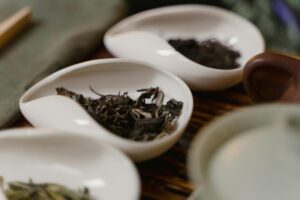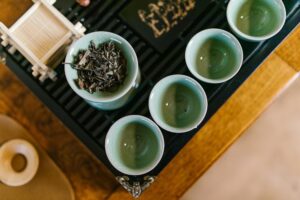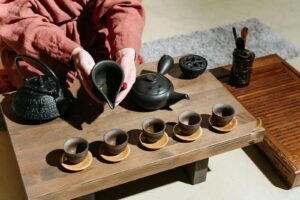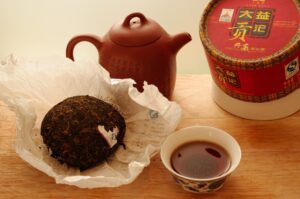
I have a tea sitting in my cupboard that I would never call my “best” tea.
It is not the rarest. It is not the most expensive. It does not come with an impressive story about ancient tea trees, remote mountains, or a limited harvest.
And yet, I drink it more often than almost anything else.
This has always fascinated me.
We spend a lot of time talking about the best teas. The finest oolong. The most delicate white tea. The matcha with the brightest colour and smoothest texture.
There is nothing wrong with appreciating quality. Tea deserves the attention it receives. Understanding where a tea comes from, how it is made, and why it tastes the way it does can make the experience much richer.
But I sometimes wonder if we confuse “best” with “most impressive.”
Because those are not always the same thing.
A tea can be extraordinary and still not become part of your daily life.
I remember trying a tea that many people considered exceptional. The aroma was beautiful. The flavours were complex. Every sip seemed to reveal something new. I understood why people loved it.
But when I finished the cup, I did not feel the urge to make another.
Meanwhile, there were simpler teas I kept returning to without thinking. The tea I reached for on busy mornings. The tea I brewed when I wanted comfort. The tea that somehow became familiar before I even realised it.
Perhaps that is the difference between a tea we admire and a tea we love.
Admiration comes from recognising something special.
Love comes from returning to it.
I think many tea lovers experience this quietly. We collect interesting teas. We search for discoveries. We get excited about recommendations from others.
But eventually, there are only a few teas that become part of our rhythm.
They become the teas we trust.
The ones we do not need to think about.
The ones that are waiting when the day feels too long.
Maybe this is why I have become less interested in finding the “best” tea and more interested in finding the tea that fits a moment.
The best tea for a quiet morning may not be the best tea for a conversation with friends. The best tea for celebration may not be the tea you want after a difficult day.
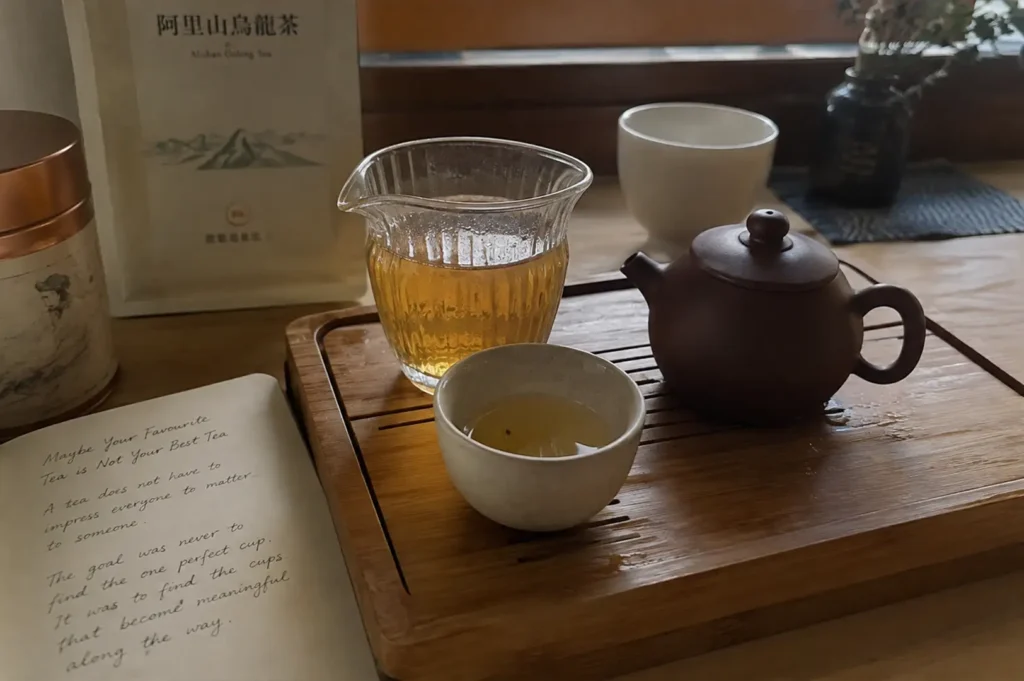
Tea is personal in that way. A tea does not have to impress everyone to matter to someone. And perhaps that is the beauty of tea appreciation.
The goal was never to find the one perfect cup.
It was to find the cups that become meaningful along the way.
So I wonder, what is the tea you keep returning to, even if it is not the one you call your best?
— Maria Tan
On tea, culture, and everyday rituals.

The Matcha Latte and the Tea It Came From
The matcha latte drink has become one of the most recognizable tea-based beverages in modern cafés. From Starbucks menus to independent tea bars, it is served hot in ceramic mugs or as iced matcha lattes layered in a glass with cold milk and ice. It is marketed as a healthy drink. It is praised for…

We Are Drinking Tea Too Quickly
There is something ironic about rushing tea. We order it to relax. We call it calming. We describe it as grounding. And yet, more often than not, we drink it the same way we drink everything else — between emails, between meetings, between scrolling. Tea has become background noise. A mug beside the laptop. A…
-
Where Tea Meets Cuppage Plaza Food: Restaurants That Serve Both Well
Walk into Cuppage Plaza Singapore and you immediately feel the shift. Just a short walk from Somerset MRT Station, Cuppage Plaza is a go-to spot for anyone craving authentic Japanese cuisine. Sure, Orchard Road is just outside, all shiny and bustling, but once you step inside this older building, the vibe totally shifts. The hallways…
-
Milk Tea Is Not Tea
This is not an argument about preference. It is a question about naming. Milk tea is everywhere now. It travels in oversized cups, sealed with plastic film. It arrives layered with foam, syrup, pearls, jelly, whipped cream. It is photographed before it is tasted. It is queued for. It is branded. It is loved. But…
-
A Journey into Herbal Teas: Exploring Nature’s Finest Infusions
Imagine cupping your hands around a warm mug, inhaling the sweet, floral scent of chamomile tea or the invigorating peppermint tea aroma from the peppermint plant. As you take the first sip, you feel a sense of calm and comfort wash over you. This soothing experience is the magic of herbal teas, a diverse and…
-
Singapore Tea for Every Palate and Every Ritual
What draws us to seek something deeper in a simple cup of tea? In Singapore, where countless cultures have settled like leaves steeping in warm water, the answer unfolds quietly in the spaces between tradition and modernity. Good tea emerges from patient sourcing, from the steady hands of those who understand its language, from leaves…
-
Where to Find Private Room Singapore Spaces for Tea Rituals
In a city that never truly rests, quiet becomes something you have to choose. You feel it when you’re weaving through Orchard Road in the middle of the day, or squeezing past crowds in the Central Business District at lunch hour. The lights are bright, the notifications keep coming, and even when you sit down, your…
-
Tea Is Losing Its Ceremony — And We Let It Happen
No one announced it. There was no collective decision, no moment of cultural shift. And yet, the ceremony has quietly receded from everyday tea. What was once deliberate has become automatic. Tea used to require attention. Water temperature mattered. Leaves were measured with care. The cup was chosen, not grabbed. Even in the absence of…

The Art of Aging: Understanding Authentic Yunnan Pu-erh Tea
Among the world’s most revered fermented dark teas, few types evoke as much intrigue and respect as Yunnan pu erh tea (普洱). Crafted from ancient tea trees in Yunnan province, this tea produced by traditional methods is a living testament to China’s rich beverage heritage. Unlike most loose leaf tea or black teas, high-quality pu…
-
Cafe Singapore Says It Values Craft. So Why Is Tea an Afterthought?
Singapore loves its café culture. We celebrate espresso machines. We admire single-origin beans. We debate tasting notes and extraction times like it is a sport. When someone says “Cafe Singapore,” most of us immediately picture coffee. But look at the tea menu. In many cafés, tea is reduced to a small corner of the page….